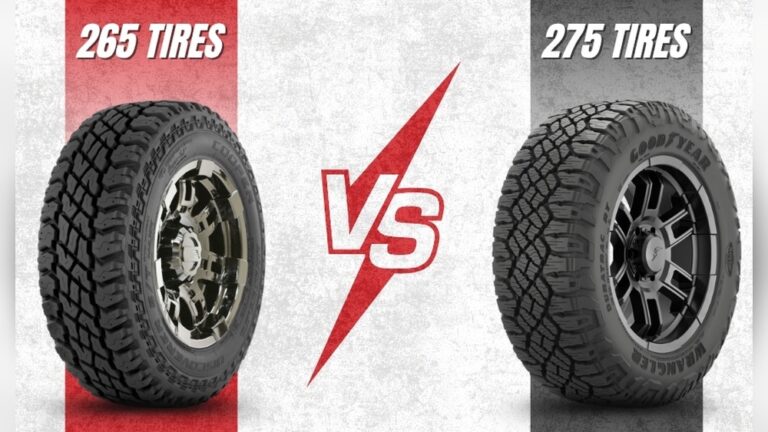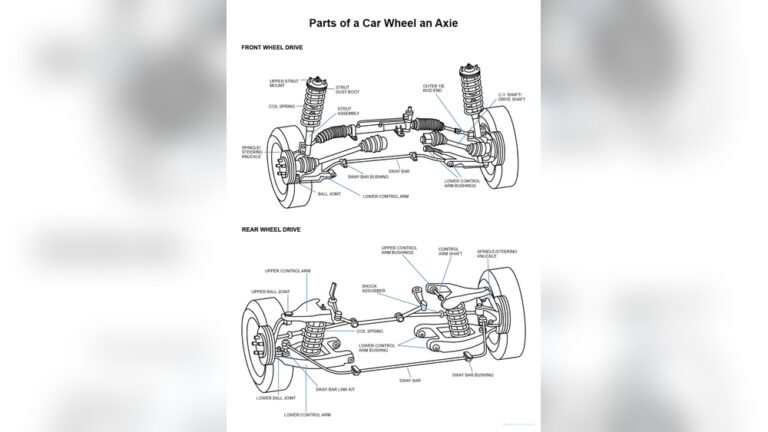
Choosing the right tire size for your vehicle can be confusing, especially when comparing 265 vs 255 tires. These numbers may seem close, but even a small change can affect your car’s performance, safety, and comfort. Whether you’re upgrading your tires for better grip or simply replacing worn ones, understanding the difference between these two popular sizes is important.
Many drivers think that a tire’s width isn’t a big deal, but that’s not always true. The numbers 265 and 255 refer to the tire width in millimeters, and that small difference of 10mm can impact handling, fuel economy, and even the way your car looks. Some cars can use both sizes, but not all. So, how do you know which is right for your vehicle?
This article will break down everything you need to know about 265 and 255 tires. We’ll compare them in detail, look at how each affects your car, and even discuss real-world examples. By the end, you’ll have the knowledge to make the best choice for your needs.
What Do 265 And 255 Mean?
Before comparing, it’s important to understand tire size numbers. In tire size codes (like 265/70R17), the first number (265 or 255) is the width of the tire in millimeters, measured from sidewall to sidewall. The second number is the aspect ratio (sidewall height as a percentage of width), and the last is the wheel diameter in inches.
So, a 265 tire is 10mm wider than a 255 tire. This might sound minor, but it can change how your car feels and performs.
Most people notice tire size first when looking at the sidewall of their tire. For example, if your tire reads 255/65R17, “255” means 255mm wide. The “65” means the sidewall height is 65% of 255mm, and “R17” means the tire fits a 17-inch wheel.
When you change from 255 to 265, you’re increasing only the width, but that impacts several areas.
Some vehicles, especially trucks and SUVs, come with several tire size options from the factory. For example, a Chevrolet Tahoe might offer both 255 and 265 widths, depending on trim level. However, just because both sizes are available doesn’t mean you can switch freely—other factors like wheel width and suspension geometry matter.
Key Differences: 265 Vs 255 Tires
Let’s look at the most important differences between these two tire widths:
- Width
- 265 tires: 265mm wide
- 255 tires: 255mm wide
The extra 10mm may not seem much, but it increases the tire’s footprint. This can influence how your vehicle feels during sharp turns or emergency maneuvers.
- Contact Patch
- Wider tires (265) have a larger contact patch with the road, which can mean more grip.
More rubber touching the road helps with acceleration and braking. In sports or off-road vehicles, this is valuable. However, more contact can also mean more wear if the tire is not rotated regularly.
- Rolling Resistance
- Wider tires generally have higher rolling resistance, which can reduce fuel efficiency.
Rolling resistance is the force needed to keep your tires moving. More resistance means your engine works harder, using more fuel. In city driving, this effect can be more noticeable.
- Speedometer Reading
- Changing tire width can slightly affect your speedometer if sidewall height or diameter also changes.
If the overall diameter of the tire changes with a new width, your speedometer may not show your exact speed. This is usually a small difference, but it’s worth checking, especially if you drive in areas with strict speed limits.
- Appearance
- 265 tires look a bit broader and can give a sportier or more aggressive look.
Some drivers choose wider tires for style as well as performance. Wider tires can fill out the wheel wells, making the vehicle look more planted.
- Fitment
- Not all vehicles can safely use both sizes. Wheel width and suspension clearance matter.
Even if your wheels are compatible, the extra width can cause rubbing on the inside of the fender or suspension parts, especially if you drive over bumps or turn sharply.
265 Vs 255 Tires: Individual Breakdown
To help you understand the differences clearly, here’s a detailed look at each size and the impact on your vehicle, grouped by key aspects.
1. Handling And Performance
- 265 tires: Offer more grip, especially in dry conditions, due to a larger contact area. This can improve cornering and stability at high speeds.
For example, if you drive on winding roads or like a more responsive steering feel, wider tires can help. The extra width gives better feedback through the steering wheel, making the car feel more connected to the road.
- 255 tires: Slightly less grip but can feel more responsive and lighter, which benefits steering feel.
Narrower tires often make the steering lighter, which some drivers prefer for daily commuting or city driving. In some performance cars, having a slightly narrower front tire can actually help reduce understeer (when the car doesn’t turn as sharply as you want).
2. Ride Comfort
- 265 tires: May feel stiffer, especially if mounted on a narrow rim, as there’s less sidewall flex.
On rough or broken roads, a wider tire with less sidewall flex can transmit more bumps to the cabin. This is especially true if the tire has a low aspect ratio (shorter sidewall).
- 255 tires: Usually offer a softer ride, absorbing bumps better due to a narrower width and sometimes taller sidewall.
If comfort is a top priority, especially for long highway trips or poor road conditions, a narrower tire can help smooth things out. The taller sidewall acts like a cushion, soaking up more road imperfections.
3. Fuel Efficiency
- 265 tires: Higher rolling resistance can lower fuel economy by 1-3%, depending on your driving style.
This might not seem like a huge difference, but over a year of driving, it can add up to several extra fuel stops. On larger vehicles, the effect might be smaller due to their already high rolling resistance, but on lighter vehicles, the drop can be more noticeable.
- 255 tires: Lower rolling resistance, often leading to better mileage.
If you drive many miles per week, especially on the highway, sticking with a narrower tire can help you save money on fuel in the long run.
4. Traction In Different Conditions
- 265 tires: Better dry grip and handling. In wet or snowy conditions, wider tires may hydroplane more easily.
On dry pavement, a wider tire is usually superior for grip and braking. But when water or snow covers the road, the larger surface area can “float” on top, increasing the risk of losing traction.
- 255 tires: Less likely to hydroplane, and can perform better in snow due to higher ground pressure.
A narrower tire cuts through water or snow, allowing it to reach the pavement more effectively. This is why many winter tires are narrower than summer or all-season tires.
5. Load Capacity
- Both sizes can have similar load ratings, but wider tires can sometimes support slightly higher loads if the sidewall and construction match.
However, don’t assume a wider tire always means a higher load rating—always check the load index printed on the tire sidewall.
6. Noise
- 265 tires: May produce more road noise, especially on rough pavement, due to larger surface area contact.
The pattern of the tread and the amount of rubber meeting the road both contribute to noise. Some high-performance 265 tires can be quite loud compared to their 255 counterparts.
- 255 tires: Typically quieter, but tire brand and tread pattern matter more.
Touring tires or those designed for comfort will usually be the quietest, regardless of width. For example, a premium 255 touring tire will almost always be quieter than a 265 mud-terrain tire.
7. Tire Availability And Cost
- Both sizes are common, but 255 tires may be easier to find for sedans and smaller SUVs, while 265 tires are popular for trucks and larger SUVs.
Some brands offer more choices in 265 width for off-road or all-terrain tires, while others focus on 255 width for road-focused or eco tires.
- Generally, a 265 tire can cost slightly more due to its size.
Besides the initial price, consider that wider tires can also cost more to ship, mount, and balance.
Real-world Examples
Let’s see how these sizes are used on different types of vehicles:
- Trucks/SUVs: Many full-size trucks and SUVs use 265 tires for added stability and off-road grip. For example, a Toyota Land Cruiser or Ford F-150 may come with 265/70R17 tires. These vehicles are heavier and benefit from the extra width, especially when towing, carrying loads, or driving off-road.
- Crossover SUVs: Models like the Honda CR-V or Toyota RAV4 might use 255 tires, which balance efficiency and comfort. These vehicles are often driven in cities and on highways, where a quieter ride and better fuel economy are more important than maximum grip.
- Sports Cars: Some performance sedans use 255 tires on the front and 265 on the rear for better traction. For example, a BMW 5 Series or Mercedes E-Class might come with staggered tire sizes for handling balance.
In some cases, drivers upgrade to wider tires for a custom look or better performance. However, it’s not always a simple swap—wheel width and offset, suspension geometry, and even brake size can limit your choices.
Credit: www.tacomaworld.com
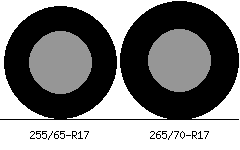
Visual Comparison
Here’s a quick look at how the two sizes compare:
| Tire Size | Width (mm) | Common Aspect Ratio | Typical Use |
|---|---|---|---|
| 255 | 255 | 40-70 | Sedans, SUVs |
| 265 | 265 | 60-75 | Trucks, SUVs |
The difference in width might not be huge visually unless you see the tires side by side, but on the road, the changes in performance and comfort are noticeable to many drivers.
Pros And Cons
265 Tires
Pros:
- More grip and stability
Extra width means better traction, especially for powerful vehicles or in spirited driving.
- Better for towing and off-road
Wider tires distribute weight over a larger area, helping in soft sand or mud.
- Sportier appearance
Many drivers like the “filled-out” look in the wheel wells.
Cons:
- Slightly less fuel efficient
Wider tires make your engine work a bit harder.
- May increase road noise
More rubber on the road often means more noise inside the car.
- Can hydroplane more in heavy rain
The larger footprint is an advantage in dry conditions, but a disadvantage in deep water.
255 Tires
Pros:
- Better fuel economy
Less rolling resistance helps save on gas.
- Softer, quieter ride
More sidewall flex and less surface area contact reduce vibration and noise.
- Often cheaper and easier to find
Many manufacturers focus on this size for mainstream vehicles.
Cons:
- Less grip in dry, high-speed conditions
A narrower tire has less contact with the road, which can be a disadvantage for sporty driving.
- Not as stable for heavy loads or towing
Wider tires are preferred when carrying extra weight.
Tire Size Calculator: 265 Vs 255
When comparing tires, it’s important to consider the overall diameter and sidewall height. Here’s an example using a common aspect ratio and wheel size:
- 255/70R16:
- Width: 255mm
- Sidewall: 70% of 255 = 178.5mm
- Diameter: (178.5 x 2) + 406.4mm (16” rim) = 763.4mm
- 265/70R16:
- Width: 265mm
- Sidewall: 70% of 265 = 185.5mm
- Diameter: (185.5 x 2) + 406.4mm = 777.4mm
Result: The 265 tire is about 14mm taller in overall diameter, which can affect speedometer accuracy and fitment.
This difference might seem small, but even a 2% change in diameter can make your speedometer less accurate and may impact ABS or traction control systems on some vehicles.
When Should You Choose 265 Tires?
- You need more grip for spirited driving or off-road.
- You often carry heavy loads or tow trailers.
- Your vehicle has enough wheel well clearance.
- You want a more aggressive look.
It’s also worth considering 265 tires if you plan to drive on loose surfaces like sand or mud, where the wider footprint gives better “floatation” and helps prevent getting stuck.
When Should You Choose 255 Tires?
- You want better fuel economy.
- Comfort and quietness are more important.
- Your car’s manual recommends 255s.
- You drive in rainy or snowy climates.
For drivers who face winter conditions, 255 tires can also provide better cold-weather performance, as they maintain more contact pressure with the road.
How To Check If A Tire Size Fits Your Car
Changing tire size isn’t just about width. You must ensure:
- The new tire fits your wheel width (check rim width range).
- The diameter doesn’t rub against suspension or fenders.
- Your speedometer and odometer won’t be too far off (usually <2% difference is okay).
- Load and speed ratings meet your car’s requirements.
Always check your car’s manual or consult a tire professional before changing sizes.
If you’re unsure, many tire shops have fitment guides or online calculators to help you check if a size is safe for your specific make and model. Never guess—wrong sizing can lead to safety issues or damage to your vehicle.
Impact On Speedometer And Odometer
A taller tire (higher diameter) will make your speedometer read lower than your actual speed, while a shorter tire does the opposite. For example, switching from 255/70R16 to 265/70R16 increases the diameter by about 1. 8%, so at 60 mph on your speedometer, you’re actually traveling about 61 mph.
It’s also important to note that this can affect your odometer, causing it to undercount miles. If you rely on your car’s trip computer for fuel calculations or maintenance reminders, this is something to keep in mind.
Popular Vehicles Using 255 And 265 Tires
Many manufacturers offer both sizes as options or use them in different trims. Here are some examples:
- Toyota Tacoma: 265/70R16 or 255/70R16 depending on trim.
- Ford Explorer: Often uses 255/50R20.
- Chevrolet Silverado: Commonly uses 265/65R18.
- Nissan Pathfinder: Sometimes equipped with 255/65R17.
Other vehicles, like the Jeep Grand Cherokee or Honda Pilot, may also offer both widths depending on package or market. When buying a used vehicle, check which size is currently installed—previous owners may have changed sizes for performance or appearance.
Sidewall Height And Aspect Ratio
Aspect ratio matters as much as width. For example, a 255/70 tire has a taller sidewall than a 265/60 tire, which can mean more comfort but less sharp handling.
Non-obvious insight: Sometimes, a wider tire with a lower aspect ratio can have a similar sidewall height to a narrower, taller tire. Always calculate sidewall height to avoid surprises.
A taller sidewall flexes more, which can soften the ride but also make cornering feel less sharp. Lower aspect ratios (like 265/60) look sportier and may provide better handling, but are less forgiving over bumps.
Wheel Width Compatibility
Tires must match your wheel width for best performance and safety:
- 255 tires: Best on 7-9 inch wide wheels.
- 265 tires: Best on 7.5-9.5 inch wide wheels.
Mounting a wide tire on a narrow wheel (or vice versa) can cause uneven wear and handling problems.
Also, mismatched tire and wheel widths can make the tire bulge or stretch, which affects both safety and appearance. Always check the recommended rim width for your chosen tire size.
Tire Weight Differences
A 265 tire is usually heavier than a 255 tire due to extra rubber. This can add unsprung weight, which may affect acceleration and braking, especially on smaller vehicles.
Non-obvious insight: Heavier tires can also change suspension behavior, making your car feel less responsive over bumps.
This extra weight can also affect your car’s fuel economy and even put more strain on wheel bearings or suspension parts over time.
Comparing Tire Brands And Models
Not all 255 or 265 tires perform the same. Brand, tread pattern, and rubber compound have a huge impact on:
- Wet/dry grip
- Road noise
- Longevity
- Price
For example, a high-performance 255 tire may outperform a cheap 265 tire in grip and comfort.
When comparing, look for professional reviews and user experiences for your specific tire model. It’s also helpful to check warranty length—some premium tires offer longer treadwear guarantees, which can offset a higher upfront price.
Fuel Economy Impact: Real Data
Tests show that switching from a 255 to a 265 tire can reduce fuel economy by 2-3% for city driving, and about 1% on the highway. This is due to increased rolling resistance and weight.
If your vehicle already has low fuel economy, even a small drop can add up over months or years. For businesses or high-mileage drivers, this can influence tire choice.
Off-road Performance
If you drive off-road, 265 tires provide a wider footprint for better flotation on sand and mud. However, in deep snow, narrower 255 tires can cut through better for more traction.
Some off-road enthusiasts swap to wider tires for sand dunes and narrower ones for forest trails or winter use. Matching your tire choice to your off-road environment can make a significant difference in how far you get before getting stuck.
Aquaplaning And Wet Safety
Wider tires have a higher risk of hydroplaning at high speeds. If you live in an area with heavy rain, sticking with 255 tires might be safer.
Tread design also matters—a 265 tire with good water-channeling grooves may perform better than a 255 with poor tread. Always consider both width and tread pattern for wet conditions.
Tire Price Comparison
On average, 265 tires are $10–$30 more per tire compared to similar 255 tires, depending on the brand and model.
For a set of four, that’s $40-$120 more. Factor in installation, balancing, and alignment costs, which may also be slightly higher for larger tires.
Load Ratings And Towing
If you tow a trailer or carry heavy cargo, check the load rating on the tire’s sidewall. While both sizes can have similar ratings, some 265 tires are built for higher loads, especially in LT (light truck) versions.
A higher load index means the tire can safely carry more weight. For safety, never exceed your tire’s load rating, even if your vehicle can physically fit a bigger tire.
Warranty And Longevity
Manufacturers may offer different warranties depending on the tire size and design. A 255 tire designed for touring may come with a longer mileage warranty than a 265 all-terrain tire.
Check the warranty details before you buy, and remember that aggressive tread patterns (common in 265 off-road tires) often wear faster than smoother, road-focused designs.
Tire Size Table: 265 Vs 255 Common Combinations
Here are common combinations you might see:
| Size Code | Width (mm) | Aspect Ratio | Rim Size (in) |
|---|---|---|---|
| 255/70R16 | 255 | 70 | 16 |
| 265/70R16 | 265 | 70 | 16 |
| 255/65R17 | 255 | 65 | 17 |
| 265/65R17 | 265 | 65 | 17 |
You might also see these sizes mixed on performance cars (wider rear tires), or on SUVs with different trim levels.
Rotation And Maintenance
Wider tires may wear faster on the edges if under-inflated. Always rotate your tires and maintain correct pressure to maximize life.
Proper maintenance includes checking alignment and balancing, as incorrect settings can cause rapid or uneven wear, especially on wider tires.
Insurance And Legal Issues
Altering tire size can affect your insurance if not approved by your car’s manufacturer. Some countries have legal limits on tire size changes, so check local regulations.
Insurance companies may deny claims if non-standard tires contributed to an accident. Always keep your tire choice within approved specifications.
Should You Upsize From 255 To 265?
If you have enough clearance and want better grip or a tougher look, upsizing can be worth it. But always consider ride comfort, fuel cost, and warranty before switching.
Also, make sure your wheels are wide enough to handle the new tire, or you may need to buy new wheels.

Credit: www.youtube.com
Should You Downsize From 265 To 255?
If you want a smoother ride or better economy, downsizing can help. But don’t do it if you tow heavy loads or drive off-road often.
Sometimes, drivers downsize for winter tires, as a narrower footprint can improve snow traction.
Installation And Calibration
After changing tire size, get your speedometer recalibrated if the diameter changes significantly. This ensures you’re not accidentally speeding or misreading mileage.
Modern vehicles may need electronic recalibration, especially if traction control or ABS sensors are involved.
Seasonal Tires: 265 Vs 255
Winter tires in 255 width may perform better in snow due to higher ground pressure, while 265 summer tires offer more grip on dry roads.
If you use two sets of wheels and tires (one for summer, one for winter), you can optimize each for the season.
Aesthetic And Style
Some drivers prefer the look of wider 265 tires for a more muscular stance, especially on trucks and SUVs. However, the difference is subtle and may not be noticed unless compared side-by-side.
Keep in mind, though, that too wide a tire can look out of place on a small vehicle. Balance style with function for the best result.
Resale Value
Sticking with the original tire size can help keep your car’s resale value higher, as buyers and dealers prefer factory specs.
Aftermarket tire sizes can sometimes raise questions about maintenance or possible issues, especially if they affect ride quality or odometer readings.
What Experts Say
Most tire experts recommend staying within 3% of your original tire diameter and consulting your owner’s manual before changing sizes. The main factor is matching tires to your driving needs and environment.
For further technical details, you can check the Wikipedia Tire Code Guide.
Credit: www.tacomaworld.com
Frequently Asked Questions
What Is The Main Difference Between 265 And 255 Tires?
The main difference is width. 265 tires are 10mm wider than 255 tires, which affects grip, handling, and fuel efficiency.
Can I Replace 255 Tires With 265 Tires On The Same Rims?
Usually, yes, if your wheels are wide enough and there’s enough clearance in the wheel well. Always check your car manual or a tire specialist first.
Will Changing From 255 To 265 Tires Affect My Speedometer?
Yes, if the aspect ratio stays the same, 265 tires will be slightly taller, causing your speedometer to read a bit lower than your actual speed.
Which Tire Is Better For Snow: 255 Or 265?
255 tires often perform better in snow because they’re narrower and can cut through the snow for more traction.
Do Wider Tires Wear Out Faster?
Wider tires can wear faster if not properly inflated or aligned. Regular maintenance and rotation help maximize lifespan.
—
Choosing between 265 vs 255 tires comes down to your vehicle, driving habits, and personal preferences. Always make sure your new tires fit your wheels and vehicle safely. When in doubt, consult a professional to avoid costly mistakes and ensure the best performance for your car.