If you drive a car, SUV, or truck, picking the right tires is more important than most people realize. Tires affect safety, comfort, fuel use, and even how your vehicle handles. The two most common types for everyday drivers are all terrain tires and highway tires. They look similar at first, but they are made for very different needs. If you’re wondering which tire is best for your lifestyle, this guide will help you understand the differences, benefits, and what really matters when choosing.
What Are All Terrain Tires?
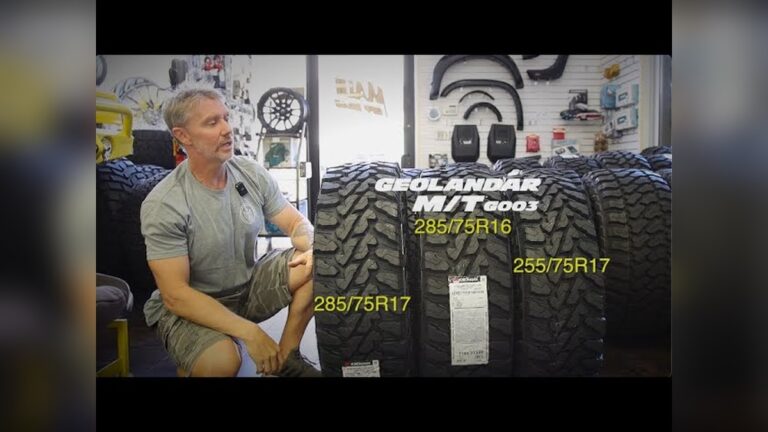
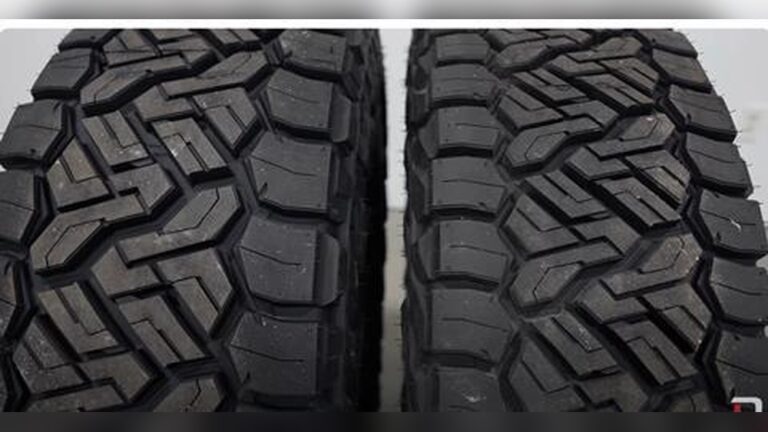
All terrain tires are made for drivers who move between paved roads and rough surfaces. These tires have a special design, with deeper grooves and stronger sidewalls. They give you good traction on mud, gravel, sand, and even snow. The tread patterns are aggressive, meaning they have big blocks and wide spaces. This helps the tire grip uneven ground.
Most all terrain tires have the letters A/T in their name. They are popular for trucks and SUVs, especially for people who go camping, hunting, or live in rural areas. You do not need to drive off-road every day to use all terrain tires, but they shine when roads get rough.
Key Features Of All Terrain Tires
- Deep tread patterns for better grip
- Strong sidewalls to resist cuts and damage
- Reinforced rubber for durability
- Self-cleaning design (mud and stones fall out easily)
Typical Uses
- Driving on dirt, gravel, or sand
- Occasional off-road trips
- Snow and wet conditions
- Rural or mountain roads
All terrain tires are like a Swiss Army knife. They are not the best at anything, but they can handle a bit of everything.
What Are Highway Tires?
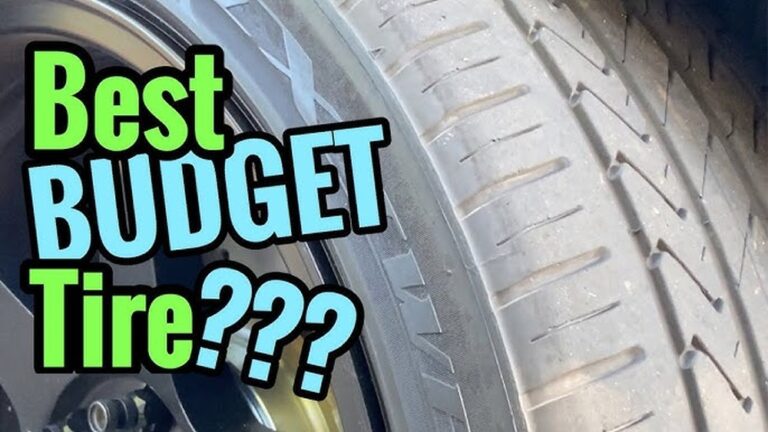
Highway tires are made for smooth, paved roads. They focus on comfort, low noise, and long life. The tread is shallower and more closed, which means less road noise and better fuel efficiency. These tires are common on sedans, minivans, and standard SUVs.
Highway tires are sometimes called touring tires or all-season tires. They work well in most weather, but they are not built for rough surfaces. If you drive mainly in cities or on highways, these are probably what you need.
Key Features Of Highway Tires
- Shallow tread patterns for quiet driving
- Soft rubber compounds for comfort
- Efficient design for lower fuel use
- Long tread life (often 40,000–80,000 miles)
Typical Uses
- City driving
- Long highway trips
- Smooth, paved roads
- Light rain or mild snow
Highway tires are like dress shoes—perfect for smooth surfaces, but not for hiking.
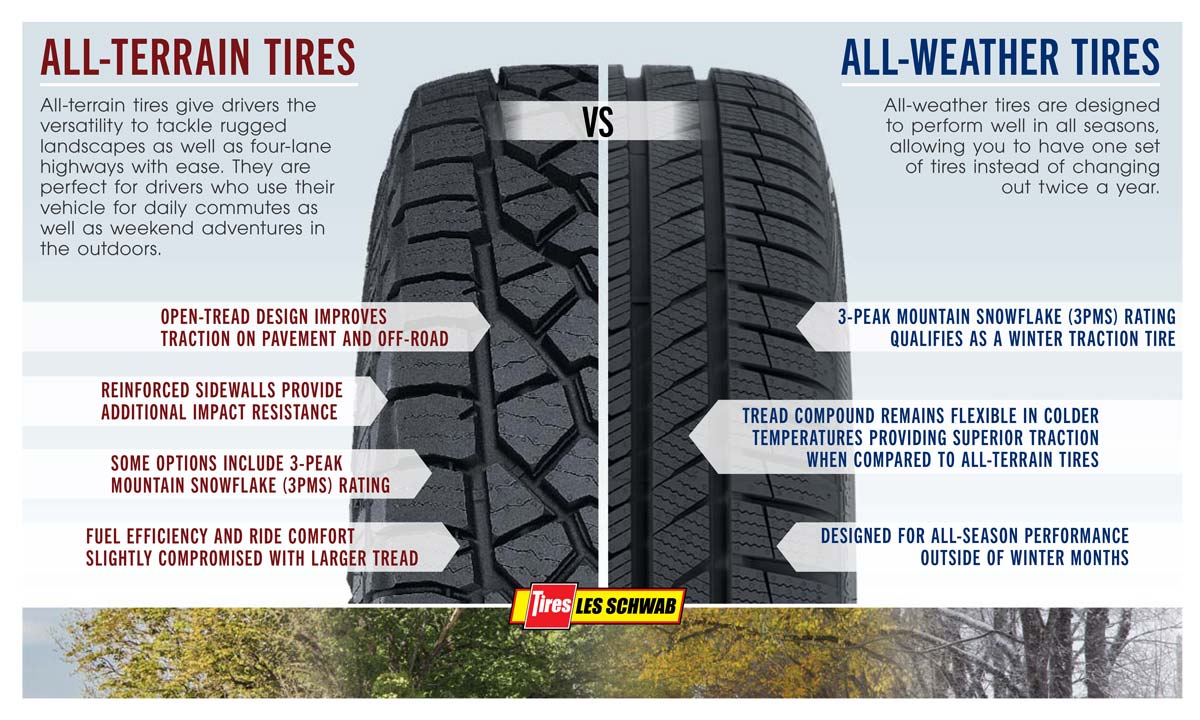
Credit: www.lesschwab.com
Comparing All Terrain Tires Vs Highway Tires
Choosing between all terrain tires and highway tires means thinking about where and how you drive. The differences affect performance, cost, and even safety. Here are the main points to compare:
| Feature | All Terrain Tires | Highway Tires |
|---|---|---|
| Traction (off-road) | Excellent | Poor |
| Traction (on-road) | Good | Excellent |
| Noise | Higher | Lower |
| Comfort | Moderate | High |
| Tread Life | Shorter | Longer |
| Fuel Efficiency | Lower | Higher |
| Price | Higher | Lower |
Let’s look at these factors in more detail.
Traction And Performance
All terrain tires shine when you leave the pavement. Their deep, aggressive tread gives strong traction on mud, loose gravel, and snow. But on smooth roads, these same features can cause more noise and less grip during sharp turns.
Highway tires are built for predictable surfaces. The tread is designed to channel water, reduce hydroplaning, and grip the road. They handle well at high speed and make less noise.
Real-life Example
If you drive to work on city streets, highway tires will feel smooth and quiet. But if your job takes you to construction sites or farms, all terrain tires are safer and less likely to get stuck.
Comfort And Noise
Highway tires are much quieter. Their soft rubber and closed tread absorb bumps and vibrations. You can listen to music or talk easily without the roar of the tires.
All terrain tires are louder, especially at highway speed. The big tread blocks slap the pavement, making a “whump-whump” sound. Some newer all terrain models use special shapes to lower noise, but they are still not as quiet as highway tires.
Tread Life And Durability
Highway tires usually last longer. Many models promise up to 80,000 miles. Their shallow tread wears slowly and evenly.
All terrain tires wear faster, especially if used mainly on pavement. The deep tread blocks can chip, and the rubber is harder, which can crack over time. But they are tougher against cuts, rocks, and sharp objects.
Fuel Efficiency
Highway tires are lighter and roll easier. This means your vehicle uses less fuel. The difference can be up to 1–2 miles per gallon.
All terrain tires are heavier, with more rubber and steel. They create more resistance, so you burn more gas. If you drive long distances, this can add up.
Price And Value
All terrain tires cost more. They use stronger materials and more rubber. Prices start at $130 each, but can reach $300 for larger sizes.
Highway tires are cheaper, often $80–$160 each. Because they last longer and use less fuel, they can be more economical in the long run.
When To Choose All Terrain Tires
Not everyone needs all terrain tires. They are best for people who:
- Drive on unpaved roads often
- Live in rural or snowy areas
- Go camping, hunting, or fishing
- Need extra traction (construction, farming)
- Want a tough look for their vehicle
If you drive mostly in cities, all terrain tires might be overkill. But if you face mud, gravel, or snow regularly, they can prevent getting stuck and keep you safe.
Common Mistakes When Choosing All Terrain Tires
- Buying just for looks: Many people like the rugged style, but forget about higher noise and fuel use.
- Ignoring tire size: All terrain tires are heavier. They can hurt handling if your vehicle is not meant for them.
- Skipping research: Not all brands are equal. Some cheap tires wear out fast and perform poorly.
Non-obvious Insights
- All terrain tires can lose traction on ice. The big tread blocks are great in mud, but slippery in freezing rain.
- If you tow heavy loads, all terrain tires often have higher load ratings, which can be safer.
When To Choose Highway Tires
Highway tires make sense if you:
- Drive mainly on paved roads
- Want quiet, comfortable rides
- Care about fuel efficiency
- Need long tread life
- Live in mild weather areas
These tires are perfect for families, commuters, and anyone who spends most time in cities or suburbs. They perform best on smooth roads and are less likely to cause steering problems.
Common Mistakes When Choosing Highway Tires
- Picking cheapest models: Cheap highway tires may wear unevenly, cause vibrations, or fail in wet conditions.
- Ignoring weather rating: Some highway tires are “summer only.” Make sure yours are rated for all seasons if you get rain or snow.
- Mismatching tire speed rating: If you drive fast or own a sports car, check the tire’s speed rating to avoid dangerous situations.
Non-obvious Insights
- Highway tires with higher speed ratings often have softer rubber, which can wear faster. Balance speed needs with durability.
- Some highway tires use “silica” in the rubber, making them grip better in rain. Look for this feature if you live in wet areas.
How Tire Design Affects Driving
Tire design is not just about looks. The way the tread is shaped, the rubber used, and even the sidewall thickness changes how your car handles.
| Design Element | All Terrain Tires | Highway Tires |
|---|---|---|
| Tread Pattern | Open, aggressive blocks | Closed, fine grooves |
| Sidewall Strength | Thick, reinforced | Standard, softer |
| Rubber Compound | Harder, more durable | Softer, flexible |
| Weight | Heavier | Lighter |
These design choices affect:
- Handling: All terrain tires may feel “floaty” at high speed. Highway tires are stable and predictable.
- Braking: Highway tires stop better on dry pavement. All terrain tires are better in mud or gravel.
- Cornering: Highway tires grip the road during turns. All terrain tires can slide more on asphalt.
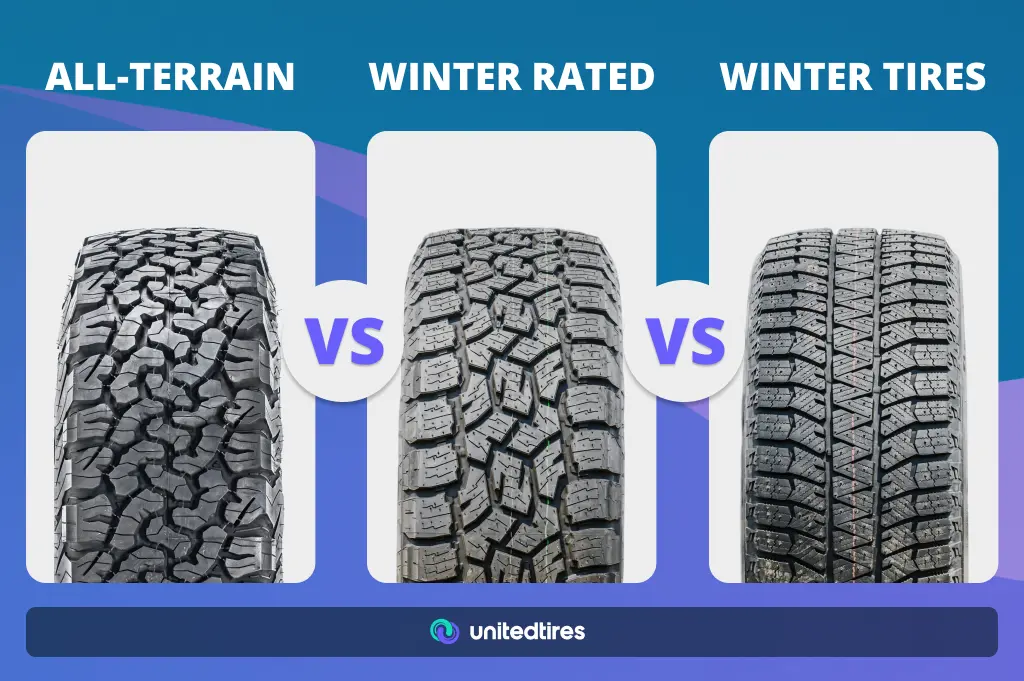
Credit: www.utires.com
Weather Performance: Rain, Snow, And Ice
Both tire types have strengths and weaknesses in different weather.
Rain
Highway tires often have special grooves that push water away. This prevents hydroplaning, when the tire loses contact with the road.
All terrain tires grip well in heavy rain, but the big blocks can hold water, causing less traction at high speed.
Snow
All terrain tires are better in deep snow. The open tread lets snow pack in and grip itself. Some even have the “Three Peak Mountain Snowflake” symbol, showing they meet winter standards.
Highway tires struggle in snow unless labeled “all-season. ” Even then, deep snow can cause slipping.
Ice
Neither tire is great on ice. Highway tires with soft rubber can grip a little better. All terrain tires may slide, as the big blocks have less contact area.
Example: Winter Driving
In areas with heavy snow, all terrain tires can help you get out of driveways and through unplowed streets. But for icy roads, consider winter tires for best safety.
Tire Maintenance: What Owners Need To Know
Proper care helps tires last longer and perform better.
- Check air pressure: Under-inflated tires wear unevenly and lower fuel efficiency.
- Rotate tires: Move tires between positions every 5,000–7,000 miles. All terrain tires especially need this.
- Balance and alignment: If the car shakes or pulls to one side, get tires checked.
- Inspect for damage: Look for cuts, cracks, or missing tread blocks.
All terrain tires may need more frequent checks, as they face rocks and rough surfaces.
Cost Breakdown: Upfront And Long-term
Tire cost is more than just the price tag. Think about how long they last and how much gas they use.
| Tire Type | Average Price (per tire) | Expected Life (miles) | Fuel Impact (mpg) |
|---|---|---|---|
| All Terrain | $130–$300 | 40,000–60,000 | -1 to -2 mpg |
| Highway | $80–$160 | 50,000–80,000 | +1 to +2 mpg |
Over five years, highway tires can save hundreds of dollars in fuel and last longer. But if you need ruggedness, all terrain tires pay off in safety.
Popular Brands And Models
Knowing which brands are trusted can help you choose wisely.
- All Terrain Tires: BFGoodrich All-Terrain T/A KO2, Goodyear Wrangler All-Terrain Adventure, Michelin LTX A/T2, Falken Wildpeak A/T3W
- Highway Tires: Michelin Defender LTX M/S, Bridgestone Dueler H/L, Goodyear Assurance, Continental CrossContact LX20
Reviews and ratings matter. Check for real-world tests and user feedback before buying.

Credit: www.discountedwheelwarehouse.com
Environmental Impact
Highway tires are lighter and use less fuel, which lowers your carbon footprint. All terrain tires use more resources and create more rolling resistance.
If you care about the environment, highway tires are the better choice. Some brands now make “eco” tires, using recycled materials.
Making The Right Choice For Your Needs
Ask yourself these questions:
- Where do I drive most often?
- Do I face mud, gravel, or snow?
- Is quiet, comfortable driving more important?
- Do I tow or carry heavy loads?
- What is my tire budget?
If you’re unsure, talk to a tire expert or check your vehicle’s manual. The wrong tire can cause handling problems, wasted money, or even accidents.
Frequently Asked Questions
What Is The Main Difference Between All Terrain And Highway Tires?
All terrain tires are designed for both off-road and on-road use, with deep, aggressive tread for grip on rough surfaces. Highway tires are built for smooth, paved roads, focusing on comfort, quietness, and fuel efficiency.
Can I Use All Terrain Tires On Highways?
Yes, you can use all terrain tires on highways. However, they are noisier, have higher fuel consumption, and may wear faster on pavement compared to highway tires.
Are Highway Tires Safe In Snow?
Some highway tires are safe in light snow if labeled “all-season.” But they are not ideal for deep snow or icy conditions. If you live in snowy areas, consider winter tires or all terrain tires with snow ratings.
Which Tires Last Longer?
Highway tires usually last longer, often 50,000–80,000 miles. All terrain tires typically last 40,000–60,000 miles, especially if used on pavement.
How Do I Know Which Tire Is Right For Me?
Consider your driving habits, weather, and road conditions. If you mostly drive on paved roads, go for highway tires. If you often drive off-road or need extra durability, choose all terrain tires.
If you want deeper information on tire technology, check this resource: Wikipedia Tire Article.
Choosing between all terrain tires and highway tires is not just about style or price. It’s about safety, comfort, and getting the most value for your needs. Take time to think about your driving life, look at trusted brands, and don’t be afraid to ask for expert advice. The right tire can make every trip smoother, safer, and more enjoyable.