Every vehicle owner wants their tires to last longer and perform safely. However, many people notice strange tire wear patterns—sometimes the inside edge wears quickly, other times the outside edge goes bald. One of the main reasons for this is how your wheels are aligned, specifically the “toe” angle. The terms toe in and toe out often confuse drivers, but understanding their effect on tire wear can save you money and prevent accidents. In this article, you’ll learn exactly how toe in and toe out cause different types of tire wear, why alignment matters, and what you can do to protect your tires.
What Is Toe In And Toe Out?
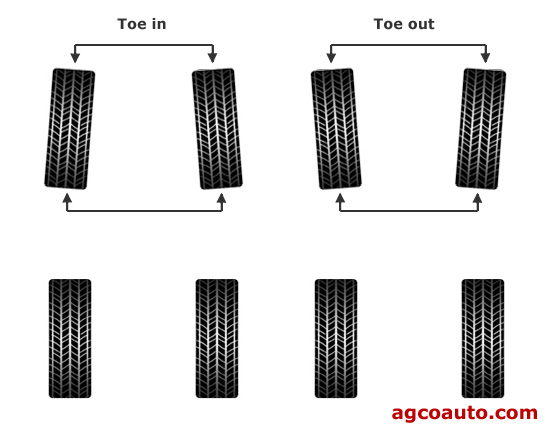
The word “toe” describes the direction your tires point when viewed from above. Imagine standing over your car, looking straight down at the front wheels. If the front edges of the tires are closer together than the rear edges, that’s called toe in. If the front edges are farther apart (pointing outward), that’s toe out.
How Toe Is Measured
Toe is measured in degrees or millimeters, showing the angle compared to a straight-ahead position. Even small differences—less than one degree—can change how your tires wear over time.
- Positive toe: Also called toe in, tires point toward each other.
- Negative toe: Also called toe out, tires point away from each other.
Every vehicle has a recommended toe setting from the factory, optimized for handling, tire life, and safety.
Why Toe Settings Matter For Tire Wear
Tires are designed to roll straight. When your wheels are not aligned, the tires drag against the road at a slight angle. This causes the rubber to scrub away faster on one side.
With toe in, the tire edges rub against the road, wearing the outer part of the tread. With toe out, the inner edges take the damage.
Incorrect toe settings not only wear tires quickly but also hurt fuel economy and can cause the car to pull or feel unstable.
How Toe In Causes Tire Wear
When your vehicle has too much toe in, the front of the tires angle toward each other. As the car moves forward, each tire tries to roll slightly toward the center of the car. The outer edge of each tire scrapes along the road.
Typical Tire Wear Pattern
- Outer edge wear: The outside (shoulder) of each tire wears down faster.
- Feathering: If you run your hand across the tread, you’ll feel a rough surface or “feathers.” One side of each tread block feels sharp, while the other is smooth.
Example
Suppose your car’s toe in is set at +0. 5 degrees when the manufacturer recommends only +0. 1 degrees. Over 10,000 miles, you may see the outside edges of both front tires become bald, while the center and inside still have good tread.
Common Causes
- Hitting curbs or potholes
- Worn steering or suspension parts
- Incorrect alignment after repairs
How Toe Out Causes Tire Wear
With too much toe out, the front of the tires point away from each other. Now, as the car moves, each tire tries to roll outward, dragging the inner edge on the road.
Typical Tire Wear Pattern
- Inner edge wear: The inside of each tire wears out quickly.
- Feathering: Like toe in, but the sharp edges are on the opposite side of each tread block.
Example
Imagine your car’s toe out is -0. 4 degrees instead of the recommended 0. 0 degrees. After a few months, you’ll see the inside tread blocks are thin, while the outside looks almost new.
Common Causes
- Hitting deep potholes
- Incorrect alignment after suspension replacement
- Loosened tie rods or worn bushings
Visual Guide: How Toe Affects Tire Wear
To help you see the difference, here’s a comparison of how toe in and toe out affect tire wear patterns:
| Toe Setting | Tire Wear Pattern | Description |
|---|---|---|
| Toe In | Outer edge wear | Outside shoulder wears down; feathering on tread blocks (smooth to rough from inside to outside) |
| Toe Out | Inner edge wear | Inside shoulder wears down; feathering from outside to inside |
| Correct Toe | Even wear | Tread wears flat across the width; longest tire life |
What Does Feathering Mean?
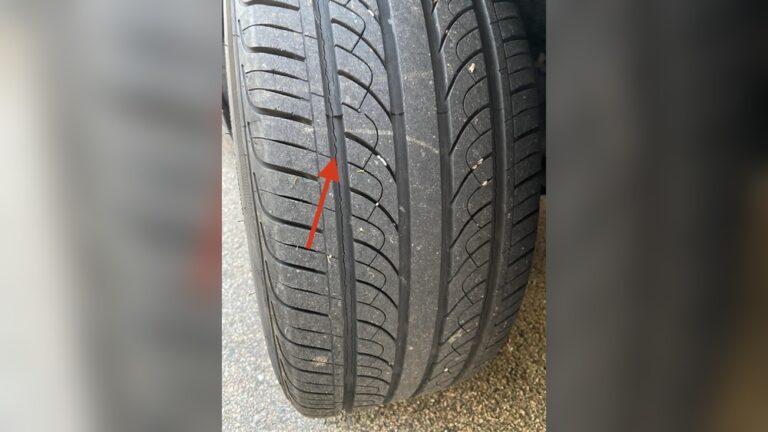
Feathering is a special type of tire wear caused by incorrect toe. The edge of each tread block becomes raised or sharp on one side, and smooth on the other. This happens because the tire is dragged slightly sideways as it rolls.
Feathering usually means the alignment is off, even if the tread looks okay at first glance.
A simple trick: run your hand across the tire. If it feels like a saw blade in one direction but smooth in the other, you have feathering—often a sign of bad toe.
Toe In Vs Toe Out: Handling And Safety
Toe settings affect more than just tire wear. They change how your vehicle feels on the road.
- Too much toe in: The car may feel stable at high speed but less responsive in turns. Excessive toe in also increases rolling resistance, reducing fuel economy.
- Too much toe out: Steering feels quick and “twitchy,” but the car may wander or feel unstable, especially at highway speed.
Incorrect toe can also make your vehicle pull to one side, vibrate, or feel loose. Over time, these problems increase the risk of accidents and mechanical failure.
Causes Of Incorrect Toe
Why does your vehicle’s toe setting change? Here are some common reasons:
- Hitting curbs or potholes: Sudden impacts bend steering parts, changing alignment.
- Worn suspension or steering parts: Loose tie rods, ball joints, or bushings allow the wheels to move out of position.
- Improper repairs: Replacing parts without a full alignment can leave toe out of spec.
- Carrying heavy loads: Overloaded vehicles can compress springs, changing toe temporarily.
- Modifications: Lowering or raising your car without realignment almost always affects toe.
How To Identify Toe-related Tire Wear
Spotting toe wear early can save your tires. Here are signs to look for:
- Uneven tread depth (more wear on inside or outside edges)
- Feathered tread blocks (feel for roughness)
- Car pulls to one side or feels unstable
- Steering wheel is off-center
It’s easy to confuse toe wear with camber wear. Camber is the tilt of the tire, while toe is the angle in or out. Toe wear always shows as feathering or strong wear on one edge, not a smooth gradient.
Comparing Toe In And Toe Out Tire Wear
Here’s a quick side-by-side view of the differences:
| Aspect | Toe In | Toe Out |
|---|---|---|
| Direction | Tires point inward | Tires point outward |
| Tire Wear | Outer edge wears | Inner edge wears |
| Handling Feel | Stable, heavy steering | Quick, twitchy steering |
| Common Cause | Hitting curbs, wear | Potholes, loose parts |
| Sign of Problem | Feathering to outside | Feathering to inside |
Credit: www.agcoauto.com
Real-world Data: How Fast Can Toe Wear Out Tires?
Small errors in toe can ruin tires quickly. Studies show that just 1/8-inch (about 3 mm) of toe error can reduce tire life by up to 15%.
- Normal tire life: 40,000 miles (64,000 km)
- With toe error: May drop to 34,000 miles (54,700 km) or less
If you drive 12,000 miles per year, this could mean replacing tires a year earlier—costing hundreds of dollars.
How To Prevent Toe-related Tire Wear
You can’t avoid every pothole, but you can reduce tire wear from bad toe. Here are some proven ways:
- Regular alignments: Have your alignment checked every 12,000 miles or once a year, especially after hitting something hard.
- Inspect tires monthly: Look for uneven wear or feathering.
- Replace worn parts: If your car feels loose or the steering is off, have a mechanic check for worn suspension or steering parts.
- Don’t ignore warning signs: Pulling, vibration, or a crooked steering wheel means it’s time for an alignment.
The Alignment Process: What Happens?
A professional alignment uses lasers or cameras to measure the toe angle. The technician adjusts the tie rods or control arms to set the correct toe. They’ll also check camber (tilt) and caster (steering axis).
Most shops give you a printout showing before and after measurements. Always ask to see this—it proves the job was done right.
Front Vs Rear Toe: Both Matter
Many people think only the front wheels need alignment, but many vehicles (especially with independent rear suspension) also have adjustable rear toe.
Rear toe problems also cause inner or outer tire wear, poor handling, and can even make the car crab or “dog track”—where the car drives slightly sideways.
Be sure to ask for a four-wheel alignment, not just a front-end alignment.

Credit: www.researchgate.net
How Alignment Affects Fuel Economy
Incorrect toe increases rolling resistance. Even a small toe error can cut your fuel economy by 1–2 mpg (miles per gallon). Over a year, that’s a lot of wasted fuel—costing you more than the price of an alignment.
Not-so-obvious Insights About Toe And Tire Wear
Most drivers know alignment is important, but here are two things many miss:
- Tires can hide the problem: Some tires are designed to resist uneven wear. On these, you may not see obvious feathering or edge wear. But the damage is still happening on a microscopic level.
- Alignment can change with load and speed: Some cars are aligned to have “zero toe” at rest, but as you drive and the suspension compresses, toe can change. That’s why it’s important to have a shop align your car with the proper load (full tank, average cargo).
Cost Of Ignoring Toe Wear
New tires cost $500–$1,000 per set. Neglecting alignment can destroy a set in as little as 10,000 miles. Worse, worn tires have less grip, increasing stopping distance and the risk of accidents.
Paying $100 for an alignment every year can save you thousands over the life of your car.
Signs It’s Time For An Alignment
- You just hit a large pothole or curb
- Your steering wheel is not straight when driving
- The car pulls left or right
- You notice uneven or rapid tire wear
- After replacing suspension or steering parts
Many shops offer a free alignment check—take advantage of this before you have a problem.
Diy Alignment Checks
While you can’t replace a professional alignment, you can do simple checks at home:
- Park on a level surface and measure the distance between the front edges and rear edges of the tires. If they differ by more than a few millimeters, get a professional check.
- Use chalk or tape to mark the tire and check for uneven tread wear over a few weeks.
Never try to adjust toe yourself unless you have the right tools and experience. A small mistake can make things worse.
Tires And Alignment: Not All Wear Is The Same
It’s important to know that not all edge wear is caused by toe. Camber (tilt) and under-inflation can also cause edge wear, but usually without the feathered feel.
If you’re not sure, have a mechanic inspect your tires and alignment.
When Replacing Tires, Check Alignment
New tires can wear out fast if installed on a car with bad alignment. Always ask for an alignment check (and a printout) when replacing tires.
How Race Cars Use Toe In And Toe Out
Race teams adjust toe to change how the car handles. More toe out can make a car turn into corners faster, but wears tires quickly. More toe in can make the car stable at high speed, but less agile.
For street driving, always use the manufacturer’s recommended settings for the best balance of tire life, safety, and fuel economy.
Alignment Vs. Rotation: What’s The Difference?
- Alignment changes the angles of the wheels so they point straight.
- Rotation means moving tires to different positions to even out wear.
Rotating tires won’t fix toe wear—it will just move the problem to other tires.
Can You See Toe Problems With The Naked Eye?
Usually, you can’t see small toe errors just by looking. By the time the wheels look visibly “in” or “out,” the tires may already be ruined. That’s why regular checks are important.

Credit: www.youtube.com
How Long Does A Good Alignment Last?
In normal driving, a good alignment can last 1–2 years. But hitting a curb, pothole, or accident can change it instantly. If you drive on rough roads, check alignment more often.
How Modern Cars Help Prevent Toe Wear
Some new cars have sensors that monitor alignment and warn you if something is wrong. But most cars still rely on regular inspections and maintenance.
Professional Alignment: What To Expect
When you visit a repair shop for alignment:
- The technician checks toe, camber, and caster.
- They adjust the tie rods to set the correct toe.
- You get a printout showing before and after results.
Ask questions if you don’t understand the numbers. Good shops will explain your results.
Key Takeaways
- Toe in wears the outer edge of tires; toe out wears the inner edge.
- Both cause feathering and reduce tire life.
- Regular alignment checks and fixing worn parts can prevent expensive tire damage.
- Watch for uneven wear, feathering, pulling, or off-center steering as warning signs.
For more technical details, you can visit the Wikipedia page on wheel alignment.
Frequently Asked Questions
What Is The Difference Between Toe And Camber?
Toe is the angle your tires point inward or outward when viewed from above. Camber is the tilt of the tire inward or outward when viewed from the front. Toe affects feathering and edge wear, while camber mostly affects whether the inside or outside edge wears down.
How Often Should I Get A Wheel Alignment?
It’s best to check alignment every 12,000 miles or once a year. Also, check after hitting curbs or potholes, or after replacing suspension or steering parts.
Will Rotating My Tires Fix Toe Wear?
No. Rotating tires moves the wear pattern to another location but does not stop the cause. You must correct the toe setting to prevent further damage.
Can Bad Toe Affect Fuel Economy?
Yes. Incorrect toe increases rolling resistance, which can lower your gas mileage by 1–2 mpg or more.
What Should I Do If I See Feathering On My Tires?
Have your alignment checked as soon as possible. Feathering is a clear sign of incorrect toe, and catching it early can save your tires from further damage.
Understanding how toe in and toe out affect tire wear can make a big difference in your vehicle’s safety and maintenance costs. A little attention to alignment today can help you avoid expensive surprises tomorrow.