When drivers start looking for new tires, they often see two names come up again and again: Hankook Tires and Cooper Tires. Both brands are known around the world, but they have different histories, strengths, and reputations. Whether you drive on city roads, rough highways, or off-road trails, your tires are one of the most important parts of your car. Good tires mean better safety, more comfort, and even savings on fuel. But how do Hankook and Cooper really compare? Let’s take a deep look at their differences, strengths, and which one might be right for you.
Brand Backgrounds: Hankook And Cooper
Before comparing their products, it helps to understand where these brands come from and what they stand for.
Hankook Tires started in South Korea in 1941. Today, Hankook is among the top seven tire companies worldwide. They make tires for cars, SUVs, trucks, and even racing vehicles. Hankook is known for technology, quality, and strong partnerships with car makers like Hyundai, Kia, and BMW. They have factories in Asia, Europe, and America, which helps them serve drivers everywhere.
Cooper Tires is an American company. Founded in 1914 in Ohio, Cooper has over 100 years of experience making tires for the American market and beyond. They focus on value, safety, and durability, often winning awards for quality and customer satisfaction. Cooper also owns other tire brands, such as Mastercraft and Mickey Thompson, giving them a wide reach in North America.
Both companies have a long history, but their roots affect how they design tires and what drivers they focus on.
Product Range And Options
One big factor when choosing a brand is the variety of products they offer. Drivers want to find the right size, tread type, and features for their specific car and driving style.
Hankook’s Product Line
Hankook offers a wide selection for nearly every vehicle:
- Kinergy: For daily driving, comfort, and fuel efficiency
- Ventus: Performance tires for sports cars and luxury vehicles
- Dynapro: For SUVs, trucks, and off-road use
- Winter icept*: For snow and icy conditions
Hankook pays special attention to new technology. For example, their “Aqua Driving Control” helps with wet roads, and “ProMileage Technology” gives longer tread life.
Cooper’s Product Line
Cooper also provides a strong mix of options:
- CS Series: All-season and performance for cars and minivans
- Discoverer: For SUVs, trucks, and off-roading, including all-terrain and mud-terrain
- Evolution: Balances comfort, safety, and price for daily drivers
- Weather-Master: Winter tires for snow and ice
Cooper puts focus on American driving needs, with special attention to pickup trucks and rural roads.
Comparing Variety
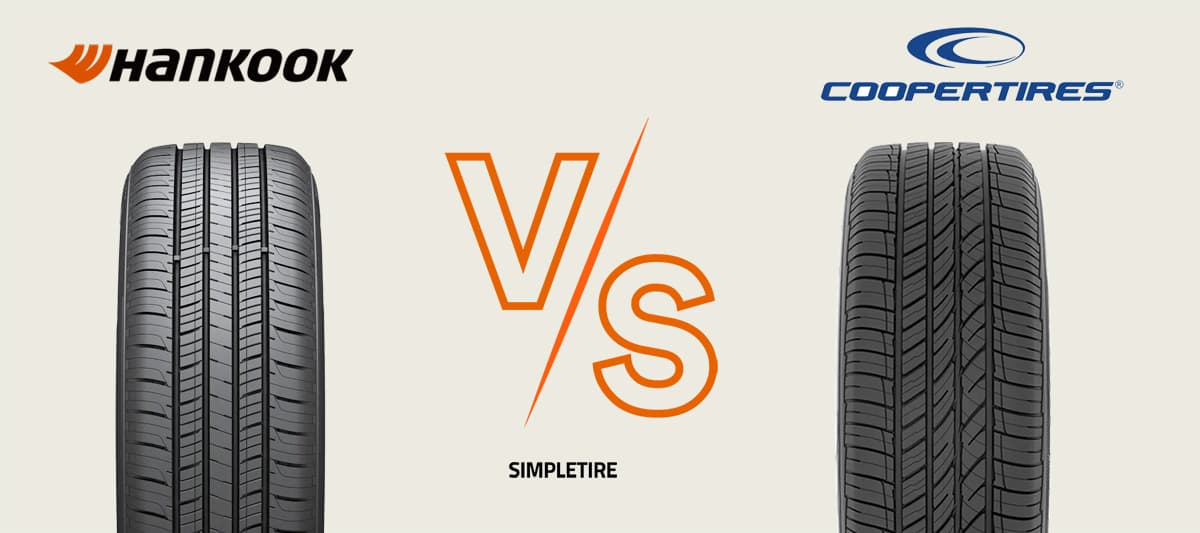
Both brands have options for most drivers, but Hankook has a slight edge in high-performance and motorsport options, while Cooper is famous for its rugged, all-terrain tires.
Credit: simpletire.com
Performance And Handling
The most important question for many drivers is: “How do these tires really perform on the road?” Let’s compare some key points.
Dry Road Performance
- Hankook: Their Ventus line is respected for grip and handling on dry roads. Many car makers use Hankook as original equipment (OE).
- Cooper: The CS5 Ultra Touring and Zeon RS3-G1 are designed for good grip, but Cooper tends to focus more on all-weather than on pure dry performance.
Wet Road Safety
- Hankook: Uses high-silica compounds and unique tread designs to reduce hydroplaning. Many tests show Hankook tires stop faster on wet roads than cheaper brands.
- Cooper: Also uses advanced rubber, but their strength is in balanced, predictable handling rather than high-end wet grip.
Snow And Ice
- Hankook Winter icept*: Specially designed for snow, with small slits (sipes) that grip icy surfaces.
- Cooper Weather-Master: Also well-rated for winter, with deep grooves to push away slush and snow.
Off-road And All-terrain
- Hankook Dynapro: Performs well on gravel, mud, and sand, with reinforced sidewalls for strength.
- Cooper Discoverer AT3: One of the most popular all-terrain tires in the US, known for toughness and long life.
Real-world Example
In a 2023 comparison by a US automotive magazine, the Cooper Discoverer AT3 4S outperformed the Hankook Dynapro ATM for off-road grip and comfort, while the Hankook was slightly quieter and smoother on the highway.
Durability And Tread Life
Tire life is critical for value. Nobody wants to replace their tires every year.
- Hankook: Many Hankook models come with a 60,000–70,000 mile treadwear warranty. Their “ProMileage” tech aims to spread pressure evenly, reducing wear.
- Cooper: Cooper gives similar warranties, and some Discoverer models are famous for lasting over 70,000 miles in real-world use.
Non-obvious insight: Tread life can depend as much on the vehicle type and alignment as the tire brand. For example, heavy SUVs can wear out even the best tires quickly if not rotated regularly.

Credit: www.duallywheels.com
Comfort And Noise
Drivers care about how smooth and quiet their ride feels, especially on long trips.
- Hankook: Uses special foam layers and tread patterns to reduce road noise. Many drivers say Hankook tires are among the quietest in their price range.
- Cooper: Focuses more on absorbing bumps than on silence. Cooper tires feel soft and comfortable, but some models are a bit noisier, especially all-terrain types.
Non-obvious insight: New tires of any brand may be quieter for the first 10,000 miles, with noise increasing as they wear down. Always check reviews from drivers with 20,000+ miles on a set for a true picture.
Fuel Efficiency
Low rolling resistance means your car uses less gas.
- Hankook Kinergy: Designed for better fuel economy, with some models saving up to 2% on fuel compared to standard tires.
- Cooper Evolution: Also offers low rolling resistance, but the gains are smaller (about 1-1.5%).
While a few percent may sound small, over thousands of miles, it can add up to real savings.

Credit: www.discountedwheelwarehouse.com
Price And Value
Cost is always a major factor. Both brands position themselves in the mid-tier range—less expensive than Michelin or Bridgestone, but more than budget brands.
Price Comparison Example
Here’s a typical price comparison for a common size (225/65R17, a popular SUV tire):
| Brand & Model | Price (USD) | Treadwear Warranty |
|---|---|---|
| Hankook Kinergy PT | $130 | 90,000 miles |
| Cooper Discoverer SRX | $140 | 75,000 miles |
Observation: Hankook often offers slightly longer warranties at a lower price, but Cooper’s products are known for ruggedness, especially for trucks and SUVs.
Warranty And Customer Support
A strong warranty gives peace of mind.
- Hankook: Warranties range from 40,000 to 90,000 miles, depending on the model. They also offer a free replacement if a tire fails in the first year.
- Cooper: Similar mileage warranties, plus a 45-day road test guarantee—if you don’t like the tires, you can exchange them.
Tip: Always read the fine print. Some warranties require regular rotation and proof of maintenance.
Availability And Dealer Network
Getting the right tires quickly is important if you have a flat or need a replacement.
- Hankook: Sold in over 180 countries, with a growing presence in the US and Europe.
- Cooper: Very strong in the US, with thousands of dealers. In other countries, selection may be smaller.
If you live in North America, both are easy to find. In Europe or Asia, Hankook has broader coverage.
Technology And Innovation
Tire technology can make a real difference in performance and safety.
- Hankook: Invests heavily in research. They developed “Kontrol Technology,” which optimizes safety, comfort, and environmental impact. Hankook also works with racing teams to test new ideas.
- Cooper: Focuses more on practical innovation, such as “Armor-Tek3” construction for sidewall strength and “Snow Groove” technology for better winter grip.
Neither brand is the absolute leader in technology (that would be Michelin or Continental), but both offer solid, modern features.
Environmental Commitment
Many drivers want tires that are not only good, but also better for the planet.
- Hankook: Works on eco-friendly materials and recycles old tires. Their factories have ISO 14001 certification for environmental management.
- Cooper: Uses some sustainable materials and tries to reduce waste, but their efforts are less publicized than Hankook’s.
Tip: If being green matters to you, look for tires marked “low rolling resistance” or “eco” from either brand.
Professional And User Reviews
What Do Real Drivers And Experts Say?
Professional Tests
In a recent European tire test, the Hankook Ventus Prime 4 scored highly for wet grip and low noise, but was average for snow. In a US off-road comparison, the Cooper Discoverer AT3 XLT was praised for durability and traction on mud.
User Feedback
Owners often mention:
- Hankook: Smooth ride, quiet operation, good value. Some report faster wear if not rotated.
- Cooper: Toughness, confidence in snow/mud, slightly higher noise for off-road models.
Non-obvious insight: Online reviews can be biased by one-off experiences (like a puncture). Always look for patterns in reviews, not just single stories.
Comparing Popular Models
Let’s see how top models from each brand match up in important categories.
| Use Case | Hankook Model | Cooper Model | Main Strength |
|---|---|---|---|
| All-Season Touring | Kinergy PT | CS5 Ultra Touring | Comfort & Tread Life |
| Performance | Ventus V12 evo2 | Zeon RS3-G1 | Dry & Wet Grip |
| All-Terrain | Dynapro AT2 | Discoverer AT3 4S | Off-Road Toughness |
| Winter/Snow | Winter i*cept evo2 | Weather-Master S/T2 | Snow/Ice Traction |
Pros And Cons: Quick Summary
If you want a fast overview, here are the main advantages and disadvantages for each brand.
Hankook Pros
- Advanced technology at a reasonable price
- Very quiet ride on highways
- Wide range of models, including performance and eco options
- Long treadwear warranties
- Good worldwide availability
Hankook Cons
- Some models wear faster under heavy loads
- Not as rugged for extreme off-road use as Cooper
Cooper Pros
- Excellent durability on rough roads
- Great for trucks and SUVs
- Strong winter and all-terrain tires
- Good customer service and road test guarantee
- Made in the USA (most models)
Cooper Cons
- Slightly higher price for similar options
- Some models are noisier, especially all-terrain
- Fewer high-performance options for sports cars
Which Brand Is Best For You?
There is no one-size-fits-all answer. The best choice depends on your vehicle, where you drive, and what you value most.
- If you want a smooth, quiet tire for daily driving, Hankook is a great pick.
- If you spend time off-road or live in a rural area, Cooper’s Discoverer line is hard to beat.
- For sports cars or luxury sedans, Hankook’s Ventus series offers more choices.
- For heavy-duty trucks or towing, Cooper’s tough construction is an advantage.
Practical advice: Don’t just look at the brand—check the specific model, read user reviews, and talk to your tire dealer about your needs.
Real Cost Of Ownership
Many buyers focus on the up-front price, but the real cost includes durability, fuel savings, and even resale value.
For example, if a set of Hankook tires costs $40 less but wears out 10,000 miles sooner, you might not save money in the long run. On the other hand, Cooper’s rugged tires might cost more but save you from flats or blowouts on rough roads.
Tip: Calculate the price per mile, not just per tire.
Common Buyer Mistakes To Avoid
- Ignoring the right size or type: Always check your car manual for the correct size and load rating.
- Focusing only on price: Cheap tires can cost more in the long run if they wear out fast or don’t grip well.
- Not considering your main driving conditions: City drivers need different tires than off-roaders.
- Skipping alignment and rotation: Even the best tires will wear out fast if your car isn’t properly maintained.
- Not registering your warranty: Some benefits require online registration after purchase.
Expert Recommendations
For most drivers, both brands offer good value and safety. If you want the best mix of comfort, quiet, and technology, Hankook is often the winner. If you need ruggedness and durability for rough roads, Cooper stands out.
If you’re still unsure, visit tire tests on sites like Tire Rack or Consumer Reports for detailed, independent reviews, or see the official Hankook Tire page for technical details.
Frequently Asked Questions
What Is The Main Difference Between Hankook And Cooper Tires?
The main difference is that Hankook focuses more on advanced technology, quiet rides, and value, while Cooper is known for rugged, durable tires especially for trucks and off-road driving. Both brands offer all-season, performance, and winter tires, but their strengths are slightly different.
Are Hankook Tires Good For Snow And Ice?
Yes, Hankook’s Winter i*cept series is designed for snow and ice, with special tread patterns and rubber that stays flexible in cold. However, for extreme winter conditions, dedicated winter tires from either brand are always better than all-season options.
Do Cooper Tires Last Longer Than Hankook Tires?
Both brands offer long-lasting models, often with similar warranties. Cooper’s Discoverer series is famous for durability, especially on trucks and SUVs. Hankook’s touring tires, like the Kinergy PT, also have high mileage ratings. Tire life depends heavily on driving style and maintenance.
Which Brand Is Quieter On The Highway?
Hankook generally has a reputation for quieter tires, especially on highways. Their Kinergy and Ventus lines use noise-reducing technology. Cooper’s all-terrain tires may be a bit louder, but their touring tires are competitive.
Is It Safe To Buy Either Brand Online?
Yes, both Hankook and Cooper are trusted brands sold by major online retailers. Always buy from a reputable dealer, check for a warranty, and make sure you choose the right size for your vehicle.
Choosing between Hankook Tires and Cooper Tires doesn’t have to be hard. By considering your driving needs, budget, and where you drive most, you can pick the right set that will keep you safe, comfortable, and satisfied for years to come.