Changing a golf cart tire might seem hard if you’ve never done it before. But with the right tools, knowledge, and a little patience, anyone can do it safely. Whether you own an electric or gas-powered golf cart, flat or worn tires are a common problem.
Fixing them quickly means you’ll spend more time on the course and less time waiting for repairs. This guide explains every step you need to take, from preparing your tools to tightening the last lug nut. By the end, you’ll feel confident tackling this simple maintenance task yourself.
Understanding Golf Cart Tires
Golf cart tires are usually smaller and lighter than car tires, but the replacement process is similar. Most golf carts use 8-inch, 10-inch, or 12-inch tires, and the tread can be turf, street, or off-road. Knowing your tire’s size and type helps you buy the correct replacement. Check the sidewall of your old tire for information such as “18×8.5-8” (meaning 18 inches tall, 8.5 inches wide, fits an 8-inch rim).
Worn tires can cause poor traction, trouble steering, and even damage to the wheel. Regular inspection prevents bigger issues. Look for bald spots, cracks, or sidewall bubbles. If you notice vibration or uneven ride, it’s likely time for a change.
Tools And Materials Needed
Before you start, gather all the necessary tools. Using proper equipment makes the job easier and safer.
- Jack – A small hydraulic floor jack works best for golf carts. Don’t use a car scissor jack, as it may be unstable.
- Jack stands – For extra safety, always support the cart with jack stands after lifting.
- Lug wrench or socket set – Usually, a 3/4-inch or 13/16-inch socket fits most golf cart lug nuts.
- New tire and wheel – Make sure the size matches your old tire.
- Tire pressure gauge – Proper inflation is important for ride quality.
- Wheel chocks – Blocks to prevent the cart from rolling while jacked up.
- Work gloves – To protect your hands from sharp edges.
Optional: Breaker bar for stubborn lug nuts, and penetrating oil for rust.
Safety Precautions
Don’t rush—safety comes first. Golf carts may be lighter than cars, but working under any vehicle brings risks.
- Park the cart on a flat, solid surface such as concrete.
- Turn off the ignition and remove the key.
- Set the parking brake firmly.
- Place wheel chocks behind the tires that will stay on the ground.
- Never rely only on a jack; always use jack stands.
A common mistake is forgetting to loosen lug nuts before lifting the cart. The wheel can spin in the air, making nuts hard to remove. Always loosen them slightly while the tire is still on the ground.
Step-by-step Guide To Changing A Golf Cart Tire
Let’s go through the process in detail so you don’t miss anything.
1. Prepare The Cart
First, park your golf cart on a level, stable surface. Remove the key and set the parking brake. Place wheel chocks behind the opposite wheels (if changing a front tire, chock the back wheels).
2. Loosen Lug Nuts
Using a lug wrench or socket, loosen each lug nut on the wheel you want to change. Turn them counterclockwise. Don’t remove them fully yet—just break them loose. If the nuts are rusted, apply a little penetrating oil and wait a few minutes.
3. Lift The Cart
Slide the jack under the recommended lift point (usually under the frame near the wheel). Pump or turn the jack to raise the cart until the tire is off the ground. Place jack stands under the frame and lower the cart gently onto them. Never crawl under a cart supported only by a jack.
4. Remove The Wheel
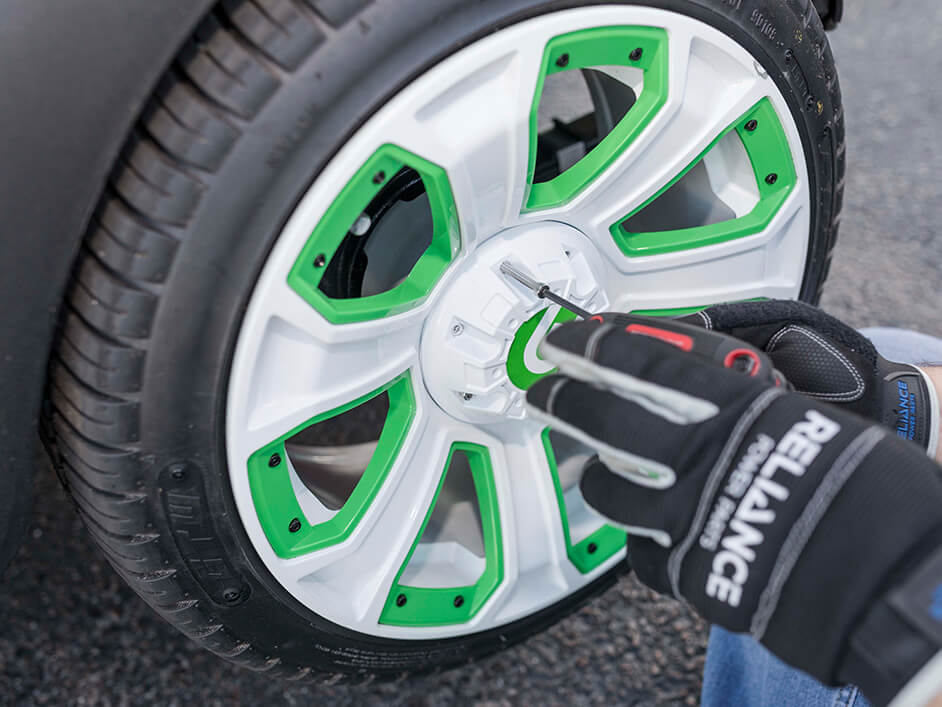
Now, unscrew the loosened lug nuts completely. Keep them in a safe place. Pull the wheel straight off the hub. Sometimes, a wheel can stick due to rust. If so, tap the back of the tire with a rubber mallet.
5. Inspect The Hub And Brakes
Before installing the new tire, check the wheel hub and brake area. Remove dirt or rust with a brush. Look for leaking brake fluid or damaged parts. This is a good time to catch small problems before they get bigger.
6. Mount The New Tire
Lift the new tire and line up the holes with the wheel studs. Push it straight onto the hub. Spin the tire slightly to make sure it seats evenly.
7. Hand-tighten Lug Nuts
Thread the lug nuts back onto the studs by hand. Tighten them in a star pattern (across from each other) to seat the wheel evenly. Don’t use the wrench yet.
8. Lower The Cart
Raise the cart slightly with the jack, remove the jack stands, then lower the cart back to the ground.
9. Tighten Lug Nuts
Now, use the wrench to fully tighten each lug nut. Again, use a star pattern to avoid warping the wheel. If you have a torque wrench, check your cart’s manual for the correct setting (usually around 50-75 ft-lbs).
10. Check Tire Pressure
Use a tire gauge to check the new tire’s pressure. Most golf cart tires need 18-22 psi—but check your owner’s manual for the exact number. Under-inflated or over-inflated tires wear out faster and affect handling.
11. Test Drive
Drive the cart slowly and listen for any strange noises. Stop and check the lug nuts again after a short drive; sometimes they loosen up. If everything feels right, you’re done!
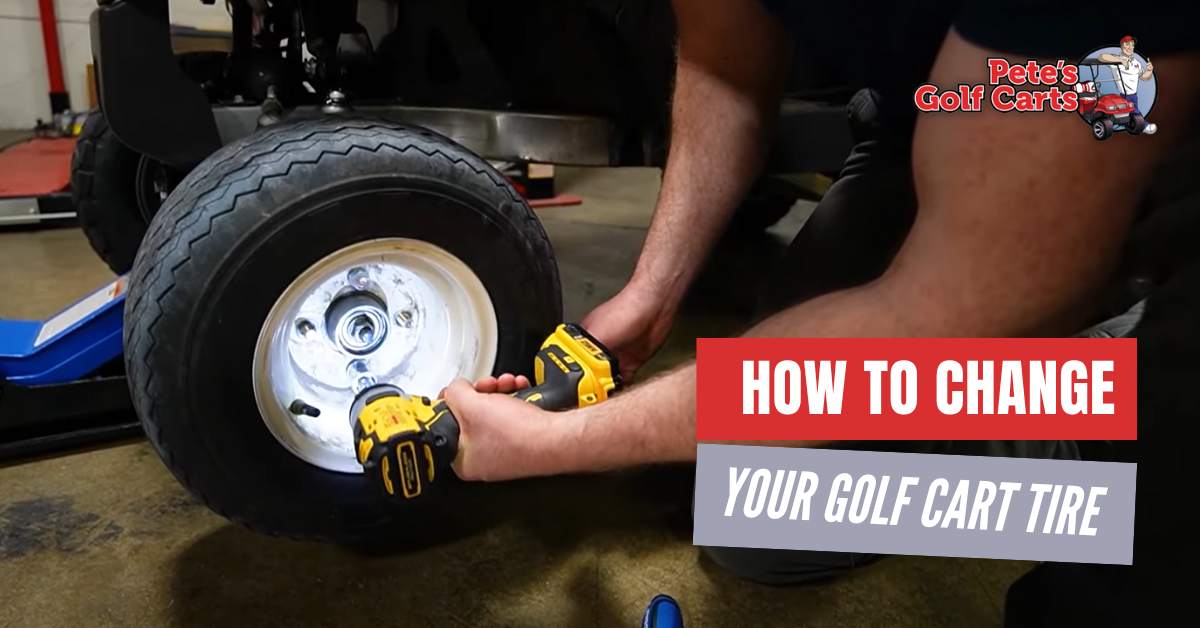
Credit: petesgolfcarts.com
Common Mistakes And How To Avoid Them
Changing a golf cart tire is simple, but some errors can cause trouble:
- Lifting the cart on a slope – This is dangerous. Always use a flat surface.
- Forgetting jack stands – Jacks can fail. Stands are a must.
- Over-tightening lug nuts – This can strip threads or break studs. Tighten snugly, not with all your strength.
- Wrong tire size – Double-check the numbers on your old tire.
- Ignoring wheel alignment – If your cart pulls to one side after changing a tire, get the alignment checked.
How Golf Cart Tires Compare To Other Vehicle Tires
Here’s a quick look at how golf cart tires stack up against car and ATV tires:
| Feature | Golf Cart Tire | Car Tire | ATV Tire |
|---|---|---|---|
| Average Diameter | 8-12 inches | 13-18 inches | 18-25 inches |
| Tread Style | Turf, street, all-terrain | Street, performance, off-road | Knobby, all-terrain, mud |
| Inflation Pressure | 18-22 psi | 30-35 psi | 3-7 psi (off-road) |
| Weight | 10-15 lbs | 20-30 lbs | 15-25 lbs |
Golf cart tires are lighter and use lower pressure than car tires, which makes them gentler on turf but less durable on rough terrain.
How To Choose The Right Replacement Tire
Picking the right tire is more than just matching the size. Think about your main use:
- Turf tires – Best for golf courses, soft on grass.
- Street tires – Good for paved paths and neighborhoods.
- All-terrain tires – Handle gravel, dirt, and trails.
Consider the load rating if you often carry heavy passengers or cargo. The wrong tire can make your cart ride rough or wear out too soon.
Here’s a comparison of the main types:
| Tire Type | Best Use | Pros | Cons |
|---|---|---|---|
| Turf | Golf courses, lawns | Protects grass, smooth ride | Poor on mud or gravel |
| Street | Pavement, concrete | Quiet, long life | Slippery on wet grass |
| All-Terrain | Trails, dirt roads | Good grip, versatile | Can damage lawns |
Most golf carts can use any of these, as long as the wheel size matches. For more details on tire types, check the Wikipedia golf cart page.
Maintenance Tips For Golf Cart Tires
Taking care of your tires keeps them safe and long-lasting:
- Check tire pressure every month.
- Rotate tires every 6-12 months if possible.
- Keep tires clean and free from debris.
- Store your golf cart out of direct sunlight to prevent rubber cracking.
- Inspect for punctures or cuts after every round of golf.
A tip many miss: Always check your valve stems for leaks. These small parts dry out and can let air escape even if your tire looks fine.
What To Do With Old Golf Cart Tires
Don’t just throw old tires in the trash. Many local auto shops or recycling centers accept used tires. Tires contain rubber, steel, and chemicals that can harm the environment if dumped. Some creative people use old tires for garden planters or play areas, but recycling is best for most.
Cost Of Changing A Golf Cart Tire
Doing the job yourself saves money. Here’s a rough breakdown:
| Item | DIY Cost | Shop Cost |
|---|---|---|
| New Tire | $35-$70 | $35-$70 |
| Labor | Free | $20-$40 |
| Total | $35-$70 | $55-$110 |
Most golf cart owners can change a tire in under an hour. If you have the tools, you’ll save money and gain a useful skill.
Credit: www.bennelsongolfcars.com
Troubleshooting: When Things Don’t Go As Planned
Sometimes, the tire won’t come off, or a lug nut is stuck. Here’s what to do:
- Stuck lug nut: Spray with penetrating oil, wait 10 minutes, and try again with a breaker bar.
- Wheel won’t budge: Tap the back with a rubber mallet. Avoid hitting the hub directly.
- Jack won’t lift: Check that it’s rated for your cart’s weight and is on level ground.
- Tire leaks after install: Check for debris on the bead (where the tire meets the rim) and inspect the valve stem.
If you can’t fix the problem, don’t force it. Bring the cart to a qualified mechanic.
Frequently Asked Questions
How Often Should I Change My Golf Cart Tires?
Most golf cart tires last 3-5 years, depending on use and terrain. Check for tread wear, cracks, or sidewall damage every season.
Can I Use Car Tires On My Golf Cart?
No, car tires are too large, heavy, and have the wrong tread for golf carts. Always use tires designed for your cart’s wheel size and type.
Do I Need To Balance Golf Cart Tires?
Balancing is not required for most golf carts, as they travel at low speeds. For carts used on roads or at high speeds, balancing may help reduce vibration.
How Do I Know The Correct Tire Pressure For My Golf Cart?
Check your owner’s manual or the tire sidewall. Most need 18-22 psi. Never guess—too much or too little air affects safety and wear.
Can I Change A Golf Cart Tire Without A Jack?
No. A jack is necessary to lift the cart and remove the wheel safely. Never try to lift a cart by hand or prop it up on unstable objects.
Changing a golf cart tire is a valuable skill that saves time and money. With the right tools and careful steps, you can keep your cart rolling smoothly and safely. Whether you’re a weekend golfer or use your cart daily, knowing how to tackle this simple task means you’ll never be stranded with a flat.
Credit: blog.buggiesunlimited.com