
Putting tire chains on a tractor is one of those tasks many people avoid until it’s absolutely necessary. But if you live in a region with heavy snow or icy conditions, tire chains can make a huge difference. They improve traction, boost safety, and keep your tractor working even in tough weather.
Learning how to install them correctly saves time, prevents damage, and helps you stay productive.
Many beginners think tire chains are confusing or hard to use. Actually, with the right steps and a little preparation, anyone can do it. This guide covers everything you need to know—what chains to use, how to put them on, tips for safe installation, and even mistakes to avoid.
Whether you’re a farmer, landscaper, or just someone who uses a tractor for winter chores, you’ll find practical advice to help you get the job done.
Why Use Tire Chains On A Tractor?
Tractors are powerful, but their tires can slip on snow, ice, or muddy ground. Tire chains add grip by digging into slippery surfaces. This keeps the tractor stable and gives you better control. Using chains is especially important for:
- Clearing snow from roads or driveways
- Hauling heavy loads in winter
- Working on steep hills or uneven terrain
- Protecting tires from excessive spinning
One study from the University of Vermont found that tire chains increase traction by up to 50% on packed snow. This means fewer accidents and less risk of getting stuck. For those who rely on their tractors daily, chains are not just helpful—they’re essential.
Choosing The Right Tire Chains
Not all tire chains are the same. It’s important to pick the right type for your tractor, the conditions, and your tires. Here are the main factors to consider:
Types Of Chains
1. Ladder-style Chains
These are the most common. They look like a ladder across the tire and work well for general use. They’re good for flat surfaces and moderate snow.
2. V-bar Chains
These chains have small V-shaped bars welded to each link. They’re tougher and grip better on ice and packed snow.
3. Double Ring Chains
Made for heavy-duty use. They are durable and designed for tractors working in rough, muddy areas.
4. Diamond Pattern Chains
They provide smoother rides and more even traction. Ideal for tractors used on paved surfaces.
Size And Fit
Always check your tire size before buying chains. The numbers are printed on the tire sidewall. Chains that are too loose can slip off. Chains that are too tight can damage the tire or wheel.
Here’s a simple comparison of chain types and their best uses:
| Chain Type | Best For | Durability | Traction |
|---|---|---|---|
| Ladder-style | General snow, flat ground | Medium | Good |
| V-bar | Ice, packed snow | High | Very Good |
| Double ring | Mud, rough terrain | Very High | Excellent |
| Diamond pattern | Paved surfaces | Medium | Good |
Material Quality
Most chains are made of hardened steel. If you use your tractor often, invest in chains with rust-resistant coatings. This helps them last longer and stay strong through many winters.
Common Mistake
Many people buy chains just based on price. Cheap chains may break or rust quickly. Always check reviews and quality ratings before purchasing.

Credit: www.youtube.com
Preparing Your Tractor And Work Area
Before you start, preparation is key. It makes the process safer and faster. Here’s what you should do:
1. Park On Level Ground
Always park the tractor on a flat surface. This prevents rolling and makes it easier to fit the chains.
2. Turn Off Engine And Set Brakes
Safety first. Shut off the engine, engage the parking brake, and remove the key.
3. Clean Tires
Remove mud, snow, or ice from the tires. Clean tires help the chains fit snugly.
4. Lay Out Chains
Spread the chains flat beside each tire. Check for broken links or twisted sections. Fix any issues before you begin.
5. Tools Needed
You don’t need many tools, but having these helps:
- Gloves (to protect your hands)
- Tire chain tighteners (rubber or metal)
- Pliers (for adjusting links)
- Flashlight (if working in low light)
Here’s a quick summary of preparation steps:
| Step | Purpose | Tools Needed |
|---|---|---|
| Park tractor | Safety & stability | None |
| Clean tires | Better chain fit | Gloves, brush |
| Lay out chains | Check for damage | Pliers |
| Gather tools | Easy installation | Tighteners, flashlight |
Step-by-step Guide: Putting On Tire Chains
Now for the main task. Follow these steps to fit tire chains on your tractor safely.
1. Position The Chains
Lay the chain flat behind or in front of the tire. For rear tires, most people place the chain behind and drive onto it. For front tires, you might roll the chain from the front.
2. Align The Chains
Make sure the cross links are straight and centered. The open ends of the chain should face outward.
3. Roll The Tractor
Slowly drive the tractor forward (or backward) so the tire sits in the middle of the chain. Stop when the chain is evenly spread under the tire.
4. Pull The Chains Up
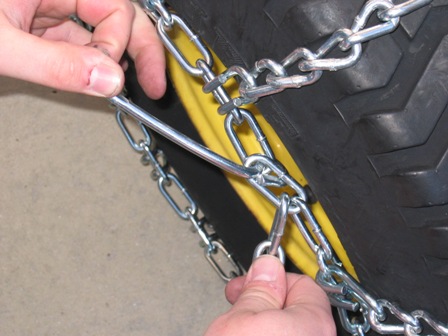
Take the ends of the chain and lift them over the tire. Hook the inside fastener first (the side closest to the tractor), then the outside fastener.
5. Adjust And Tighten
Use chain tighteners to remove slack. If the chain is loose, it can slip or damage the tire. Tighteners help keep the chain in place.
6. Check The Fit
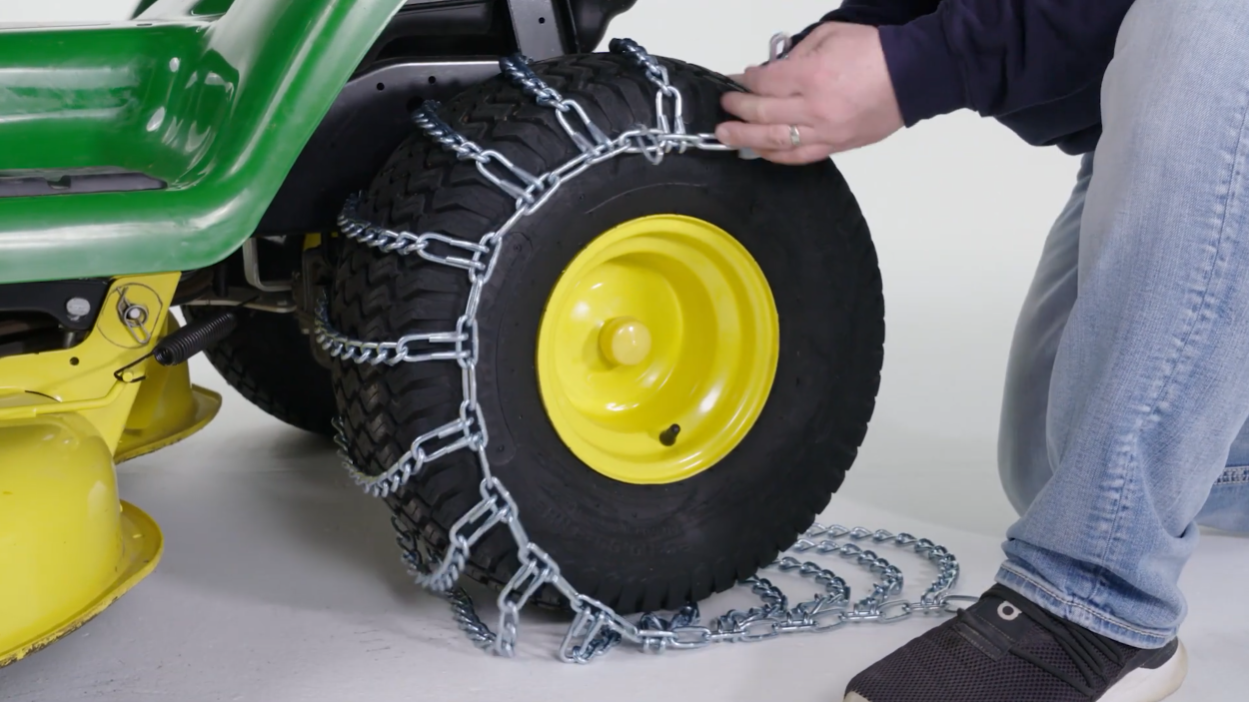
Walk around the tire and look for gaps or twisted links. The chain should sit snugly but not too tight. Adjust as needed.
7. Repeat For Other Tires
If your tractor has chains for both rear tires, repeat the steps. Some tractors need chains only on the rear, but for extra traction, you can fit chains on all four tires.
8. Test Drive
Drive slowly for 20–30 meters. Listen for rattling or clinking noises. If you hear anything odd, stop and recheck the chains.
Practical Example
Let’s say you have a John Deere 5055E tractor with 16.9-28 rear tires. You bought V-bar chains. After cleaning the tires and laying out the chains, you drive onto them, hook the ends, and use rubber tighteners. After a short test drive, the chains stay snug, and you notice much better grip on snow.
Credit: blog.machinefinder.com
Tips For Safe And Efficient Installation
Here are some practical tips to make the process smoother:
- Wear thick gloves. Chains are cold and can scratch your hands.
- Never rush. Take your time to align the chain correctly.
- If chains are too tight, loosen a link or use extension links.
- Always use chain tighteners. They prevent chains from slipping.
- After installing, check chains every hour during the first day. They may loosen as the tires warm up.
- If you need to remove chains, reverse the steps. Never use force—chains should come off easily if installed right.
Mistakes Beginners Often Make
Some common errors can cause problems. Here’s what to avoid:
1. Wrong Chain Size
Always double-check tire measurements before buying.
2. Loose Chains
If chains are not tight, they can damage the tire or even fly off.
3. Skipping Chain Tighteners
Never skip this step. Tighteners are cheap but prevent many issues.
4. Twisted Links
Make sure all links are straight. Twisted chains don’t grip well.
5. Ignoring Maintenance
After use, clean and dry chains before storing. Rusty chains break more easily.
Maintenance And Storage Tips
Taking care of your tire chains means they’ll last for many winters. Here’s how:
- After each use, wash off mud, salt, and snow. Dry chains completely before storage.
- Store chains in a dry, cool place. Hang them up if possible.
- Inspect chains for broken links or rust before each season.
- Lubricate moving parts if the chain has special fasteners.
If you’re unsure about chain care, check the manual or visit reliable sources like TractorData for maintenance info.
Comparing Tire Chains Vs. Alternatives
Some people use other traction devices, such as tire studs or snow tires. Here’s a quick comparison:
| Traction Device | Best For | Cost | Ease of Installation |
|---|---|---|---|
| Tire chains | Heavy snow, ice | Medium | Moderate |
| Snow tires | Light snow | High | Easy |
| Tire studs | Ice | Low | Hard |
While snow tires are good for cars, tractors need the extra grip of chains in most winter conditions.
Credit: www.tirechainsrus.com
Frequently Asked Questions
How Do I Know Which Tire Chain Size Fits My Tractor?
Check the numbers on your tire’s sidewall. Match these with the chain size recommended by the manufacturer. If unsure, ask your dealer or check the manual.
Can I Use Car Tire Chains On A Tractor?
No. Tractor tires are larger and heavier. Car chains won’t fit well and may break. Always use tractor-specific chains.
Do I Need Chains On Both Rear And Front Tires?
Usually, chains on rear tires are enough. If you work on steep or slippery ground, chains on all four tires give extra grip.
How Fast Can I Drive With Tire Chains?
Keep speed below 30 km/h (18 mph). Higher speeds can cause chains to break or slip off.
How Often Should I Check My Tire Chains?
Check chains after the first hour of use, then every few hours. Look for loose links, damage, or rust.
Putting tire chains on your tractor may seem hard at first, but with the right steps, it becomes easy and safe. Remember, preparation is key—take your time, use the proper tools, and check your work. Investing in good chains and maintaining them well means you’ll stay safe and productive, even in tough winter conditions.
With this guide, you’re ready to tackle snow and ice like a pro.