Flat tires always seem to happen at the worst time—on your way to work, during a road trip, or late at night. When you see that low-pressure warning or hear that telltale thumping, the big question is: should you patch the tire or plug it? These two repair methods are common, but each comes with its own pros, cons, and best-use cases. Choosing the right solution can mean the difference between a safe, long-lasting repair and a risky quick fix.
This guide will help you fully understand the difference between patching and plugging a tire. We’ll look at how each method works, when to use them, and what can go wrong if you pick the wrong one. Along the way, you’ll get practical tips, real-world examples, and honest advice. Whether you’re a car owner, a DIY enthusiast, or just want to avoid getting stranded, this article will help you make the right call the next time you face a flat.
What Is Tire Plugging?
Plugging a tire is a fast way to seal a puncture from the outside without removing the tire from the wheel. The process uses a sticky, flexible material (usually a rubber strip) that fills the hole and blocks air from escaping.
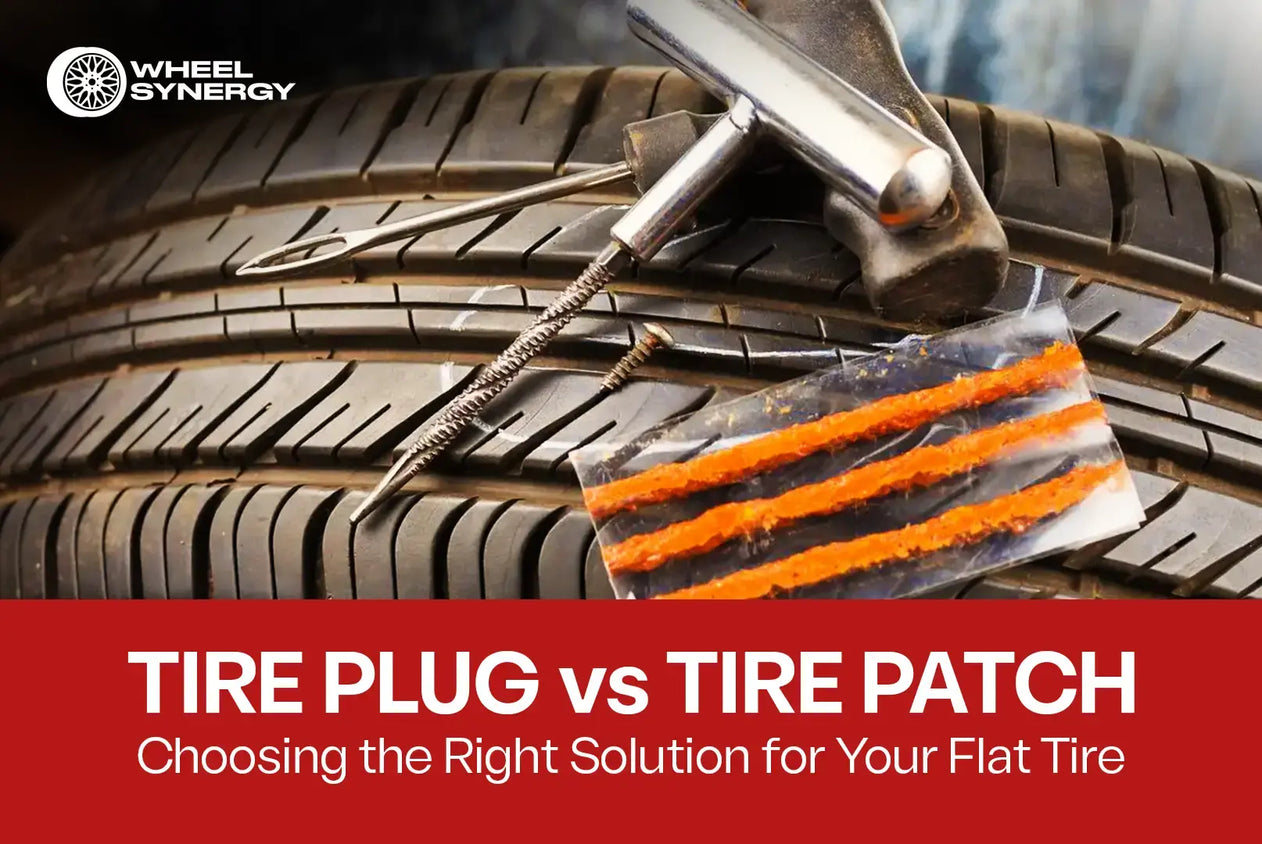
A tire plug is inserted into the puncture with a special tool. After the plug is pushed in, it expands and seals the area. The tire is then trimmed flush with the tread. This repair can be done in minutes, often by the roadside. Many drivers carry a tire plug kit for emergencies.
How Tire Plugging Works
- Find the puncture: Locate the object (nail, screw, etc.) Causing the air leak.
- Remove the object: Pull it out with pliers.
- Prepare the hole: Use a reaming tool to clean and roughen the hole.
- Insert the plug: Thread the plug into the tool, push it into the hole, then pull out the tool—leaving the plug in place.
- Trim excess: Cut off any plug sticking out of the tread.
When Plugging Is Used
Plugging is often chosen for:
- Small punctures (usually less than 1/4 inch in diameter)
- Tread area only (not sidewalls or shoulders)
- Quick, roadside repairs
- Temporary fixes until a professional repair
Plugging is fast and requires simple tools, but it’s not always the best choice for long-term safety.
What Is Tire Patching?
Patching a tire is a more thorough repair method. It involves removing the tire from the wheel and applying a patch to the inside surface. The patch is glued with a strong adhesive, sealing the hole from within and reinforcing the tire structure.
Patching requires more time and special equipment. It’s usually done in a tire shop, but some skilled DIYers do it at home with the right tools.
How Tire Patching Works
- Remove the tire: Take the wheel off the car and deflate it.
- Dislodge the tire: Use a tire changer or pry bars to separate the tire from the rim.
- Locate and mark the puncture: From inside, find the entry point and mark it.
- Buff and clean: Roughen the area around the puncture and clean it to help the adhesive bond.
- Apply vulcanizing cement: Spread glue over the area.
- Attach the patch: Place the patch and press firmly to seal.
- Reinstall the tire: Mount the tire back on the rim, inflate, and check for leaks.
When Patching Is Used
Patching is best for:
- Small to medium punctures (up to 1/4 inch)
- Tread area only
- Long-lasting, durable repairs
- Professional tire service shops
Patching offers a stronger and safer repair, especially for the long term.
Key Differences Between Patching And Plugging
Understanding the main differences helps you decide which method to use. Here’s a clear comparison:
| Feature | Patching | Plugging |
|---|---|---|
| Repair Location | Inside the tire | From outside the tire |
| Time Required | 30-60 minutes (shop) | 5-10 minutes (roadside) |
| Tools Needed | Tire changer, patch kit, adhesive | Plug kit, pliers |
| Durability | High (long-term) | Moderate (often temporary) |
| Cost | Higher ($20–$40 at a shop) | Lower ($5–$10 DIY kit) |
| Skill Level | Professional/advanced DIY | Beginner/DIY friendly |
Plugging is quick and easy, but not as strong. Patching is more involved, but lasts longer and is safer.
Pros And Cons Of Plugging A Tire
Plugging is popular for its speed and simplicity, but it comes with limitations.
Pros
- Fast Repair: A plug can be installed in minutes. Ideal for emergencies.
- Easy to Use: No need to remove the wheel. Most people can do it with a kit.
- Low Cost: Plug kits are cheap. Many come with several plugs and tools.
- Portable: You can keep a kit in your car for quick fixes.
Cons
- Temporary Solution: Plugs are not as durable as patches. They can fail, especially in hot or wet conditions.
- Limited to Tread Area: Plugs should never be used on sidewalls or close to the tire’s edge.
- Not for Large Holes: Only works for small punctures. Larger holes may reopen.
- Possible Slow Leaks: A poorly installed plug may not seal perfectly, leading to slow air loss.
- Invisible Internal Damage: Plugging doesn’t let you check the inside for hidden damage.
Pros And Cons Of Patching A Tire
Patching is the gold standard for many tire shops, but it also requires more effort.
Pros
- Long-Lasting Repair: Patches bond well and last for the tire’s life if done right.
- Stronger Seal: Seals from inside, reducing the risk of leaks.
- Can Inspect Internal Damage: Removing the tire lets you spot splits, sidewall damage, or other problems.
- Safe for Higher Speeds: Patches are safer for highway driving.
Cons
- Takes More Time: Removing and remounting the tire is labor-intensive.
- Needs Special Tools: Not all drivers have the equipment at home.
- Higher Cost: Professional repair costs more than plugging.
- Not Always DIY-Friendly: Mistakes can ruin the patch or the tire.
When To Patch And When To Plug
The type of repair you choose should depend on the puncture’s location, size, and your needs.
Plugging Is Best For:
- Nail or screw in the center tread
- Puncture smaller than 1/4 inch (6mm)
- No sidewall or shoulder damage
- Quick, emergency fixes
Plugging is ideal if you need to get moving again fast, but you should still have the tire checked and patched later.
Patching Is Best For:
- Punctures in the tread
- Long-term repair
- Puncture smaller than 1/4 inch
- Willing to spend more time or money
Patching should be your choice if you want maximum safety and durability.
Never Patch Or Plug If:
- The puncture is in the sidewall or shoulder
- The hole is larger than 1/4 inch
- The tire has visible splits, bubbles, or cords showing
- The tire is worn out (tread below 2/32 inch)
In these cases, replace the tire. Driving on a badly damaged or wrongly repaired tire is dangerous.
How Long Will A Plug Or Patch Last?
A big concern for drivers is how long the repair will hold.
- Plugged tires: May last a few days to a few months. Some last the life of the tire, but many fail sooner—especially if installed incorrectly.
- Patched tires: Often last the life of the tire if professionally done. Many tire shops offer warranties on patch repairs.
Non-obvious insight: Even if a plug holds, repeated plugging can weaken the tire. More than two plugs in the same tire is risky and not recommended.
Another insight: Driving at high speeds or overloading the car increases the chance of a plug failing. Patches are more reliable under stress.
Real-world Examples
Let’s look at some common scenarios:
- Scenario 1: You find a nail in your tire at a gas station. The puncture is small and right in the center tread. You use a plug kit and drive home. This is fine as a temporary fix, but plan to visit a tire shop soon for inspection and a patch.
- Scenario 2: You get a slow leak, remove the tire, and discover a small hole. You patch it from the inside. The tire holds air for months, and you drive safely at highway speeds.
- Scenario 3: Your tire has a slash on the sidewall. Neither plugging nor patching is safe. The tire must be replaced.
Step-by-step: How To Plug A Tire
If you need to plug a tire yourself, follow these steps for the best chance of success:
- Find the puncture: Spray soapy water and look for bubbles.
- Remove the cause: Use pliers to pull out the nail or screw.
- Ream the hole: Use the tool in your kit to roughen and widen the hole.
- Prepare the plug: Thread a sticky rubber plug into the insertion tool.
- Insert the plug: Push it fully into the hole, then pull the tool out.
- Trim the plug: Cut off the excess flush with the tread.
- Check for leaks: Inflate the tire and spray soapy water again.
- Monitor tire pressure: Check every few days until you’re sure it’s holding.
Tip: Avoid using plug kits on the sidewall, or if the hole seems jagged or irregular.
Step-by-step: How To Patch A Tire
If you want to patch a tire and have the tools, here’s what to do:
- Remove the wheel: Use a jack and lug wrench.
- Deflate the tire: Remove the valve core.
- Break the bead: Use a bead breaker or pry bars to separate the tire from the rim.
- Mark the puncture: Locate from inside and mark with chalk.
- Buff the area: Use a buffer to roughen a spot slightly larger than the patch.
- Clean the area: Wipe with rubber cleaner.
- Apply adhesive: Spread vulcanizing cement on the buffed area.
- Place the patch: Press firmly, working out air bubbles.
- Reassemble the tire: Put the tire back on the rim, inflate, and balance.
- Check for leaks: Spray soapy water.
Pro tip: Use a combination patch-plug for best results. This product fills the hole and seals the inside, combining both methods’ strengths.
Cost Comparison: Patching Vs Plugging
How much you’ll pay depends on who does the work and where.
| Repair Type | DIY Cost | Shop Cost | Time Needed |
|---|---|---|---|
| Plugging | $5–$10 (kit) | $15–$30 | 5–10 min |
| Patching | $10–$20 (kit) | $20–$40 | 30–60 min |
| Replace Tire | – | $70–$200+ | 30–60 min |
Plugging is cheaper and faster for DIY. Patching costs more, but is worth it for peace of mind, especially for valuable or high-speed tires.
Safety Considerations
Tire repairs are about more than just stopping a leak—they’re about keeping you safe on the road.
Key safety points:
- Never try to repair a sidewall or shoulder puncture. The sidewall flexes a lot and can fail suddenly.
- Don’t repair holes larger than 1/4 inch. Large holes mean major structural damage.
- Always check for hidden internal damage before patching.
- Avoid stacking repairs. Multiple plugs or patches weaken the tire.
- After a repair, check tire pressure regularly. Any drop means the repair may be failing.
Remember, your tires are the only thing between your car and the road. Don’t take risks with questionable repairs.

Credit: www.sullivantire.com
Environmental Impact
Every year, millions of tires are replaced because of small punctures. Repairing tires when possible saves money and reduces waste. However, a poorly repaired tire can cause blowouts or accidents, leading to more environmental and personal harm.
Insight: Patching extends tire life and reduces landfill use, but only when the repair is done right. Plugging may seem eco-friendly, but if the repair fails and you need a new tire, the impact increases.
Professional Recommendations
Most tire professionals and organizations, like the U.S. Tire Manufacturers Association, recommend patching (or a patch-plug combination) for any repair that’s meant to last. Plugging is only for emergencies and should be checked by a pro as soon as possible.
For more on tire repair standards, see this National Highway Traffic Safety Administration resource.

Credit: www.sullivantire.com
Common Mistakes To Avoid
- Using a plug on the sidewall: Dangerous. The sidewall is too flexible.
- Failing to inspect inside: Punctures can cause internal splits or bubbles.
- Not trimming the plug: Excess rubber can catch on the road and pull out.
- Over-inflating after repair: Can stress the repair and cause leaks.
- Ignoring slow leaks: A good repair should hold pressure. If it doesn’t, get it checked.
Which Is Right For You?
The answer depends on your situation:
- If you need to drive immediately and the puncture is small and in the tread, a plug is OK for a short distance.
- If you want a reliable, long-term fix, patching is worth the time and cost.
- For best results, ask for a combination patch-plug. Many shops use these for both a tight seal and reinforcement.
Tip: Always check your spare and keep a tire repair kit in the car. Even the best patch or plug can fail, so being prepared is smart.
Credit: www.wheelsynergy.com
Frequently Asked Questions
What’s Safer: Patching Or Plugging A Tire?
Patching is generally safer because it seals from the inside and lets you check for hidden damage. Plugging is quick but less reliable, especially at highway speeds.
Can You Plug A Tire More Than Once?
It’s not recommended. Each new plug weakens the tire. More than two plugs in one tire raises the risk of a blowout.
How Long Can I Drive On A Plugged Tire?
A plug can last days to months, but it’s best to see it as a temporary fix. Get the tire patched or replaced as soon as you can.
Will A Patched Tire Last As Long As A New One?
A properly patched tire can last the rest of its usable life, as long as the repair is in the tread and done correctly.
Is It Safe To Patch A Run-flat Tire?
Most experts say no. Run-flat tires have special sidewall construction that can be damaged by driving while flat. Always follow the manufacturer’s advice for repairs.
Dealing with a punctured tire can be stressful, but knowing the difference between patching and plugging a tire empowers you to make a safe, informed choice. Plugging is quick and can get you back on the road fast, but patching offers more safety and durability. Remember, where the puncture is, how big it is, and your driving needs all play a role. When in doubt, consult a professional. Proper repair not only saves money—it protects you and everyone else on the road. Stay safe and keep your tires in top condition.