When winter arrives and roads turn icy, the question of safe driving becomes urgent for millions of drivers. In snowy areas, people look for ways to keep control of their cars and avoid accidents. Two popular tools for this are snow tire socks and chains. Both are designed to help tires grip slippery roads, but they are very different in how they work, how easy they are to use, and what situations they fit best. If you are new to winter driving or just want to find the best solution for your car, understanding these differences is key.
In this article, you’ll get a clear, complete look at snow tire socks vs chains. You’ll learn how each works, their strengths and weaknesses, and the real-world situations where they shine or fall short. With data, expert tips, and practical examples, you’ll be ready to choose the right option for your safety and peace of mind.
What Are Snow Tire Socks?
Snow tire socks are fabric covers you slip over your tires when facing snow or ice. They’re made from strong, high-friction textiles, often polyester, that increase grip between your tire and the road. The main idea is simple: by adding a rough surface to your tire, you reduce the chance of slipping.
Most snow socks are lightweight and foldable. They fit in your trunk easily and can be installed in just a few minutes, even if you’re not strong or handy. Some brands use advanced weaving patterns to add extra strength and durability.
People often choose snow socks because they are:
- Easy to put on and take off
- Quiet when driving
- Less likely to damage roads or tires
But, snow socks also have limits. They wear out faster than chains, especially if used on dry pavement, and they may not be legal everywhere. For some drivers, especially those in cities or with short commutes, they offer a simple, practical solution.
What Are Snow Chains?
Snow chains are metal links that wrap around your tires, creating a tough, grippy surface. They have been used for decades and are still the standard in many snowy regions. The metal links bite into ice and snow, offering strong traction on even the steepest, most slippery roads.
Chains come in different styles: ladder, diamond, or cable. Some are heavy-duty for trucks and SUVs; others are lighter for passenger cars. Installing chains takes more effort and time compared to socks, and you’ll need to check your car’s manual to make sure your tires have enough space for them.
Drivers choose chains when they need:
- Maximum grip in deep snow or on ice
- A solution for mountain roads or severe conditions
- A tool that works for long distances
Chains are tough but not perfect. They can be noisy, rough, and may damage roads or car parts if not used correctly. Many areas have rules about when and where you can use chains, so always check local laws before driving.

Credit: www.youtube.com
How Snow Tire Socks Work
Snow socks use fabric technology to boost grip. The textile fibers create thousands of small edges that press into the snow and ice. This helps the tire “bite” the surface better, reducing slips.
When you drive, the sock stays in place due to the tension between the tire and the road. The snow also freezes to the fabric, adding more grip. Some advanced socks use water-absorbing materials to remove the thin layer of water that forms on ice, which is often the real reason tires slide.
One non-obvious point: snow socks work best at lower speeds (usually below 30 mph or 50 km/h). They are not meant for highway driving. Also, they are less effective in very deep snow, where the tire may not touch the road at all.
How Snow Chains Work
Chains use hard metal links that dig into snow and ice. When you drive, each link presses into the slippery surface, breaking through the ice and giving the tire something to grip. This is why chains are trusted in mountain passes and on steep hills.
Some chains have extra studs or spikes for even more traction. The pattern of the chain (ladder, diamond, etc. ) Affects how smooth your ride is and how much grip you get when turning. Diamond patterns, for example, give good traction in corners as well as straight lines.
A detail beginners miss: chains need to be installed tightly. If they are loose, they can hit your car’s fenders or brakes, causing damage or even coming off. Always check fit before driving.
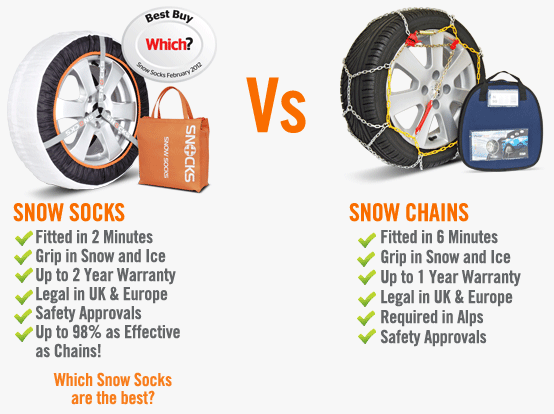
Head-to-head: Snow Tire Socks Vs Chains
Let’s compare the two options side by side. The table below shows the main differences.
| Feature | Snow Tire Socks | Snow Chains |
|---|---|---|
| Traction | Good for light/medium snow | Excellent in deep snow/ice |
| Noise/Vibration | Very quiet | Noisy, can cause vibration |
| Installation Time | 2-5 minutes per tire | 5-15 minutes per tire |
| Durability | Wears out quickly on dry roads | Lasts longer, even on rough snow |
| Road Damage | Safe for all surfaces | Can damage roads if used incorrectly |
| Legal Status | Not always legal in all states/countries | Required in some regions |
| Storage | Small and light | Heavy and bulky |
| Speed Limit | Usually up to 30 mph (50 km/h) | Usually up to 30 mph (50 km/h) |
| Cost | Moderate ($40–$120 per set) | Varies widely ($50–$200 per set) |
When Should You Use Snow Tire Socks?
Snow socks are best for drivers who:
- Face sudden or short snowfalls
- Drive mostly in cities or on plowed roads
- Want a quick, easy solution
- Need something safe for delicate wheels or low-clearance cars
For example, if you live in a city that gets a few snow days each winter, socks are handy. You can store them in your trunk and slip them on if you get caught in a storm. Some cars, like sports models or those with very tight wheel wells, can’t fit chains at all—socks may be the only option.
A practical tip: always check your car’s manual or ask your dealer before buying socks. Some cars have sensors or systems that don’t work well with any tire covers.
When Should You Use Snow Chains?
Chains are the right choice if:
- You drive in mountains or rural areas with deep snow
- You face ice and slush often
- Local laws require chains (some places only accept chains, not socks)
- You need maximum safety on dangerous roads
If you travel to ski resorts, mountain passes, or anywhere chains are mandatory, you must use them. Chains also work better for trucks, vans, and larger vehicles carrying heavy loads.
A common mistake: people try to use chains on dry or mostly clear roads. This can damage the road, your tires, and even your suspension. Always remove chains as soon as you reach clear pavement.
Legal Requirements And Local Laws
Rules for winter traction devices change by country, state, and even by road. In some places, chains are required during heavy snow, but socks are not accepted. In others, either is fine if they meet certain standards.
For example:
- In the United States, many mountain passes require “chains on board” during winter. Some states accept snow socks if they’re certified.
- In Europe, rules are stricter. Austria, Switzerland, and France often require chains in the Alps, but may accept certified textile devices.
- In Japan, chains are required in some regions and snow socks are not always allowed.
Always check local laws before traveling. Police may fine you or stop you from driving if you don’t have the right equipment.
Installation: Step-by-step Comparison
Understanding how to install each device is important for safety and speed. Here’s a side-by-side look.
| Step | Snow Tire Socks | Snow Chains |
|---|---|---|
| Preparation | Lay socks flat, shake out any twists | Untangle chains, lay them flat |
| Placement | Pull sock over top of tire, adjust around sides | Drape chain over tire, connect at back and front |
| Adjustment | Drive forward a few feet to self-center | Tighten with tensioner or by hand, check fit |
| Removal | Slip off and fold; can be done easily with gloves | Unhook, remove carefully, avoid tangling |
Snow socks are usually faster and cleaner to install, especially in cold weather. Chains can be tricky, especially if your hands are cold or if snow is deep around your tires.
Durability And Maintenance
Snow tire socks are not built for long-term use. Most last for a few uses, especially if you drive over dry patches. The textile can tear on sharp stones or rough asphalt. Always inspect for damage before each use. It’s smart to carry a spare set if you drive in snow often.
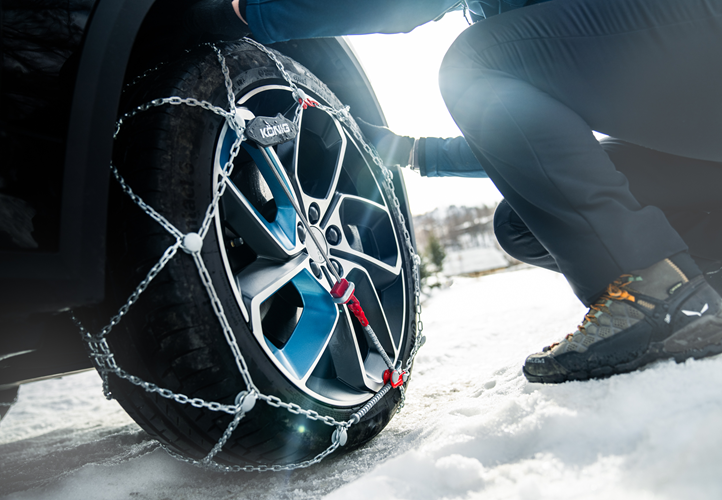
Chains are much tougher. High-quality models can last for years if cared for. After each use, rinse off salt and grit, then dry before storing. Chains can rust if left wet. Check for broken links before every use.
A detail many miss: both socks and chains wear faster if you spin your tires. If you get stuck, avoid flooring the gas pedal—this can shred fabric or break metal.
Credit: www.autoevolution.com
Ride Comfort And Handling
Driving with snow socks feels almost like driving on regular tires. They’re quiet and smooth, with very little vibration. This is one reason people in cities and with small cars prefer them.
Chains, on the other hand, make noise and can cause the car to shake, especially at higher speeds. Turning can feel rough, and stopping distances are longer. However, the grip is much better in tough conditions.
If you value comfort and have only light snow, socks win. If you need the best possible grip, chains are worth the rougher ride.
Cost And Value
Prices for both products vary by brand, size, and quality.
- Snow tire socks: Usually $40–$120 per set for common cars. Some high-end brands cost more, but most are affordable. Remember, you may need to replace them often.
- Snow chains: Range from $50 to $200 or more per set. Heavy-duty chains for SUVs or trucks can be expensive but last longer.
While socks are cheaper up front, chains may offer better value if you drive in snow every winter. Don’t forget to budget for extras like storage bags, gloves, or replacement parts.
Vehicle Compatibility
Not every car can use both socks and chains. Some vehicles, especially sports cars or those with little space between the tire and wheel well, cannot fit chains. Snow socks are often the only option for these cars.
Check your owner’s manual or ask a mechanic if you’re unsure. Some tire sizes are also hard to fit with standard chains, and you may need to order custom models.
A practical insight: many rental cars in snowy regions come with socks, not chains, because they fit more vehicles and are easier for drivers to use.
Environmental Impact
Snow tire socks are gentler on roads, especially concrete or brick. They don’t scratch or chip the surface, and they make less noise, reducing urban sound pollution. However, socks are not recyclable in most places and must be thrown away when worn out.
Chains can damage roads if used without enough snow, leading to costly repairs. Metal fragments may also end up in the environment. But, chains last longer and can often be recycled at the end of their life.
If you want an eco-friendly choice, use socks for occasional, light snow, and avoid chains unless truly needed.
Real-world Examples
Imagine you’re driving in a city that gets a sudden snowstorm. The roads are plowed but still slippery. You pull out your snow socks and slip them on in minutes. You get home safely and take them off before the roads clear, avoiding any damage to your tires or the road.
Now picture a trip to a mountain ski resort. The roads are covered in deep snow and ice, with sharp turns and steep hills. Police check your car and only allow chains. You install your chains and drive slowly but safely up the mountain.
Both tools have their place, but the right choice depends on your situation, car, and local laws.
Common Mistakes To Avoid
- Driving too fast with either device. Both have speed limits (usually 30 mph / 50 km/h).
- Leaving socks or chains on dry pavement. This quickly destroys them and can damage your car.
- Not checking fit before snow season. Try installing at home first, not for the first time on a cold, snowy road.
- Ignoring local laws. You can be fined or turned away at checkpoints.
- Not carrying gloves or a mat. Installing in snow is cold and messy without protection.
Making Your Decision: Key Questions
Before buying, ask yourself:
- How often do I drive in snow?
- Are there legal requirements where I live or travel?
- Does my car have space for chains?
- Do I want comfort, or do I need maximum grip?
- Am I willing to replace socks often, or do I want long-lasting chains?
If you are still unsure, talk to a local tire shop or mechanic. They know the best options for your area and vehicle.
Choosing The Right Brand And Model
Not all socks or chains are the same. Look for:
- Certification (like TÜV in Europe or SAE in the U.S.)
- Good reviews from real users
- Clear sizing guides
- Warranty or replacement policy
Avoid very cheap, unbranded products. They may not fit well or last long. For more information on tire traction devices, you can visit Wikipedia’s snow chain page.
Future Trends: What’s Changing?
Manufacturers are working on new materials and designs. Some snow socks now have stronger fibers that last longer. Chains are getting lighter and easier to install, with self-tensioning systems that save time. In some countries, “hybrid” devices mix textile and metal for better grip and easier use.
Car technology is also changing things. Electric cars often have less space for chains, so socks are becoming more popular. Some new tires have built-in “traction strips,” but they are still rare and costly.
Keep an eye on new developments if you want the latest and best safety tools.
Frequently Asked Questions
Are Snow Tire Socks Legal Everywhere?
No, snow tire socks are not accepted in all countries or states. Some regions require metal chains, especially on mountain roads. Always check local rules before you travel.
How Long Do Snow Socks And Chains Last?
Snow socks usually last for a few uses, especially if used on dry or rough roads. Chains can last many winters if used and stored properly. Both wear out faster if you spin your tires or use them on bare pavement.
Can I Use Socks Or Chains On All Four Tires?
Yes, but always follow your car’s manual. For front-wheel drive, install on the front tires. For rear-wheel, install on the rear. For all-wheel drive, most experts suggest all four tires for best safety.
Do Socks Or Chains Fit All Vehicles?
Not always. Some cars have very little space for chains, and some tire sizes are hard to match. Snow socks fit more cars, but always check compatibility before buying.
Which Is Safer: Snow Socks Or Chains?
Chains give better grip in deep snow and ice, making them safer in tough conditions. Snow socks are safe for light snow and city driving but are not as strong in extreme weather. Choose based on your driving needs and local laws.
Driving in winter doesn’t have to be risky if you prepare well. By understanding the strengths and limits of snow tire socks vs chains, you can make the best choice for your safety, comfort, and car. Whether you pick socks, chains, or both, smart planning is your best defense against winter’s toughest roads.
Credit: www.snowchains.com