Choosing the right tires for your vehicle is a bigger decision than many people realize. When you’re looking at tire options, you’ll often see ratings like C or E printed on the sidewalls. These letters might seem confusing at first, but they have a big impact on how your car, truck, or trailer will perform—especially if you haul heavy loads or drive in tough conditions. Understanding the difference between C vs E rated tires can save you money, improve safety, and help your vehicle last longer.
This guide explains everything you need to know about C and E rated tires. You’ll learn what the ratings mean, how they affect load capacity and performance, and which type is right for your needs. We’ll look at real-world examples, common mistakes, and practical tips that go beyond the basics.
By the end, you’ll be confident in picking the right tire for your situation, without wasting time or money.
What Do Tire Load Ratings Mean?
Tires are not all made the same. Each tire has a load rating, which tells you how much weight it can safely carry. The most common ratings you’ll see for light trucks, vans, and trailers are C, D, and E. For now, let’s focus on the differences between C rated tires and E rated tires.
A tire’s load rating is not just a suggestion—it’s a safety standard. If you overload a tire, it can overheat, wear out faster, or even fail while driving. That’s why manufacturers put these ratings on every tire.
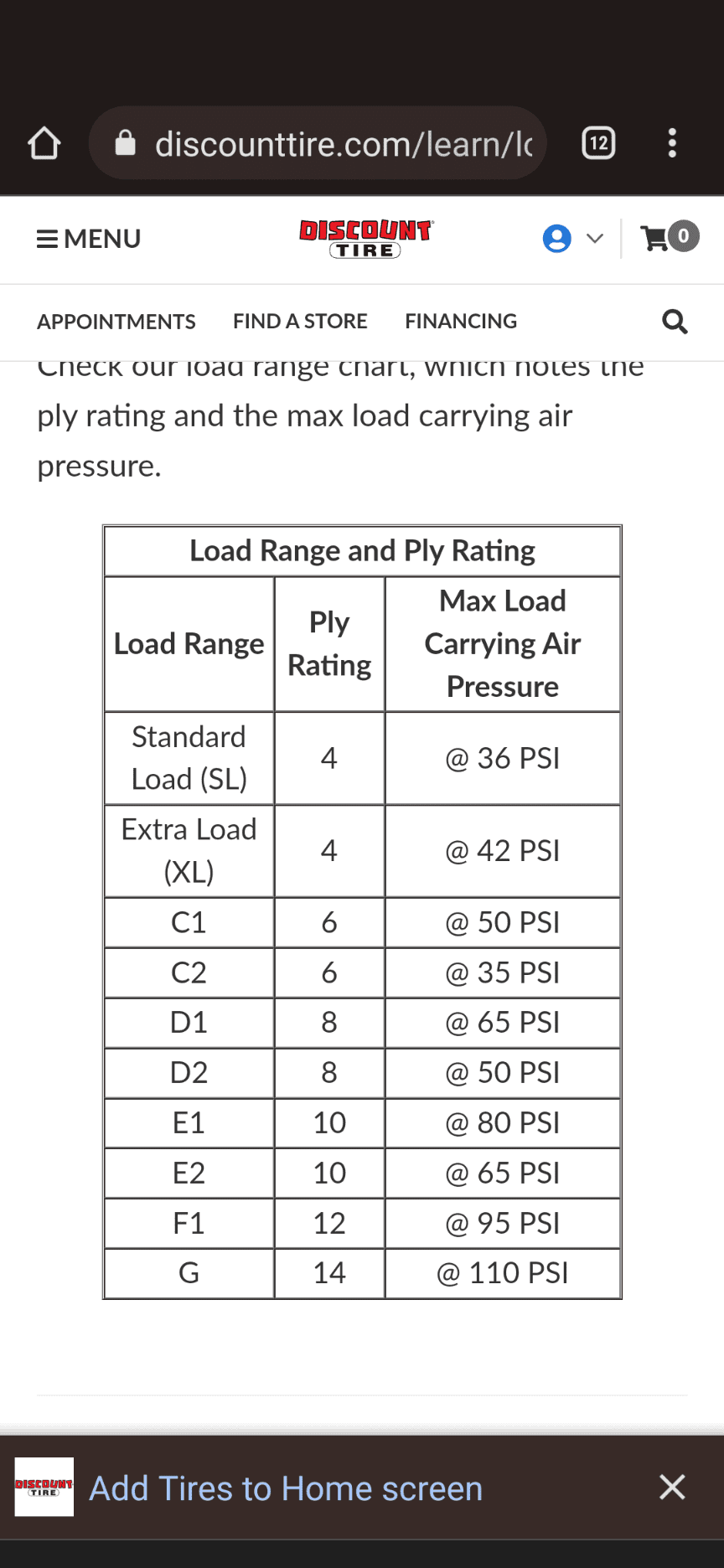
Load ratings are often shown as letters, but there’s more to the story. Each letter actually refers to a ply rating—a historical way of describing how many layers of material (plies) were used inside the tire. Today, tires are made with advanced materials, so the number of plies isn’t as important as it used to be. But the letter ratings have stuck around as an easy way to compare tire strength.
C Rated Tires: Features And Uses
C rated tires are commonly found on light trucks, vans, and small to medium trailers. They’re designed for moderate loads and everyday driving.
- Ply rating: 6-ply (nowadays, may not have six actual plies)
- Typical maximum load: About 1,820 lbs (825 kg) per tire at 50 psi (may vary by brand)
- Recommended pressure: 50 psi (pounds per square inch)
These tires are a good choice for:
- Daily driving: If you mostly use your truck or van for groceries, commuting, or light hauling, C rated tires are usually enough.
- Light towing: Small trailers, pop-up campers, or utility trailers under 3,000 lbs often use C rated tires.
- Comfort: Because they don’t need to be as stiff as higher-rated tires, C rated tires often provide a smoother, quieter ride.
Real-world Example
Imagine you drive a mid-size pickup and occasionally haul mulch or a small boat. You don’t carry heavy loads every day. C rated tires will give you enough strength without sacrificing ride comfort or fuel economy.
Key Insights For Beginners
- C rated tires cost less than E rated models, and usually last longer if you don’t overload them.
- If you upgrade to E rated tires on a vehicle that doesn’t need them, you may notice a rougher ride and lower gas mileage.

Credit: www.reddit.com
E Rated Tires: Features And Uses
E rated tires are designed for much heavier loads. You’ll see them on larger trucks, 3/4 ton and 1-ton pickups, big trailers, and commercial vans.
- Ply rating: 10-ply (again, not always literal, but means very strong)
- Typical maximum load: About 3,042 lbs (1,380 kg) per tire at 80 psi (varies by brand)
- Recommended pressure: 80 psi
E rated tires are best for:
- Heavy towing: If you pull a large travel trailer, horse trailer, or equipment, you need the strength of E rated tires.
- Work trucks: Construction vehicles, delivery vans, and trucks carrying tools or materials often use E rated tires.
- Off-road use: When you drive on rough roads, rocks, or gravel, the extra strength helps prevent punctures.
Real-world Example
If you have a Ford F-250 and regularly tow a 10,000 lb fifth-wheel camper, E rated tires are not optional—they’re necessary for safety and legal reasons.
Key Insights For Beginners
- E rated tires are stiffer. This means they may ride rougher on city streets, especially if you don’t keep them fully loaded.
- You must run E rated tires at higher pressure to get the full load capacity. Running them under-inflated is dangerous and defeats their purpose.
Side-by-side Comparison: C Vs E Rated Tires
To make things clearer, here’s a direct comparison of key specs between common C and E rated tires:
| Feature | C Rated Tire | E Rated Tire |
|---|---|---|
| Load Range | C | E |
| Ply Rating | 6 | 10 |
| Max Load (per tire) | ~1,820 lbs | ~3,042 lbs |
| Max PSI | 50 psi | 80 psi |
| Typical Use | Light trucks, small trailers | Heavy trucks, big trailers |
| Ride Comfort | Smoother | Stiffer |
| Price | Lower | Higher |
Notice how E rated tires handle almost double the weight of C rated tires. But they come with a trade-off in comfort and price.
How To Choose: C Vs E Rated Tires
Picking between C and E rated tires is not just about “bigger is better.” You need to match your choice to your real needs. Here’s how to decide:
- Check Your Vehicle’s Manual
- Every car, truck, or trailer has a recommended tire load rating. Don’t go below this number.
- Upgrading is only smart if you actually need more capacity.
- Know Your Maximum Load
- Calculate the most you’ll ever carry or tow. Don’t forget passengers, cargo, and trailer tongue weight.
- If your total weight per tire gets close to the C rating, it’s safer to step up to E rated tires.
- Consider Driving Conditions
- For mostly city or highway driving, C rated tires are usually enough unless you haul big loads.
- For rough roads, construction, or long hot trips, E rated tires offer extra safety.
- Think About Comfort and Cost
- E rated tires last longer under heavy use but can ride harshly when unloaded.
- C rated tires are more comfortable and use less fuel.
Common Mistakes To Avoid
- Don’t buy E rated tires “just in case” if you never haul big loads. They cost more and reduce comfort.
- Never run tires below their recommended pressure. Under-inflated E rated tires can overheat and fail.
- Don’t mix load ratings on the same axle. All tires on an axle should be the same rating for safe handling.
Tire Construction: Why E Rated Tires Are So Strong
You might wonder: Why are E rated tires so much stronger? The answer is in their construction. While old tires used layers of cotton, modern tires use steel belts and advanced synthetic materials. E rated tires have thicker sidewalls and more reinforcing material, which lets them handle higher pressures.
This extra strength also means:
- Better resistance to cuts and punctures off-road
- Less flexing under load, which keeps the tire cooler
- Heavier weight, which can affect fuel economy and handling
But there’s a hidden detail: The extra stiffness means that if you run your truck empty most of the time, E rated tires can feel “bouncy” or harsh.
Inflation Pressure: Why It Matters
Many drivers don’t realize that the maximum load rating is only true at the tire’s maximum listed pressure. For example, an E rated tire might say “3,042 lbs at 80 psi.” If you only inflate it to 50 psi, you don’t get the full load capacity.
Some people lower tire pressure for a softer ride, but this is risky. Under-inflated tires flex more, get hotter, and wear out quickly. Always follow the pressure listed on your vehicle’s door sticker, not just the tire’s sidewall.
Here’s a quick reference comparing inflation levels:
| Tire Rating | Max PSI | Max Load | Typical Use |
|---|---|---|---|
| C | 50 psi | ~1,820 lbs | Light load |
| E | 80 psi | ~3,042 lbs | Heavy load |
Real World Performance: Road Feel And Handling
If you switch from C to E rated tires, you’ll notice some differences:
- Steering feel: E rated tires may feel slower to respond, especially on small vehicles.
- Cornering: The stiffer sidewalls make E rated tires more stable under load.
- Braking: With heavy loads, E rated tires stop more safely. But with light loads, the difference is less noticeable.
- Noise: E rated tires can be noisier, especially on rough roads.
Drivers sometimes upgrade to E rated tires for “peace of mind,” but unless you truly need the extra strength, the trade-offs are not always worth it.
Cost Differences: Are E Rated Tires Worth It?
E rated tires are more expensive than C rated ones—sometimes by $30–$60 per tire. Over a set of four, that adds up. They’re also heavier, which can reduce your miles per gallon by 1–2 mpg in some cases.
If you regularly carry heavy loads or tow, the extra cost is worth it for safety and tire life. But for everyday driving, C rated tires often make more sense.
Here’s an example price range:
| Tire Rating | Average Price (per tire) | Expected Lifespan |
|---|---|---|
| C | $120–$180 | 45,000–60,000 miles |
| E | $180–$250 | 50,000–70,000 miles (when used correctly) |
When To Upgrade From C To E Rated Tires
Sometimes, your needs change, and you wonder if it’s time to move up to E rated tires. Here are signs that an upgrade makes sense:
- You bought a bigger trailer: If your trailer’s weight plus cargo is close to or above the C tire limit.
- You’re adding a slide-in camper: These add lots of weight to the rear axle.
- You tow in hot weather or on rough roads: Heat and rough surfaces stress tires more.
- You need peace of mind: If you’re close to the limit and want extra safety, E rated tires are a smart choice.
But remember, always check your vehicle’s wheel and axle ratings too. Upgrading tires doesn’t increase your truck’s legal capacity if the axle isn’t rated for the extra load.
Credit: www.tacomaworld.com
Are There Downsides To Using E Rated Tires?
While E rated tires are strong, they’re not always the best choice for everyone. Here’s why:
- Rougher ride: The stiffer sidewalls can make your truck feel like it’s bouncing on bumps.
- Increased wear on suspension: Heavier tires add stress to your vehicle’s suspension parts.
- Worse traction in some cases: On light vehicles in snow or rain, stiff tires can slide more easily.
- Harder to balance: Heavier tires may be tougher to balance, leading to vibrations.
If you don’t actually need the extra strength, C rated tires often perform better for comfort and handling.
C Vs E Rated Tires For Trailers
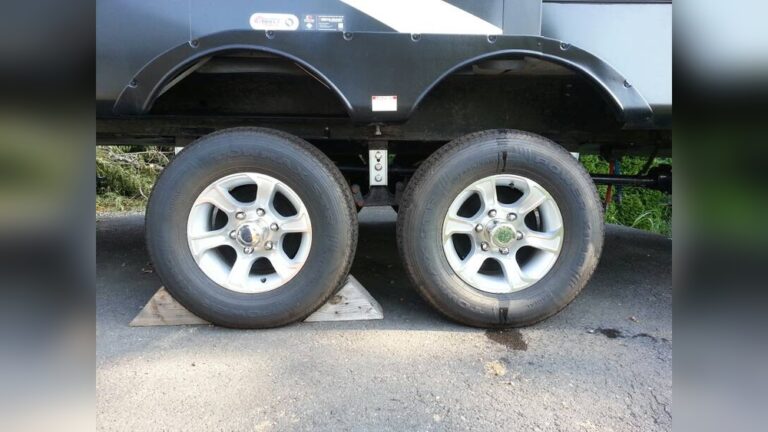
Tire ratings matter even more for trailers, because overloaded tires are a common cause of trailer accidents. Most small utility trailers come with C rated tires, which are fine for light loads. But for large travel trailers, car haulers, or horse trailers, E rated tires are recommended.
Before you buy, check:
- The GVWR (Gross Vehicle Weight Rating) of your trailer
- The tire load rating at the pressure you plan to run
- The axle weight rating
If you’re close to the limit, go up to E rated tires for safety. Also, remember that trailer tires often sit for long periods, and old, dry-rotted tires can fail even if they still have tread. Always check the tire’s age and replace after 6–7 years.
Off-road And All-terrain Use
If you drive on gravel, dirt, or rocky roads, E rated tires are often the better choice. The thicker sidewalls resist punctures from sharp rocks. Many all-terrain tires are only available in E rated versions.
But if you mostly drive on pavement, you may not need the extra strength. Some drivers even “air down” their E rated tires for off-road traction, but this should only be done carefully and temporarily.
Tire Ratings And Legal Requirements
In most places, you’re not legally required to use E rated tires unless your vehicle or trailer came with them from the factory. However, insurance companies may deny claims if you overload your tires or use a lower rating than required.
If you haul for work, commercial insurance may require E rated tires for certain vehicles. Always check your local laws and your insurance policy.
For more technical background on tire ratings, see the official National Highway Traffic Safety Administration resources.
Credit: www.ranger5g.com
How To Read Tire Sidewall Markings
When shopping, look for a marking like “LT245/75R16/E” or “ST205/75R15/C” on the tire sidewall:
- LT means Light Truck (often used for pickups and vans)
- ST means Special Trailer
- The last letter (C or E) is the load rating
- The numbers before the letter show the size
Make sure all tires on an axle match in size and rating.
Practical Tips For Choosing And Using C Or E Rated Tires
- Weigh your vehicle loaded for a trip at a local scale to know your real axle weights. Don’t guess.
- Check tire pressure monthly, especially before trips. Air leaks out slowly over time.
- Rotate your tires every 5,000–7,000 miles to even out wear.
- Replace tires by age, not just tread. Tires over 6 years old can crack and fail, even if they look good.
- Don’t exceed your wheel’s pressure rating. Some wheels can’t handle 80 psi, even if the tire can.
C Vs E Rated Tires: Which Is Right For You?
To sum up, here’s when to pick each tire:
- Choose C rated tires if:
- You drive a light truck, van, or small trailer
- You rarely carry heavy loads
- Comfort and fuel economy are important
- Choose E rated tires if:
- You own a 3/4-ton or 1-ton truck
- You tow large trailers or carry heavy loads often
- You drive off-road or in hot, rough conditions
- Safety margin is more important than ride comfort
If you’re unsure, talk to a tire specialist. Bring your vehicle’s manual, and know your typical and maximum loads. Don’t guess or rely on what “looks stronger. ”
Frequently Asked Questions
What Does The “c” Or “e” Mean On A Tire?
The C or E is a load range rating. C means the tire is built for moderate loads (about 1,820 lbs per tire), while E means it’s built for heavy loads (about 3,042 lbs per tire). The rating tells you how much weight the tire can safely carry at a specific pressure.
Can I Put E Rated Tires On A Truck That Came With C Rated Tires?
Yes, you can use E rated tires on a truck that came with C rated tires, but it may ride rougher and cost more. Only upgrade if you need the extra load capacity or drive in demanding conditions. Always make sure your wheels and suspension can handle the higher pressure.
Do E Rated Tires Last Longer Than C Rated Tires?
E rated tires can last longer if you use them under heavy loads, as they’re built tougher. But if you mostly drive empty or lightly loaded, the extra stiffness can actually make them wear unevenly and reduce their lifespan.
Is There A Difference In Traction Between C And E Rated Tires?
The main difference is in sidewall stiffness and strength, not in tread grip. For everyday driving, traction is similar, but E rated tires may slide more on ice or snow if they’re not loaded, due to the stiffer rubber.
How Do I Know Which Tire Rating My Vehicle Needs?
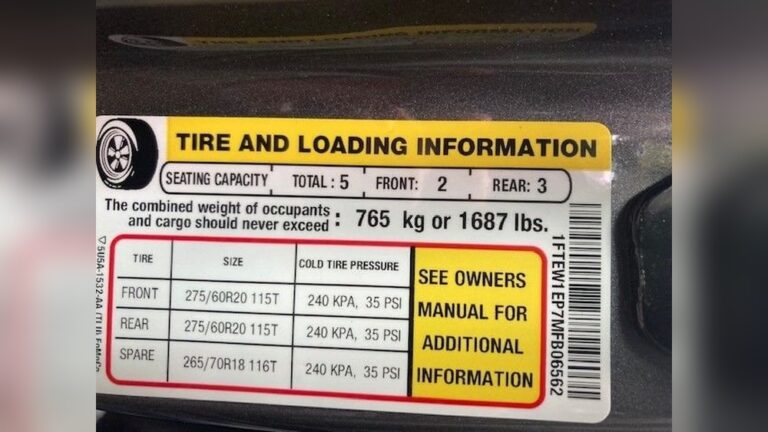
Check your owner’s manual or the sticker inside your driver’s door. It will list the minimum load rating and recommended tire size. Never use tires with a lower rating than recommended.
Choosing between C vs E rated tires is about matching the tire’s strength to your real-world needs. With the right knowledge, you can drive safely, save money, and get the best performance from your vehicle—whether you’re hauling a big load or just heading out on the open road.