When it comes to choosing the right tires for your vehicle, the decision is more than just about price or style. Tires are your car’s only contact with the road, directly affecting safety, comfort, and performance. Among the many tire brands available, Falken and Kumho stand out as popular choices for drivers who want a balance of value and reliability. But which one is better for your specific needs? This detailed guide will help you understand the differences, strengths, and weaknesses of Falken vs Kumho tires, so you can make a confident decision.
Brand Backgrounds: Falken And Kumho
Understanding the background of each brand can give you a better sense of their products and reputation.
Falken: Sporty Roots, Modern Technology
Falken Tires was launched in Japan in 1983, focusing first on high-performance tires for sports cars and racing. Over the years, Falken expanded its range to include all-season, touring, and off-road tires. Now owned by Sumitomo Rubber Industries, Falken is known for using advanced technology and for its participation in motorsports. This history gives Falken a sporty edge and a reputation for building tires that handle well at higher speeds.
Kumho: Innovation And Value
Kumho Tire started in South Korea in 1960. Today, it is a global brand, making tires for passenger cars, SUVs, trucks, and even aircraft. Kumho is known for innovation, investing in new rubber compounds and tread designs. The brand often focuses on providing good value—balancing quality with affordability—making it a favorite for budget-conscious drivers who still want reliability.
Product Range And Variety
Both brands offer a wide variety of tires, but with some differences in focus.
Falken’s Lineup
Falken has a broad range, including:
- Ultra-high performance: For sports cars and enthusiasts (e.g., Falken Azenis FK510)
- All-season touring: For everyday cars and sedans (e.g., Falken Ziex ZE950)
- All-terrain and off-road: For trucks and SUVs (e.g., Falken Wildpeak AT3W)
- Winter tires: For snow and ice (e.g., Falken Espia EPZ II)
Falken often targets drivers who want a sporty feel, even for regular vehicles.
Kumho’s Lineup
Kumho offers:
- Performance tires: For faster driving (e.g., Kumho Ecsta PS91)
- All-season touring: For comfort and fuel savings (e.g., Kumho Solus TA31)
- High mileage: For long-lasting use (e.g., Kumho Solus TA11)
- Off-road and all-terrain: For rugged use (e.g., Kumho Road Venture AT51)
- Winter tires: For cold climates (e.g., Kumho WinterCraft WP71)
Kumho aims to balance performance and budget, making it easier for drivers to find affordable options.
Performance Comparison
Let’s look at how Falken and Kumho perform in real-world conditions. Performance can mean different things: handling, braking, comfort, noise, and even how long the tires last.
Dry Road Handling
Falken is well known for its dry handling. The company’s roots in motorsports mean many Falken tires have stiff sidewalls and special tread designs for quick steering response. For example, the Falken Azenis FK510 is often praised for its grip and sharp cornering.
Kumho, on the other hand, provides solid but often less sporty handling. The Kumho Ecsta PS91 is strong on dry roads, but most Kumho all-season and touring models focus more on comfort and safety than on performance driving.
Wet Road Performance
Safety in the rain is essential. Both brands use special rubber blends and tread patterns to remove water and prevent hydroplaning.
- Falken tires like the Ziex ZE950 and Wildpeak AT3W are known for strong wet grip. They use silica-rich compounds and wide grooves to channel water.
- Kumho tires, such as the Solus TA31, also perform well in wet conditions, though some reviews mention slightly longer stopping distances compared to Falken’s best models.
Snow And Ice
Winter driving is tough for any tire. Both Falken and Kumho offer winter tires, but their all-season tires have different abilities in light snow.
- Falken Wildpeak AT3W is a favorite among SUV and truck drivers for handling snow, thanks to deep treads and advanced siping.
- Kumho WinterCraft series is well-rated for ice and slush, while the Solus all-season models are good in light snow but not as effective in deep snow as Falken’s top all-terrain models.
Ride Comfort And Road Noise
If you value a quiet, smooth ride, both brands have strengths.
- Kumho often emphasizes comfort and low noise, especially in its Solus touring line. Many users report that Kumho tires are quieter than some other budget brands.
- Falken tires, particularly the performance models, can be firmer and a bit noisier, but their touring tires like the Sincera SN250 are designed for comfort.
Tread Life And Durability
How long will your tires last? This depends on the model and driving style, but some trends are clear.
- Kumho often leads in treadwear warranties, with many models offering 60,000–80,000 miles of coverage.
- Falken warranties are usually slightly lower, often 50,000–65,000 miles, but some of their high-mileage touring tires match Kumho’s figures.
A common beginner mistake is choosing a tire based only on treadwear warranty. Real-world life can be shorter if you drive aggressively, ignore rotations, or live in hot climates.
Price And Value
Both Falken and Kumho are in the mid-range price segment. They are less expensive than premium brands like Michelin or Bridgestone, but usually cost a bit more than entry-level brands.
- Kumho is generally a little cheaper per tire, especially for common sizes.
- Falken sometimes costs more, especially for performance or all-terrain models.
The small price difference is often offset by Falken’s stronger performance on sporty or off-road vehicles. However, for basic sedans and family cars, Kumho’s lower price can be attractive.
Sample Price Comparison
Below is a sample price comparison for popular all-season tire models (prices can change by location and size):
| Model | Size (example) | Approx. Price (USD) | Treadwear Warranty |
|---|---|---|---|
| Falken Ziex ZE950 | 205/55R16 | $110 | 65,000 miles |
| Kumho Solus TA11 | 205/55R16 | $98 | 75,000 miles |
Remember, prices can vary. Always check local dealers and online stores for the best deals.

Credit: www.youtube.com
Warranty And Customer Support
Warranties show a company’s confidence in its products. Both Falken and Kumho offer competitive warranties for tread life, but some differences exist.
- Falken: Most models include a standard road hazard protection (covers damage from potholes or nails for the first two years or 3/32″ of wear). This is a non-obvious benefit that many buyers overlook.
- Kumho: Most tires come with a limited treadwear warranty and a 30-day satisfaction guarantee, but road hazard coverage is less common and often depends on the dealer.
Customer support from both brands is usually handled through local dealers or the website. Reading reviews and asking about support policies before buying can avoid surprises later.
Falken Vs Kumho: Key Strengths And Weaknesses
To help clarify the main differences, here’s a summary of what each brand does best, and where they may fall short.
Falken: Best For Performance And Versatility
Strengths:
- Excellent dry and wet handling, especially for sporty cars
- Strong off-road and all-terrain options
- Motorsports technology in consumer tires
- Good winter performance in select models
Weaknesses:
- Slightly higher price for performance models
- Touring tires can be firmer than Kumho
- Treadwear warranty is sometimes shorter
Kumho: Best For Value And Comfort
Strengths:
- Lower price per tire in most sizes
- Long treadwear warranties
- Comfortable, quiet ride for daily driving
- Good all-season and winter tire options
Weaknesses:
- Less sporty handling in most models
- Fewer off-road options for serious 4×4 use
- Road hazard protection less common
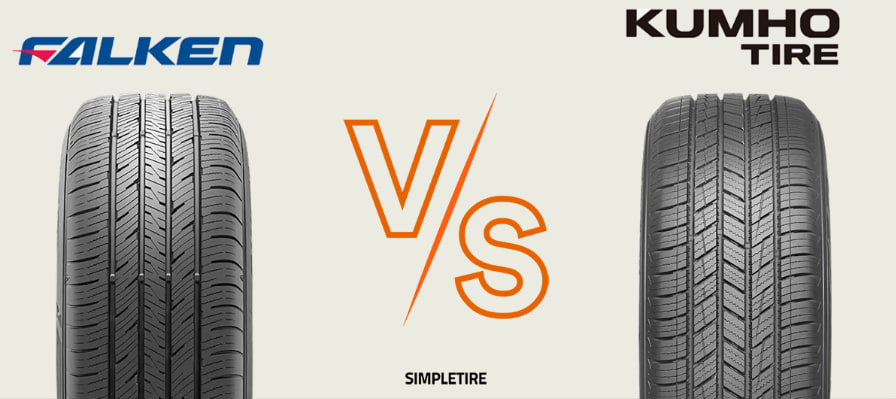
Credit: simpletire.com
Real-world Reviews And User Experience
Looking at what real drivers say can provide useful insights. Here are some common patterns:
- Falken performance tires are popular among car enthusiasts who want a tire that feels sporty but don’t want to pay for a top-tier brand.
- Falken Wildpeak AT3W is often chosen by truck and SUV owners who need a tire that works well both on and off the road. Many report that it handles snow and mud surprisingly well for the price.
- Kumho touring tires receive high marks from commuters and families who want a quiet, comfortable ride and don’t need maximum grip.
- Kumho WinterCraft tires are appreciated in cold regions for their performance on ice and slush, even if they wear out a little faster than some competitors.
One insight beginners might miss: Tire performance can change a lot as the tire wears down. A tire with great wet grip when new may lose that advantage after 20,000 miles, especially if you don’t rotate them regularly.
Environmental Impact And Sustainability
More drivers now care about eco-friendly tires and the environment.
- Falken invests in fuel-efficient tires, like the Sincera SN250, which uses low rolling resistance compounds to save gas and reduce CO2.
- Kumho has developed “eco” lines (like Kumho Ecowing) that use special materials and tread patterns to lower rolling resistance.
Both brands recycle used tires and aim to reduce waste in production. However, neither is as focused on green technology as some premium brands. Still, choosing either Falken or Kumho is better for the environment than buying low-quality, short-life tires that end up quickly in landfills.
Popular Models: Head-to-head
For a more direct comparison, let’s look at some of the most popular models from each brand, side by side.
| Falken Model | Kumho Model | Best Use | Key Feature |
|---|---|---|---|
| Falken Azenis FK510 | Kumho Ecsta PS91 | Sports/Performance | High-speed grip |
| Falken Wildpeak AT3W | Kumho Road Venture AT51 | All-Terrain/Off-road | Deep tread for snow & mud |
| Falken Sincera SN250 | Kumho Solus TA11 | All-Season Touring | Long tread life & comfort |
| Falken Espia EPZ II | Kumho WinterCraft WP71 | Winter/Snow | Soft compound for ice |
Choosing The Right Tire For Your Needs
Here’s how to decide which brand or model is best for you:
- Driving Style: If you enjoy sporty driving, Falken’s performance line is often better. For relaxed daily driving, Kumho touring tires offer more comfort.
- Vehicle Type: Owners of SUVs and trucks may prefer Falken for off-road, while Kumho’s Road Venture line is a good alternative for light off-roading.
- Climate: For wet or snowy areas, look for models with high silica content and good winter reviews. Both brands have options, but Falken’s Wildpeak is a favorite for winter versatility.
- Budget: Kumho is usually cheaper and offers more mileage per dollar, but Falken gives more excitement for sporty cars or challenging conditions.
- Warranty and Support: Consider warranty length and whether road hazard protection is important for your area.
A practical tip: Never buy tires just by brand or price. Always check the specific model’s ratings for your car, and ask your installer for recommendations based on local driving conditions.
Common Mistakes When Comparing Tires
Many buyers focus only on price or choose the highest mileage warranty. However, these are not always the best ways to judge value.
- Ignoring noise and comfort: If you do a lot of highway driving, a quiet tire like the Kumho Solus TA11 can be a better choice than a performance tire.
- Overlooking real-world reviews: Look for reviews from drivers in your region with similar vehicles.
- Not considering your climate: Summer tires are dangerous in snow, and winter tires wear out fast in hot weather.
- Skipping rotations and maintenance: Even the best tire will wear out quickly if not rotated every 5,000–7,000 miles.
Expert Opinions And Industry Ratings
Both Falken and Kumho regularly score well in independent tire tests.
- Falken Azenis FK510 was highly rated by AutoBild and Tire Rack for sporty performance.
- Kumho Solus TA11 has won awards for value and comfort from consumer magazines.
These results show that both brands are trustworthy, but each excels in different areas. For more detailed test results, you can visit independent tire testing organizations like Tire Rack.

Credit: www.blackcircles.com
Frequently Asked Questions
Are Falken Or Kumho Tires Better For High-performance Cars?
Falken generally has the edge for high-performance vehicles, especially models like the Azenis FK510. These tires offer better grip and handling at higher speeds due to their motorsports technology. Kumho’s Ecsta line is solid but usually focuses more on value than pure performance.
Which Brand Lasts Longer: Falken Or Kumho?
Kumho often provides longer treadwear warranties (up to 80,000 miles on some models), which means their tires can last longer with proper care. However, actual life depends on your driving habits and road conditions.
Are Falken Or Kumho Tires Better For Winter?
Both brands offer good winter tires. Falken’s Wildpeak AT3W is excellent for snow and ice, especially for SUVs and trucks. Kumho’s WinterCraft WP71 is a strong choice for passenger cars in icy climates.
Is There A Big Price Difference Between Falken And Kumho?
Kumho tires are generally a bit cheaper than Falken, especially for standard all-season models. However, the price gap is often small, and Falken’s performance or off-road tires may justify the extra cost for some drivers.
Do Falken Or Kumho Tires Come With A Road Hazard Warranty?
Falken often includes road hazard protection on many models, which can save you money if a tire gets damaged early. Kumho’s coverage depends on the dealer, so always ask before buying.
Both Falken and Kumho have built solid reputations for quality, safety, and value. The best choice comes down to your driving style, local conditions, and budget. Take time to read reviews, compare models, and ask for advice from local tire experts.
With the right tires, you’ll enjoy a safer, smoother ride wherever the road takes you.