Every truck driver knows that keeping tires in good condition is crucial for safety, especially on a semi-truck. One question that often comes up is about the steer tire—the tire on the front axle that controls the direction of your semi. If you get a puncture or damage, can you patch a steer tire on a semi, or should you always replace it? Let’s take a detailed look at this important topic, breaking down the risks, laws, expert opinions, and real-world experiences so you can make the safest decision for yourself and everyone on the road.
What Is A Steer Tire And Why Does It Matter?
The steer tire is the front tire on a semi-truck. Its main job is to handle steering, but it also supports a lot of weight and absorbs road shocks. Because of its position and function, a steer tire is under more pressure than other tires. A failure here can mean loss of control—sometimes with deadly results.
Unlike drive or trailer tires, steer tires are responsible for:
- Precise steering control
- Carrying heavy front-axle weight
- Handling the first impact from potholes and debris
- Providing a smooth ride
A problem with a steer tire can cause fast lane changes or even a rollover. This is why safety experts always highlight the importance of steer tire integrity.
The Risks Of Patching A Steer Tire
Patching any tire means repairing it after a puncture, usually from a nail or sharp object. In passenger cars, patching is a common fix. But for semi-trucks, especially steer tires, the risks are much higher.
Why Patching Is Risky On Steer Tires
1. High Loads And Stress
Steer tires handle more weight than other tires on a truck. A patched area may not be as strong as the original rubber, so there’s a higher chance of failure under load.
2. Heat Build-up
Repairs can affect how heat moves through the tire. Since steer tires already run hotter, a patch can make this worse, increasing the risk of a blowout.
3. Speed And Control
At highway speeds, even a small repair can fail suddenly. Losing a steer tire at 60 mph can lead to a serious accident.
Real-world Data
- The Federal Motor Carrier Safety Administration (FMCSA) reports that tire issues cause about 15% of all truck-related crashes.
- Blowouts on steer tires are more likely to result in a rollover compared to other tire positions.
Most tire experts and big trucking companies strongly discourage patching steer tires for these reasons.
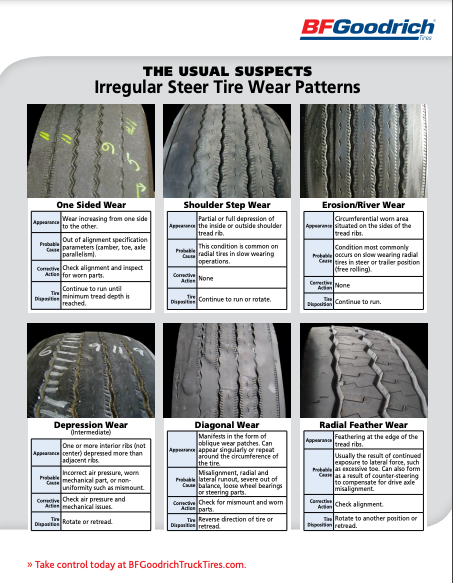
Credit: dot-ready.com
What Do The Laws And Regulations Say?
It’s not just about best practices—there are also legal rules that cover commercial truck tires. In the United States, the Department of Transportation (DOT) and FMCSA have clear standards for tire repairs.
Us Dot Rules
- Section 393.75 of the FMCSA regulations states that tires cannot have “any tread or sidewall separation, or be flat or have an exposed ply or cord.”
- While patching is not directly outlawed, most tire shops interpret these rules to mean steer tires must not have any repairs that weaken the structure.
- Many states have their own rules, often stricter than federal law.
Industry Practices
Most major trucking fleets and tire companies have their own policies:
- No repaired or retreaded tires on the steer axle
- Only new, undamaged tires allowed
This is not just about avoiding fines—it’s about liability. If a patched steer tire fails and causes a crash, the company or driver may be held responsible.
Patching Methods: Are Any Safe For Steer Tires?
There are two main ways to repair a tire: plugging and patching.
Plug Repairs
A plug is a rubber piece inserted from the outside to seal a small hole. These are quick but not very strong. Plug repairs are never recommended for steer tires, as they do not restore the tire’s full integrity.
Patch Repairs
A patch is applied inside the tire, sealing the area from within. Sometimes, a combination plug-patch is used for better sealing. Even this method is not considered safe for steer tires, especially for punctures in the tread area.
Sidewall Damage
If the sidewall is damaged—even a small cut—the tire should be replaced, not repaired. The sidewall handles flex and stress, and repairs here are too risky.

Credit: thecarstuff.com
Expert Opinions: What Do The Professionals Say?
Ask any experienced tire technician or fleet manager, and the answer is usually clear: never patch a steer tire on a semi.
- Michelin, one of the top tire makers, advises that only new tires go on the steer axle of a semi-truck.
- Goodyear and other major brands have similar policies.
- Major fleets like Schneider and JB Hunt do not allow repaired or retreaded tires on steer axles.
Even if a patch seems to work, it’s a gamble with your life and the safety of others.
Comparing Steer Tire, Drive Tire, And Trailer Tire Repairs
To understand why steer tire repairs are so controversial, compare them with other tires on the truck.
| Tire Position | Repair Allowed? | Common Practice |
|---|---|---|
| Steer Tire | No | Use only new, undamaged tires |
| Drive Tire | Yes (with caution) | Repairs and retreads allowed if safe |
| Trailer Tire | Yes (more common) | Repairs and retreads often used |
As you can see, steer tires are treated much more carefully than other tires.
What Should You Do If You Get A Flat On A Steer Tire?
If you get a puncture or damage on a steer tire, here are the recommended steps:
1. Pull Over Safely
Find a safe place to stop, away from traffic if possible.
2. Inspect The Damage
Check if the tire is completely flat, slowly leaking, or just has a nail.
3. Do Not Drive Further
Even if the tire is still holding air, driving on a damaged steer tire can be dangerous.
4. Call For Assistance
Use your company’s roadside service or call a professional tire service.
5. Replace, Don’t Repair
Always install a new or professionally inspected tire on the steer axle.
Emergency Situations
Sometimes, you’re far from help and need to move the truck. In rare cases, a temporary repair might get you safely off the road or to a shop. But this is a last resort, not a permanent fix.
Non-obvious Insights Most Beginners Miss
1. Patching Voids Warranties And Insurance
Many tire warranties and trucking insurance policies become void if you patch a steer tire and it fails. Even if the patch “works,” you risk losing financial protection in an accident.
2. Hidden Internal Damage
Not all tire damage is visible from the outside. A simple puncture can weaken the internal structure. Only replacing the tire ensures hidden damage doesn’t cause a later blowout.
3. Retreaded Steer Tires Are Also Risky
Some drivers think retreading is different from patching, but retreads are also not allowed on steer axles for the same safety reasons.
Cost Considerations: Why Replacement Is Worth It
Replacing a steer tire costs more than a patch, but the price of a blowout can be far greater.
| Option | Average Cost | Long-Term Risk |
|---|---|---|
| Patching | $30–$50 | High (accidents, liability, downtime) |
| Replacing with New Tire | $400–$700 | Low (safe, reliable, legal) |
It’s easy to see why safety experts say: “Don’t risk your life to save a few hundred dollars.”
International Standards: How Other Countries Handle Steer Tire Repairs
In Europe, Australia, and Canada, regulations are often stricter than in the US. Many countries specifically ban repairs on steer axles for commercial trucks. Professional drivers everywhere are taught that the steer axle is the most important for safety.
For example, the European Union has clear rules that prohibit any retreads or repaired tires on the steer axle of large vehicles.

Credit: thecarstuff.com
Common Myths About Patching Steer Tires
1. “a Small Patch Is Safe.”
Even a small patch can fail unexpectedly because of the high stress and heat on steer tires.
- “If the shop says it’s okay, it must be legal.”
Some shops may offer a patch, but that does not mean it follows industry best practices or legal standards.
3. “retreaded Tires Are Just As Good As New.”
Retreads are fine for drive and trailer tires, but not for steer axles due to safety concerns.
When Is Patching Ever Acceptable On A Steer Tire?
In short: almost never. The only possible exception is a very slow drive at low speed, just to get to a safe place. Even then, it’s a temporary solution for emergencies only. Never use a patched steer tire for normal operations or at highway speeds.
Pro Tips For Steer Tire Maintenance
- Inspect daily: Look for cuts, bulges, or embedded objects.
- Check pressure: Underinflated tires heat up faster and fail sooner.
- Rotate regularly: This helps tires wear evenly.
- Replace early: Don’t wait for tires to reach the legal minimum tread depth.
- Buy quality: Invest in top-tier steer tires for better safety and performance.
If you’re unsure, always ask a certified tire professional. For more details, you can check the FMCSA’s guidelines on tire safety.
Frequently Asked Questions
Can I Patch A Steer Tire If The Damage Is Small?
No, you should not patch a steer tire, even for small punctures. The risk of failure is too high, and most experts recommend full replacement for any damage.
Are Retreaded Tires Safe For The Steer Axle?
Retreaded tires are not considered safe for the steer axle of a semi-truck. They are more likely to fail under high stress and are not allowed by most fleets and regulations.
What Happens If A Steer Tire Blows Out While Driving?
A blowout on a steer tire can cause the truck to lose steering control, possibly leading to a rollover or crash. This is why steer tire integrity is so critical.
Is It Illegal To Patch A Steer Tire On A Semi?
While not always specifically illegal, patching a steer tire goes against most industry standards and may violate DOT rules. It can also make you liable in an accident.
What’s The Best Way To Prevent Steer Tire Failures?
The best prevention is regular inspection, maintaining correct tire pressure, and always using new, high-quality tires on the steer axle. Never use patched or retreaded tires for steering.
Keeping your semi’s steer tires in top condition is not just a recommendation—it’s a lifesaving rule. Always choose safety over shortcuts, and remember: when in doubt, replace, don’t patch.