Certainly! Let’s expand the article on “285 Vs 275 Tires” into a detailed, publication-ready guide, keeping your original structure and expanding each section with more depth, examples, explanations, and insights.
—
285 Vs 275 Tires
Choosing the right tire size for your vehicle is more important than many drivers realize. The numbers on your tires, such as 285 and 275, are not just random codes—they determine how your car handles, how it looks, and even how much you spend on fuel.
If you’re trying to decide between 285 and 275 tires, this guide will make things much clearer. We’ll cover what those numbers mean, how each size affects driving, and what you should consider before making your choice. Whether you’re upgrading for style, performance, or you just need a replacement, understanding these differences will help you avoid mistakes and choose the best option for your needs.
What Do 285 And 275 Mean?
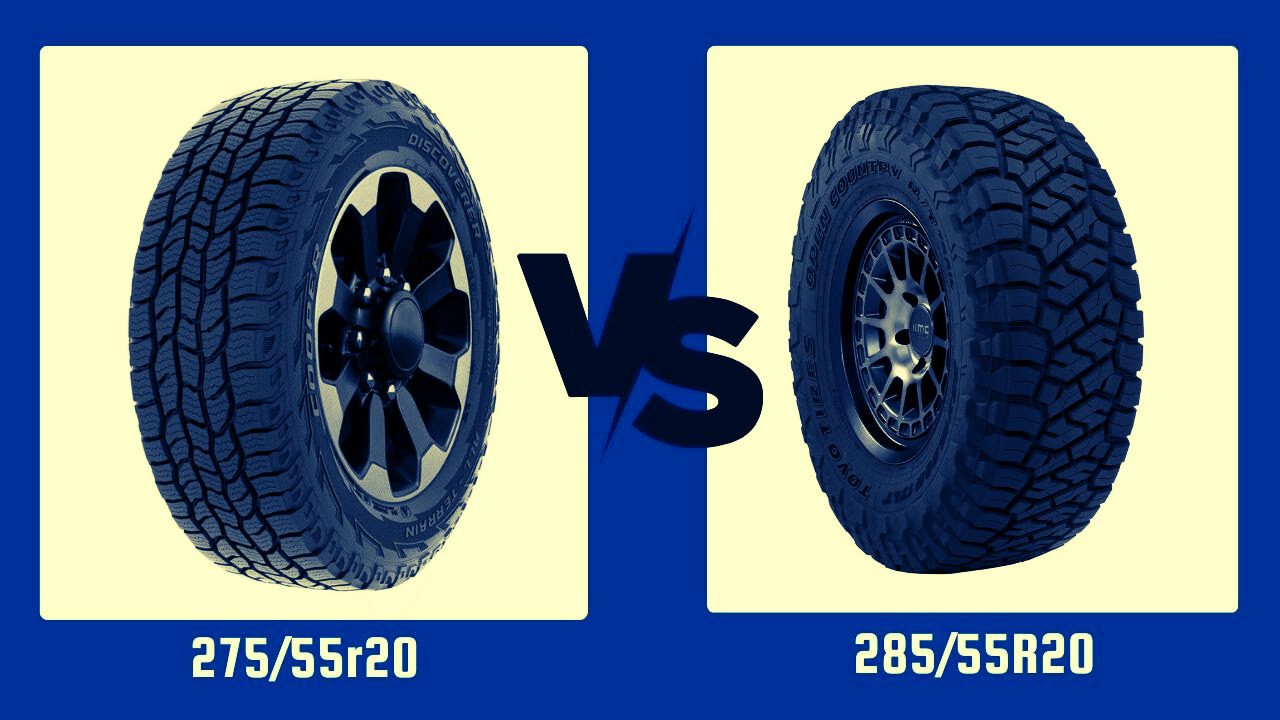
At first, the numbers 285 and 275 might look confusing, but they’re actually simple once you break them down. These numbers refer to the width of the tire in millimeters. So, a 285 tire is 285 millimeters wide, and a 275 tire is 275 millimeters wide.
That’s a 10-millimeter difference in width.
But there’s more than just width. Tire sizes are usually written like this: 285/70R17 or 275/65R18. Here’s what each part means:
- 285 (or 275): The width of the tire in millimeters from sidewall to sidewall.
- 70 (or 65): The aspect ratio, which is the height of the sidewall as a percentage of the width. A 70 means the sidewall is 70% as tall as the tire is wide.
- R: Stands for radial, which is the most common type of tire construction today.
- 17 (or 18): The diameter of the wheel (or rim) in inches that the tire fits.
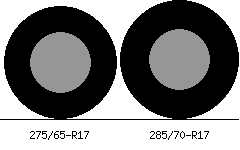
So, if you’re comparing a 285/70R17 to a 275/70R17, the main difference is that the 285 is wider by 10 millimeters.
Insight: Many drivers don’t realize that even a small change in width can affect the way your speedometer reads and how your car’s safety systems (like ABS or traction control) work. That’s why it’s important to understand what these numbers mean before you switch sizes.
How Do They Affect Vehicle Performance?
The width and profile of your tires have a big impact on how your vehicle feels and performs. Here’s what happens when you go from 275 to 285 tires, or vice versa:
1. Handling And Stability
A wider tire, like a 285, gives your vehicle a larger contact patch with the road. This means more rubber is touching the ground at any time, which can improve grip, especially when turning.
- 285 tires: Offer more stability during fast cornering and may provide better traction on dry roads. This is helpful for trucks, SUVs, or sports vehicles that need extra grip.
- 275 tires: Are slightly narrower, which can lead to slightly less grip but may improve steering response, especially on lighter vehicles.
Example: If you drive a pickup and often haul heavy loads or tow trailers, you might feel more confident with 285 tires because of the added stability.
2. Ride Comfort
Wider tires can make a ride feel stiffer or bumpier because there’s less sidewall to absorb road shocks if you also lower the aspect ratio. But if the aspect ratio stays the same (like 70 in both 285/70R17 and 275/70R17), the difference is small.
- 285 tires: May feel a bit firmer, especially on rough roads.
- 275 tires: Slightly softer ride, which can be more comfortable for daily commuting.
Insight: Some drivers expect a dramatic change in comfort, but with similar aspect ratios, the effect is usually subtle.
3. Fuel Economy
Wider tires have more rolling resistance. This means your engine has to work harder to keep the vehicle moving, which can reduce your fuel efficiency.
- 285 tires: Usually cause a small drop in miles per gallon (mpg), especially at highway speeds.
- 275 tires: May save you a little bit on fuel, especially if you do a lot of city driving.
Practical Example: If you drive 20,000 miles a year, the difference might be 1-2 mpg, which can add up over time.
4. Acceleration And Braking
Wider tires can improve braking performance because of the larger contact patch. However, they’re also heavier, which can slow down your acceleration a little.
- 285 tires: Better stopping power in dry conditions, but may slightly reduce acceleration.
- 275 tires: Lighter, so your car might feel a bit quicker off the line.
Non-obvious insight: Some vehicles’ braking systems are tuned for a specific tire size. Changing width may change ABS response or even increase stopping distance in wet conditions.
5. Off-road Performance
If you take your vehicle off-road, tire size makes a big difference.
- 285 tires: Give you a wider footprint, helping you stay on top of sand or mud. They also look more aggressive.
- 275 tires: Easier to fit into tight wheel wells, and less likely to rub against the body when you turn sharply.
Tip: If you plan to “air down” your tires for off-roading, the extra width of a 285 can be a big advantage for traction.

Credit: www.youtube.com
Appearance And Fitment
Many drivers choose larger tires for looks as much as for performance. Here’s how 285 and 275 tires compare visually and in terms of fit.
Appearance
A wider tire almost always looks more “muscular” or aggressive. This is especially noticeable on trucks, SUVs, and Jeeps.
- 285 tires: Fill the wheel wells more and often stick out slightly, giving a bolder stance.
- 275 tires: Still look tough, but not as pronounced as 285s.
Practical example: If you want your pickup to stand out or match the look you see on off-road builds, 285s are a popular upgrade.
Fitment
Fitment means how well the tire fits on your vehicle’s wheels and under the body.
- 285 tires: May require a wider wheel (rim) to fit safely. They also might rub against fenders, suspension, or steering components if your vehicle isn’t designed for them.
- 275 tires: Easier fit on most stock wheels and less likely to cause rubbing issues.
Important insight: Always check your vehicle’s owner’s manual or consult a tire professional before changing sizes. Some vehicles can handle 285s with no problem, while others may need a lift kit, wheel spacers, or trimming.
Speedometer And Odometer Impact
Changing tire size can change the way your speedometer and odometer work. That’s because your car’s computer is programmed for a certain tire size.
- If the new tire is taller: Your speedometer will read slower than your actual speed.
- If the new tire is shorter: Your speedometer will read faster.
Example: If you switch from a 275/65R18 to a 285/65R18, your overall tire diameter increases slightly. When your speedometer says 60 mph, you might actually be going 62 mph.
Tip: There are online calculators that let you compare tire sizes and see how they affect your speedometer. [Tire Rack’s calculator](https://www.tirerack.com/tires/tiretech/techpage.jsp?techid=7) is a trusted tool for this.
Non-obvious insight: In some locations, a speedometer that is off by more than a certain amount can fail a vehicle inspection. Always check local laws if you change tire size.
Cost Differences
Tire cost depends on the brand, tread pattern, and where you buy, but generally, 285 tires cost more than 275s.
- 285 tires: More rubber, so they’re usually $10–$40 more per tire.
- 275 tires: Slightly cheaper, and often more choices in stock.
Example: If you need four tires and there’s a $20 difference per tire, that’s an extra $80 when upgrading to 285s.
Tip: Don’t forget to factor in the cost of new wheels if your current ones are too narrow for 285s.
When Should You Choose 285 Tires?
285 tires are not just about looks—they’re for specific needs. Here’s when you might want to go with the larger size:
- Off-Roading: If you drive in sand, mud, or snow, the wider footprint can help you avoid getting stuck.
- Towing/Hauling: If you have a heavy trailer or a truck bed full of gear, 285s can provide more stability.
- Aggressive Style: If you want your vehicle to look more rugged, 285s make a big visual impact.
- After Lifting the Vehicle: If you install a suspension lift or leveling kit, 285s fill out the extra space better.
Important: Make sure your wheels are wide enough (usually 8–9.5 inches) for 285 tires. Also, check for rubbing issues on full turns or bumps.
When Should You Choose 275 Tires?
275 tires are a smart choice in many cases. Consider them if:
- Factory Fit: Your car or truck came with 275s. Sticking with the original size is usually safest.
- Daily Driving: If you commute or drive on highways, 275s balance comfort, cost, and fuel economy.
- No Suspension Mods: If you haven’t lifted or leveled your vehicle, 275s are less likely to rub.
- Better Winter Performance: Narrower tires can cut through snow more effectively than wider ones.
Tip: If you want to upgrade your tires without changing wheels or suspension, 275s are usually the maximum safe size.
Common Mistakes When Switching Tire Sizes
Many drivers make errors when changing tire sizes. Here’s what to avoid:
- Ignoring Wheel Width: Not all wheels can safely fit 285 tires. Using a tire that’s too wide for your wheel can cause uneven wear and even blowouts.
- Skipping Alignment: After changing tire size, always get a wheel alignment. This prevents uneven wear and steering problems.
- Not Checking Clearance: Test for rubbing by turning your steering wheel all the way left and right and driving over bumps.
- Forgetting About Spare Tire: If you upgrade to 285s, your spare may not match. This can be a problem in an emergency.
- Assuming Bigger Is Always Better: Wider tires don’t always handle better in rain or snow. Sometimes, they hydroplane more easily.
Credit: www.tacomaworld.com
Real-world Examples
Let’s look at how the difference plays out for two common vehicles:
Toyota Tacoma
- Stock tire size: 265/70R16 or 265/65R17
- Popular upgrades: 275/70R17 (mild upgrade), 285/70R17 (aggressive look, needs slight lift or trimming)
Result: 275s offer a “factory plus” look and fit almost all Tacomas with no issues. 285s fill the wheel wells and are great for off-roading, but you may need to trim the fender liner.
Ford F-150
- Stock tire size: 275/65R18
- Popular upgrades: 285/65R18 (wider, similar height)
Result: 285s look tougher and give a bit more grip. Most F-150s can fit them with no lift, but you should check clearance on older trucks or with certain wheel offsets.
Non-obvious insight: The same tire size can fit differently on different vehicles depending on wheel offset, suspension design, and even the shape of the fender.
Final Thoughts: Which Should You Choose?
There is no one-size-fits-all answer. Your decision should be based on your driving needs, your vehicle, and your budget.
- Choose 285 tires if you want maximum grip, go off-road often, or want a bold look and are ready to handle possible fitment adjustments.
- Choose 275 tires if you want a safer, simpler upgrade that keeps comfort, fuel economy, and everyday practicality.
Before making the switch, talk to a tire professional. Bring your vehicle’s year, make, model, and wheel size information. Ask them to check for possible rubbing or computer recalibration needs.
Tire size is more than just a number—it’s about how your vehicle handles, how much you enjoy driving, and how safe you are on the road. Take the time to choose carefully, and you’ll get the best performance, value, and style for your needs.
For more technical details about tire sizing, see the [Tire Rack tire tech guide](https://www.tirerack.com/tires/tiretech/techpage.jsp?techid=7).
—
With this expanded guide, you have all the key knowledge to confidently choose between 285 and 275 tires for your vehicle.
Credit: www.tireryder.com