Choosing between pneumatic tires and cushion tires is a key decision for anyone working with forklifts or industrial vehicles. This choice affects not only the performance of the machine, but also how safe, efficient, and cost-effective your operations will be. Many beginners simply pick what comes standard, but there is much more to consider. Each tire type has its strengths and weaknesses, and the best option depends on your specific work environment, budget, and needs.
Understanding the differences between pneumatic and cushion tires can save you time, money, and trouble. This article explains everything you need to know, from technical details and practical examples to expert tips and common mistakes. Whether you are a warehouse manager, a forklift operator, or just starting to explore this topic, you will find clear guidance here.
Let’s dive deep into the world of industrial tires and help you make a confident, informed choice.
What Are Pneumatic Tires?
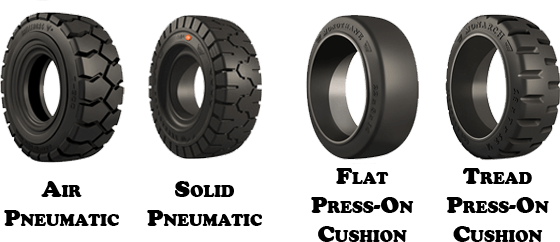
Pneumatic tires are filled with air, similar to tires used on cars or trucks. They are designed to provide a soft, cushioned ride and are usually made from rubber with a strong inner core. Pneumatic tires come in two main types: air-filled and foam-filled. Air-filled tires are lighter and cheaper, while foam-filled tires are more resistant to punctures.
These tires are most commonly used outdoors or on rough surfaces. They absorb shocks from bumps, cracks, and uneven ground, making them ideal for construction sites, lumber yards, and outdoor warehouses.
How Pneumatic Tires Work
Pneumatic tires have a hollow inner core, which is inflated with air or foam. The pressure inside the tire creates a cushion that supports the load and absorbs impact. This makes the ride smoother for both the operator and the equipment.
For example, if a forklift drives over a pothole, pneumatic tires will compress and bounce, reducing the jolt felt by the driver. This is especially important when moving fragile goods or working long shifts.
Key Features Of Pneumatic Tires
- Strong grip on uneven surfaces
- Shock absorption for smoother rides
- Suitable for outdoor use
- Available as air-filled or foam-filled
- Higher profile and larger size than cushion tires
Typical Applications
Pneumatic tires are best for:
- Construction sites
- Shipping yards
- Gravel, asphalt, or dirt surfaces
- Outdoor warehouses
- Places with debris or obstacles
Advantages Of Pneumatic Tires
- Better comfort: The air cushion softens bumps, reducing fatigue for operators.
- Strong traction: Deep treads give good grip on rough or loose surfaces.
- Versatile: Can handle a variety of environments, including wet, muddy, or uneven ground.
- Protects cargo: The smoother ride helps prevent damage to goods.
- Durable: Foam-filled pneumatic tires resist punctures and can last longer in harsh settings.
Disadvantages Of Pneumatic Tires
- Higher maintenance: Air-filled tires can puncture or lose pressure, needing regular checks.
- More expensive: Initial cost and replacement price are higher than cushion tires.
- Bulky size: Larger tires may not fit tight spaces or low-clearance areas.
- Not ideal indoors: Can damage delicate floors and have a larger turning radius.
What Are Cushion Tires?
Cushion tires are made from solid rubber bonded to a metal core. They do not contain air or foam, so they are tough and compact. Cushion tires are designed for smooth, flat surfaces, like concrete or tile floors found in indoor warehouses.
These tires are often chosen for tight areas, where machines need to turn sharply or fit into narrow aisles.
How Cushion Tires Work
Cushion tires rely on their solid structure. Instead of absorbing shocks with air, they use thick rubber to handle weight and pressure. The tire remains rigid, so there is less bounce or flex.
If a forklift with cushion tires hits a small bump, the impact is felt more directly. This is fine on smooth floors, but can be uncomfortable or even damaging on rough ground.
Key Features Of Cushion Tires
- Compact size for tight spaces
- Smooth surface for indoor use
- Solid rubber construction
- Low profile (smaller diameter)
- Easy turning and maneuverability
Typical Applications
Cushion tires excel in:
- Indoor warehouses
- Distribution centers
- Retail stores
- Food processing facilities
- Any place with smooth, flat floors
Advantages Of Cushion Tires
- Low maintenance: No air to check, no risk of punctures.
- Cost-effective: Cheaper to buy and replace than pneumatic tires.
- Easy maneuvering: Smaller size means tighter turns and better handling.
- Fits small spaces: Ideal for areas with low clearance or narrow aisles.
- Good for clean floors: Won’t damage delicate surfaces.
Disadvantages Of Cushion Tires
- Limited outdoor use: Poor performance on gravel, dirt, or uneven surfaces.
- Less shock absorption: Can cause discomfort or damage to goods when hitting bumps.
- Lower traction: Slippery when wet or dusty.
- Not suitable for heavy debris: Can get stuck or damaged by large objects.
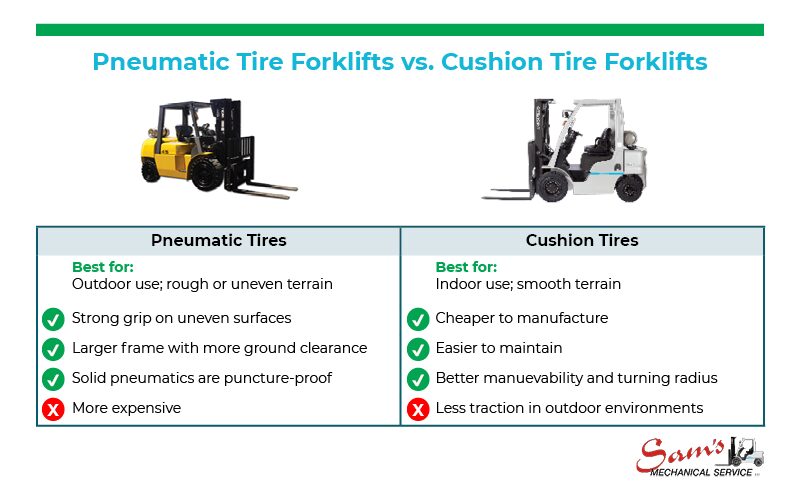
Credit: www.samsmechanical.com
Comparing Pneumatic And Cushion Tires
The choice between pneumatic tires and cushion tires depends on several factors. Here is a comparison to help you see the differences clearly:
| Feature | Pneumatic Tires | Cushion Tires |
|---|---|---|
| Material | Rubber, air/foam | Solid rubber, metal core |
| Surface | Rough, uneven, outdoor | Smooth, flat, indoor |
| Size | Larger, higher profile | Smaller, low profile |
| Shock Absorption | Excellent | Minimal |
| Traction | Strong | Moderate |
| Maintenance | Requires checks | Low maintenance |
| Cost | Higher | Lower |
| Typical Use | Outdoor, heavy-duty | Indoor, light-duty |
Key Factors To Consider When Choosing
Choosing the right tire is about more than just the surface. Here are the main points to think about:
1. Work Environment
If your forklift operates mostly outdoors, pneumatic tires are usually best. They handle rough terrain, debris, and weather changes. If you stay indoors, cushion tires fit better, as they protect floors and offer easy maneuvering.
2. Floor Condition
Pneumatic tires can handle cracks, potholes, and uneven surfaces. Cushion tires require smooth, clean floors. If your warehouse has old or rough concrete, pneumatic tires may help prevent damage and reduce maintenance.
3. Load Weight And Type
Heavy loads, fragile goods, or high stacking can benefit from pneumatic tires’ shock absorption. Cushion tires are fine for lighter loads or goods that are not easily damaged.
4. Space And Layout
Narrow aisles, tight corners, or low ceilings favor cushion tires. Their smaller size and tight turning radius make them ideal for crowded spaces.
5. Maintenance And Cost
Pneumatic tires need regular air checks, rotation, and repairs for punctures. Cushion tires require less attention, which can save labor and downtime.
6. Operator Comfort
Long shifts or rough surfaces can cause fatigue and discomfort. Pneumatic tires reduce vibration and impact, making work easier for the driver.
7. Safety Concerns
Wet or dusty floors can make cushion tires slippery. Pneumatic tires have deeper treads, which help prevent accidents in these conditions.
Real-world Examples
Let’s look at how these tires are used in actual businesses:
Example 1: Outdoor Lumber Yard
A lumber yard uses forklifts to move wood and materials across gravel, dirt, and asphalt. The ground is uneven, sometimes muddy, and there are nails and sharp objects scattered around.
They choose foam-filled pneumatic tires for their forklifts. These tires handle rough terrain, resist punctures, and protect fragile wood from shocks.
Example 2: Indoor Distribution Center
A large distribution center has smooth, polished concrete floors and narrow aisles. Forklifts need to turn quickly and fit into small spaces. There is little debris, and loads are mostly boxes and pallets.
They use cushion tires because they require minimal maintenance, allow sharp turns, and don’t damage the floor.
Example 3: Food Processing Facility
A food plant has strict hygiene standards. Floors must be kept clean, and there are no obstacles. Forklifts need to be nimble and easy to clean.
Cushion tires are preferred here. They don’t track dirt, are easy to wash, and fit through tight spaces.
Example 4: Construction Site
A construction company uses forklifts to move building materials outdoors. Surfaces are rough, sometimes muddy, with large rocks and debris.
They select pneumatic tires for their shock absorption and traction, preventing accidents and protecting both cargo and workers.
Cost Comparison
Cost is always a major concern. Both initial price and long-term expenses should be considered.
| Cost Factor | Pneumatic Tires | Cushion Tires |
|---|---|---|
| Initial Price | $200–$500 per tire | $100–$250 per tire |
| Maintenance | Regular air checks, repairs | Occasional replacement |
| Replacement Frequency | Every 2–3 years | Every 1–2 years |
| Puncture Repair | $50–$150 per incident | Rarely needed |
| Downtime | Higher due to repairs | Lower |
Non-obvious insight: Many buyers focus on initial price but forget to calculate downtime costs. Pneumatic tires may cost more up front, but if they prevent cargo damage or reduce worker fatigue, the savings can be bigger over time.
Credit: www.wdmatthews.com
Common Mistakes When Selecting Tires
Many people make simple but costly mistakes when picking tires. Here are some to avoid:
- Ignoring floor condition: Choosing cushion tires for rough floors can cause accidents and expensive repairs.
- Underestimating maintenance: Pneumatic tires need regular attention. Skipping checks can lead to blowouts and downtime.
- Focusing only on price: The cheapest tire may not be the best for your needs. Consider total cost, including replacement and labor.
- Not matching tire to application: Using pneumatic tires indoors can damage floors and make maneuvering harder.
- Overlooking operator comfort: Fatigue leads to mistakes and accidents. Good tires can protect both workers and cargo.
Performance And Safety Data
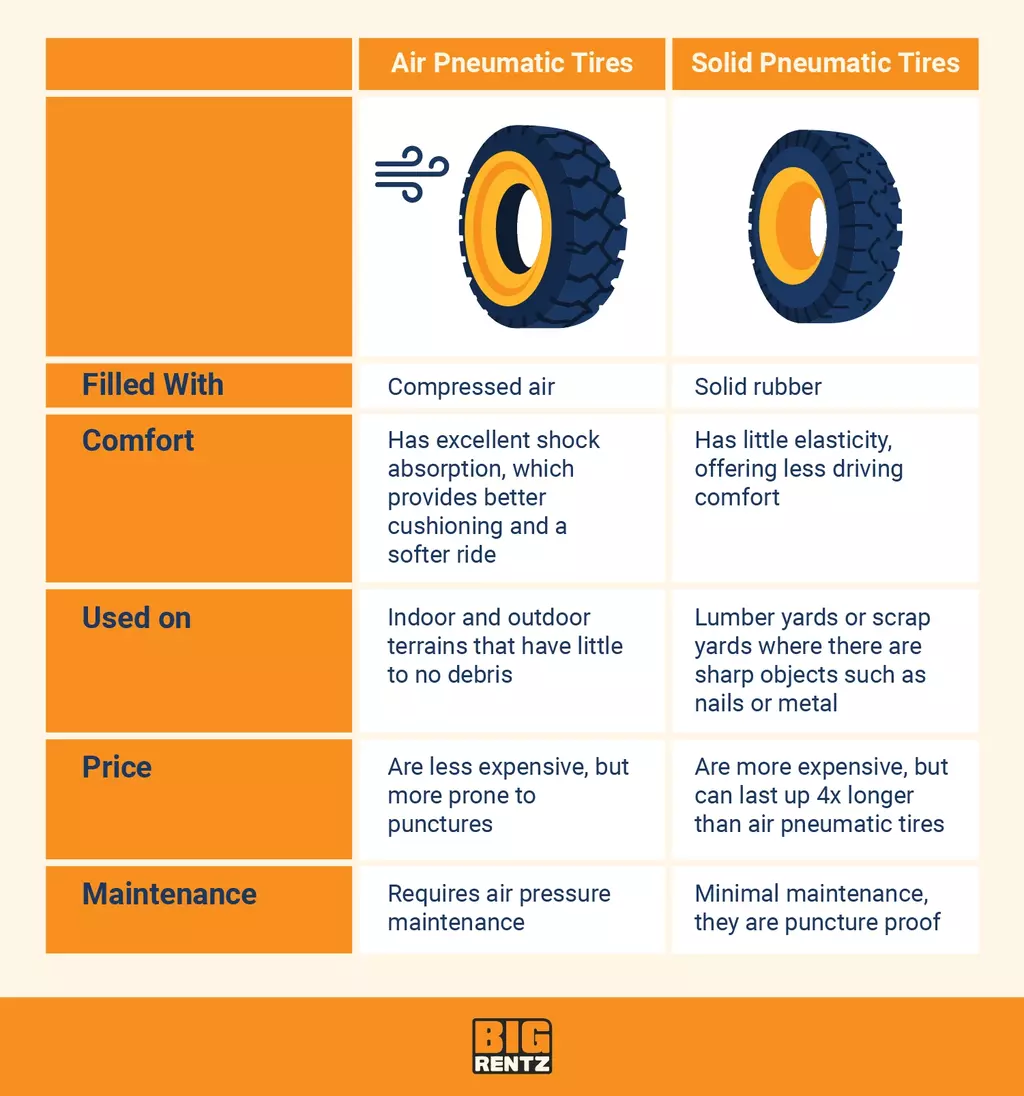
Forklift accidents are often linked to tire failure or poor traction. According to the Occupational Safety and Health Administration (OSHA), improper tire selection and maintenance contribute to thousands of workplace injuries each year.
Pneumatic tires reduce vibration by up to 60%, according to manufacturer tests. This not only improves safety but also increases productivity by reducing breaks and errors.
Cushion tires, when used on proper floors, can cut turning radius by 20–30%. This means forklifts can operate in tighter spaces, speeding up work and reducing collisions.
Non-obvious insight: Tire choice affects not just efficiency, but also insurance costs and long-term workplace safety. Investing in the right tire can lower your risk profile and keep your business running smoothly.
Credit: www.bigrentz.com
Maintenance Tips For Both Tire Types
Proper care keeps your tires safe and reliable. Here are expert tips:
For Pneumatic Tires
- Check air pressure weekly: Under-inflated tires wear out faster and risk blowouts.
- Inspect for punctures and cracks: Look for nails, sharp objects, or damage after each shift.
- Rotate tires regularly: This helps them wear evenly and last longer.
- Replace worn treads: If the tread is shallow, traction drops sharply.
For Cushion Tires
- Clean tires often: Dirt and debris can reduce grip and cause slipping.
- Inspect for flat spots: Heavy loads or sharp turns can cause uneven wear.
- Replace when rubber is worn: Thin rubber increases risk of accidents.
- Avoid rough surfaces: Cushion tires are not designed for bumps or debris.
Environmental Impact
Tire choice also affects the environment. Pneumatic tires, especially foam-filled, are harder to recycle. Cushion tires, made from solid rubber, can sometimes be recycled more easily, but both types require proper disposal.
Some companies now offer eco-friendly tire options made from recycled rubber or sustainable materials. If environmental responsibility is important to your business, ask suppliers about these choices.
Upgrading Or Switching Tires
Changing from cushion to pneumatic tires (or vice versa) is possible, but not always easy. Forklift frames and axles are designed for specific tire types. Switching may require new wheels, axles, or even a different machine.
If you are considering a switch, consult your equipment manufacturer first. Upgrading can improve performance, but only if done safely and correctly.
Expert Recommendations
- If you operate mostly outdoors or on rough surfaces, choose pneumatic tires for safety and durability.
- For indoor, smooth floors, go with cushion tires to protect surfaces and maximize efficiency.
- When in doubt, ask your tire supplier for a site visit. They can inspect your floors, loads, and environment to recommend the best tire type.
Frequently Asked Questions
What Is The Main Difference Between Pneumatic And Cushion Tires?
The main difference is their construction and use. Pneumatic tires are filled with air or foam and are designed for outdoor, rough surfaces. Cushion tires are solid rubber and work best indoors on smooth floors.
Can I Use Pneumatic Tires Indoors?
You can, but it is not recommended. Pneumatic tires are larger and may damage delicate floors or make maneuvering harder in tight spaces.
Which Tires Last Longer?
Foam-filled pneumatic tires usually last longer in rough environments because they resist punctures. Cushion tires wear faster if used on rough surfaces but can last a long time on smooth, clean floors.
Are Cushion Tires Cheaper To Maintain?
Yes. Cushion tires require less maintenance since there is no air to check or repair. Replacement is simple and downtime is low.
How Do I Choose The Right Tire For My Forklift?
Consider your work environment, floor condition, load type, space, and budget. If you operate outdoors or deal with rough terrain, choose pneumatic tires. For indoor, smooth floors, cushion tires are best.
If you want to learn more about forklift tire safety and regulations, visit OSHA’s official forklift operation page.
Making the right tire choice is more than just picking what fits. It affects your safety, efficiency, and long-term costs. Take time to assess your needs, ask questions, and invest in the tire that matches your business. With this knowledge, you can avoid common mistakes and keep your operations running smoothly for years to come.