Tires are more than just rubber that meets the road—they are essential for safety, comfort, and the performance of your car. Yet, many drivers misunderstand two important services: tire rotation and tire alignment. These terms sound similar, but they are very different and play unique roles in keeping your vehicle running smoothly. If you want your tires to last longer, handle better, and keep you safe, it’s important to know what each service does, when to get them, and how they affect your car. This article explains everything you need to know about tire rotation vs tire alignment—from what they are, to why they matter, and even how to spot problems before they become serious.
What Is Tire Rotation?
Tire rotation means moving your car’s tires from one position to another. Usually, the front tires move to the back and the back tires move to the front. Sometimes, the tires also switch sides, depending on the car and tire type. The main goal is to make sure all tires wear evenly.
Every car puts different pressure on each tire. For example, in front-wheel-drive cars, the front tires do most of the work—they steer, brake, and drive the car forward. This makes the front tires wear out faster than the rear ones.
If you never rotate them, you’ll need to replace front tires much sooner than the back ones.
How Often Should You Rotate Tires?
Most car makers recommend rotating tires every 5,000 to 8,000 miles (about every other oil change). However, check your vehicle’s manual for the best advice. Some tires, like directional or staggered tires, may have special rules.
Why Is Tire Rotation Important?
Rotating your tires regularly offers several important benefits:
- Even tire wear: All tires wear out at the same rate, so you don’t have to replace just one or two at a time.
- Better handling: When all tires have similar tread, your car responds better when you turn or brake.
- Longer tire life: You get more miles out of your tires, saving money in the long run.
- Improved safety: Evenly worn tires reduce the risk of blowouts and keep your car stable on the road.
- Maintains warranty: Many tire warranties require proof of regular rotation.
Basic Tire Rotation Patterns
There are different ways to rotate tires, depending on your car and tires:
- Forward cross: Front tires move to the back, back tires move to front and switch sides.
- Rearward cross: Back tires move to the front, front tires move to the back and switch sides.
- X-pattern: All four tires switch places diagonally.
- Side-to-side: Only used for some performance or specialty vehicles.
Your mechanic will choose the best pattern for your vehicle.
Non-obvious Insights About Tire Rotation
Many people overlook two details:
- Rotation can hide deeper problems: If you notice uneven wear even after regular rotation, this may signal a bigger problem, such as suspension issues or misalignment.
- Rotation affects tire noise: Tires with uneven wear often make more road noise. Regular rotation can keep your ride quieter.
What Is Tire Alignment?
Tire alignment, also called wheel alignment, is a precise adjustment of your car’s suspension system. It makes sure your tires point straight and meet the road at the correct angle. Proper alignment is not just about the tires themselves—it’s about how the tires connect with the car’s suspension and steering.
There are three main angles checked during alignment:
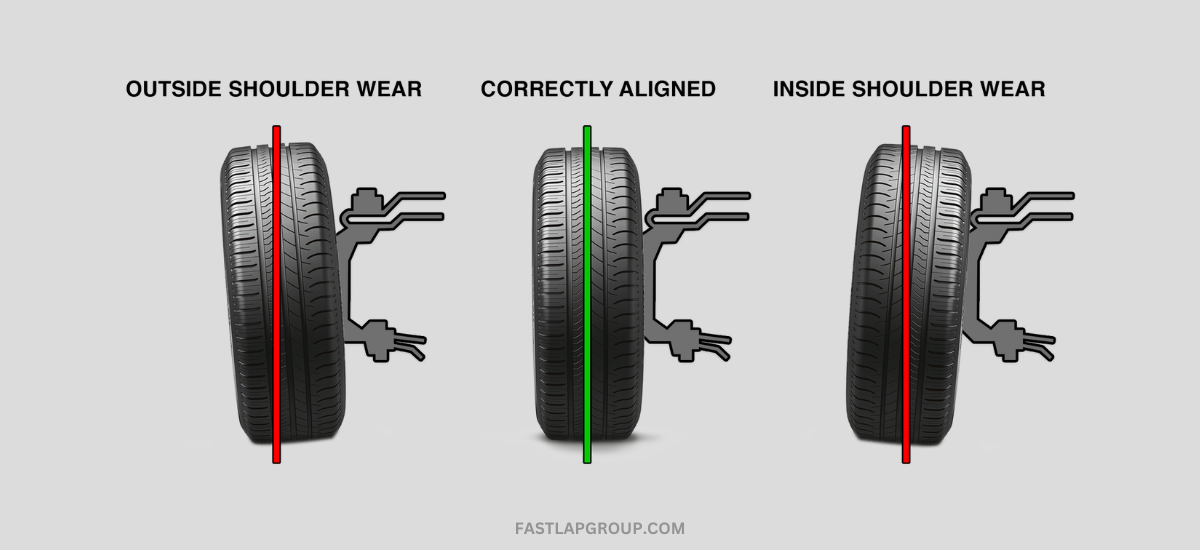
- Camber: The tilt of the tire inward or outward when viewed from the front.
- Toe: Whether the tires point inwards or outwards when viewed from above.
- Caster: The angle of the steering axis when viewed from the side.
A skilled technician uses special machines to measure and adjust these angles to match the car maker’s specs.
When Do You Need Tire Alignment?
You may need an alignment if you notice:
- The car pulls to one side while driving.
- The steering wheel is off-center when driving straight.
- Uneven tire wear, especially on the inside or outside edges.
- Steering feels loose or shaky.
Most experts suggest checking alignment every 12,000 to 15,000 miles, after hitting a big pothole, or when you buy new tires.
Why Is Tire Alignment Important?
Tire alignment is critical for several reasons:
- Prevents uneven wear: Misaligned tires wear out quickly and unevenly, costing you more money.
- Improves handling: Your car feels more stable and responds better to steering.
- Increases fuel efficiency: Aligned tires roll with less resistance, saving fuel.
- Enhances safety: Good alignment means better grip, especially in emergencies or bad weather.
- Reduces stress on suspension: Misalignment can damage parts like shocks, struts, and bushings.
Non-obvious Insights About Tire Alignment
Beginners often miss:
- Alignment can change after small impacts: Even hitting a curb at low speed can affect alignment, not just big accidents.
- Alignment is not permanent: Normal driving, especially on rough roads, can slowly cause misalignment over time.
Key Differences Between Tire Rotation And Tire Alignment
Even though both services help your tires last longer and your car perform better, tire rotation and tire alignment are not the same.
| Feature | Tire Rotation | Tire Alignment |
|---|---|---|
| What it does | Moves tires to different positions | Adjusts angles of the wheels |
| How often | Every 5,000–8,000 miles | Every 12,000–15,000 miles, or as needed |
| Equipment needed | Basic tools (jack, wrench) | Special alignment machines |
| Signs you need it | Uneven tire wear | Pulling, off-center steering, uneven wear |
| DIY possible? | Yes, for some cars | No, must use a shop |
How Tire Rotation And Alignment Impact Tire Life
Both services are crucial for maximizing tire lifespan. Here’s how they work together:
- Rotation prevents one tire from wearing out faster than the others. If you never rotate, the most stressed tires might need replacing at half the normal mileage.
- Alignment ensures that all tires wear in a straight, even line. Misalignment can destroy tires in a few thousand miles.
For example, a well-rotated and aligned set of tires can last 40,000–60,000 miles. Without these services, you may only get 20,000–30,000 miles. Over time, these differences add up—regular care saves you hundreds of dollars.
How To Know If You Need Tire Rotation Or Tire Alignment
Some signs suggest which service you need. Here’s a simple comparison to help you decide:
| Symptom | Likely Needed |
|---|---|
| Uneven wear on front vs rear tires | Tire rotation |
| Steering wheel pulls to one side | Tire alignment |
| Car vibrates at highway speed | Could be alignment or balance |
| Rapid tire wear on one edge | Tire alignment |
| All tires wear evenly, but fast | May need both services |
The Process: What Happens During Tire Rotation And Alignment?
Tire Rotation Process
Rotating tires is a fairly simple process for most cars:
- The mechanic lifts the car and removes all four wheels.
- They check each tire for damage, unusual wear, or objects stuck in the tread.
- Tires are moved to new positions, following the rotation pattern recommended for your car.
- Lug nuts are tightened to the correct torque.
- Sometimes, tire pressure is checked and adjusted.
For cars with a full-size spare, the spare may also be rotated in.
Tire Alignment Process
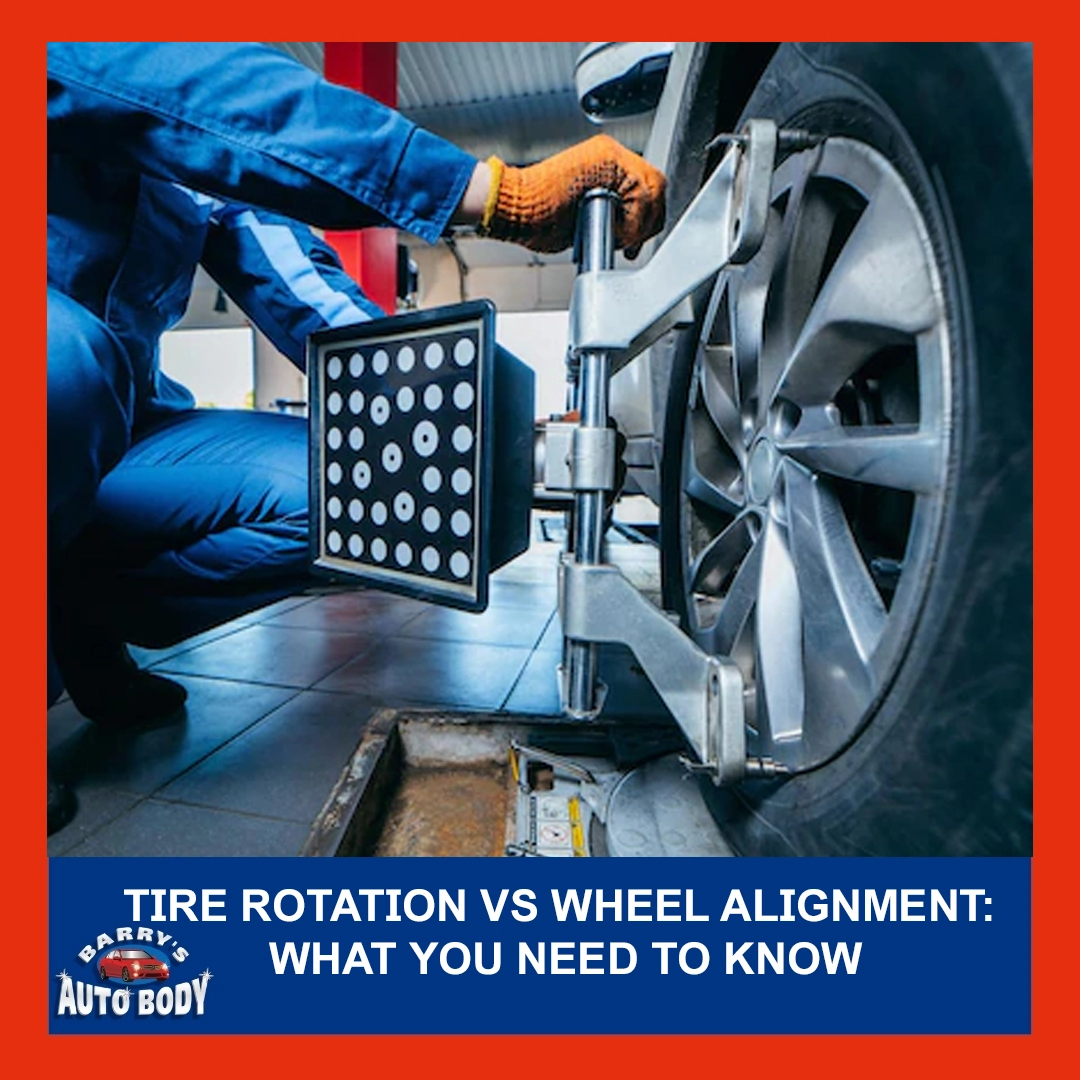
Tire alignment is more complex and requires special equipment:
- The car is placed on an alignment rack.
- Sensors are attached to each wheel.
- The system measures camber, caster, and toe angles.
- The technician adjusts the suspension or steering components until all angles match manufacturer settings.
- A printout shows before-and-after measurements.
Sometimes, a test drive follows to check real-world performance.
Cost Comparison
On average:
- Tire rotation costs $20–$50 per service.
- Tire alignment costs $75–$120 for a four-wheel alignment.
Many shops offer free rotation with other services or tire purchase.
Credit: barrysautobody.com
Common Myths About Tire Rotation And Alignment
Myth 1: Only high-mileage cars need rotation or alignment.
Even new cars need regular tire care. Neglecting these services from the start can cause problems much sooner.
Myth 2: If the car drives straight, alignment is fine.
Slight misalignment can still cause rapid, uneven tire wear even if you don’t feel it in the steering.
Myth 3: Rotation and alignment are the same thing.
As you’ve seen, they are very different jobs.
Myth 4: You only need these services if there’s a problem.
Preventive maintenance is better and cheaper than waiting for damage.
Myth 5: All shops perform these services equally well.
Choose a trusted, experienced mechanic with the right tools for best results.
How Tire Rotation And Alignment Affect Performance And Safety
Handling And Stability
Properly maintained tires help your car handle curves, stops, and emergency maneuvers. Uneven tires or misaligned wheels can cause dangerous skids, especially in wet or snowy weather.
Braking Distance
A car with well-maintained tires stops faster. Uneven tire wear can lengthen stopping distance by several feet—enough to make a difference in an emergency.
Comfort
Cars with rotated and aligned tires ride more smoothly. You’ll notice less vibration, road noise, and steering shake.
Fuel Efficiency
Misaligned tires waste energy. According to the U.S. Department of Energy, proper alignment can improve fuel economy by up to 10%. Over a year, that’s real savings at the pump.
Real-world Examples And Data
- Case 1: A family SUV skipped tire rotation for 15,000 miles. Front tires wore down to 3/32” tread (almost bald), while rear tires still had 7/32”. After rotation, the worn tires moved to the rear, but their life was already shortened by half.
- Case 2: A commuter car hit a pothole and ignored a slight steering pull. Within 4,000 miles, one tire was worn down to the cords on the inside edge, requiring early replacement.
- Case 3: A rideshare driver rotated and aligned tires every 6,000 miles. Tires lasted 55,000 miles and wore evenly, saving about $400 over three years.
Do-it-yourself: Can You Rotate Or Align Tires At Home?
Rotating Tires Yourself
If you have a jack, jack stands, and a wrench, you can rotate tires at home on many vehicles. However, you need to follow the correct rotation pattern and torque the lug nuts properly. Be sure to check tire pressure after you finish.
Aligning Tires At Home
Tire alignment is not a DIY job. It requires special machines and expertise. Trying to adjust alignment without the right tools can make things worse and put your safety at risk.
Tire Rotation And Alignment Mistakes To Avoid
- Skipping the spare tire: If you have a full-size spare, include it in the rotation pattern.
- Ignoring tire pressure: After rotation, always check and set the correct pressure for each tire.
- Neglecting regular checks: Waiting until you see tire wear or steering problems can cost more in the long run.
- Assuming new cars don’t need care: Factory alignment can shift after hitting curbs or potholes.
- Choosing the wrong shop: Look for mechanics with good reviews and modern alignment equipment.
How Tire Rotation And Alignment Affect Tire Warranty
Most tire makers require regular rotation and recommend alignment checks to keep your warranty valid. If you file a warranty claim, they may ask for service records as proof. Skipping these services can void your coverage, costing you money if tires wear out early.

Credit: www.youtube.com
How Weather And Roads Affect Tire Care Needs
If you drive on rough roads, in areas with lots of potholes, or in extreme weather (hot summers, icy winters), your tires and alignment need more frequent checks. Salt, mud, and sand can also speed up tire wear and alignment shifts.
Choosing A Shop For Tire Rotation And Alignment
Look for a shop that:
- Uses modern alignment machines.
- Has trained, certified technicians.
- Offers a printout of alignment measurements.
- Checks for worn suspension parts before aligning.
- Explains their process and answers your questions.
If you buy tires from a large retailer, ask if they include free rotation and alignment checks.
The Bottom Line: Which Is More Important?
Both tire rotation and tire alignment are important for different reasons. Rotation is about even wear; alignment is about correct direction and angles. Skipping either one can lead to more expensive repairs, unsafe driving, and early tire replacement. The best approach is to schedule both services as part of your regular car care routine.
For more technical details about tire alignment, you can read this Wikipedia article on wheel alignment.
Frequently Asked Questions
What Happens If I Never Rotate My Tires?
If you never rotate your tires, the ones in the most stressed positions (usually the front) will wear out much faster. This leads to uneven tread, poor handling, and the need to replace tires sooner. It can also void your tire warranty.
How Do I Know If My Wheels Are Out Of Alignment?
Common signs include your car pulling to one side, a crooked steering wheel, uneven tire wear, or vibration at certain speeds. It’s best to have alignment checked by a professional if you notice any of these symptoms.
Can Tire Rotation Fix Alignment Problems?
No, rotation only moves tires to different positions. It does not adjust angles or correct steering issues. You need a proper alignment service to fix misalignment.
Is Tire Balancing The Same As Rotation Or Alignment?
No. Tire balancing is a separate service that makes sure the tire and wheel spin evenly. It fixes vibration problems but does not move tires or change wheel angles.
How Much Does Tire Rotation And Alignment Cost Together?
Prices vary by location and vehicle, but a combined service usually costs between $100–$150. Many shops offer package deals, especially if you buy new tires or have regular maintenance done.
Caring for your tires is one of the smartest investments you can make in your vehicle. By understanding the difference between tire rotation and tire alignment, you can drive safer, save money, and get the most out of every mile.
Credit: fastlapgroup.com