When looking at your car’s tires, you might see a code like 95H printed on the sidewall. For many drivers, these letters and numbers are confusing. Yet, understanding them is important for your safety and your car’s performance. The code tells you about the load and speed capabilities of the tire. If you pick the wrong one, you risk tire failure, poor handling, or even voiding your warranty.
In this guide, you’ll learn what 95H means on tires, why it matters, and how to make the right choice for your vehicle. We’ll break down each part of the code, explain related terms, give real-world examples, and answer the most common questions drivers have. By the end, you’ll be able to read any tire code confidently and make smarter decisions for your car.
Breaking Down The Tire Code: What Does 95h Mean?
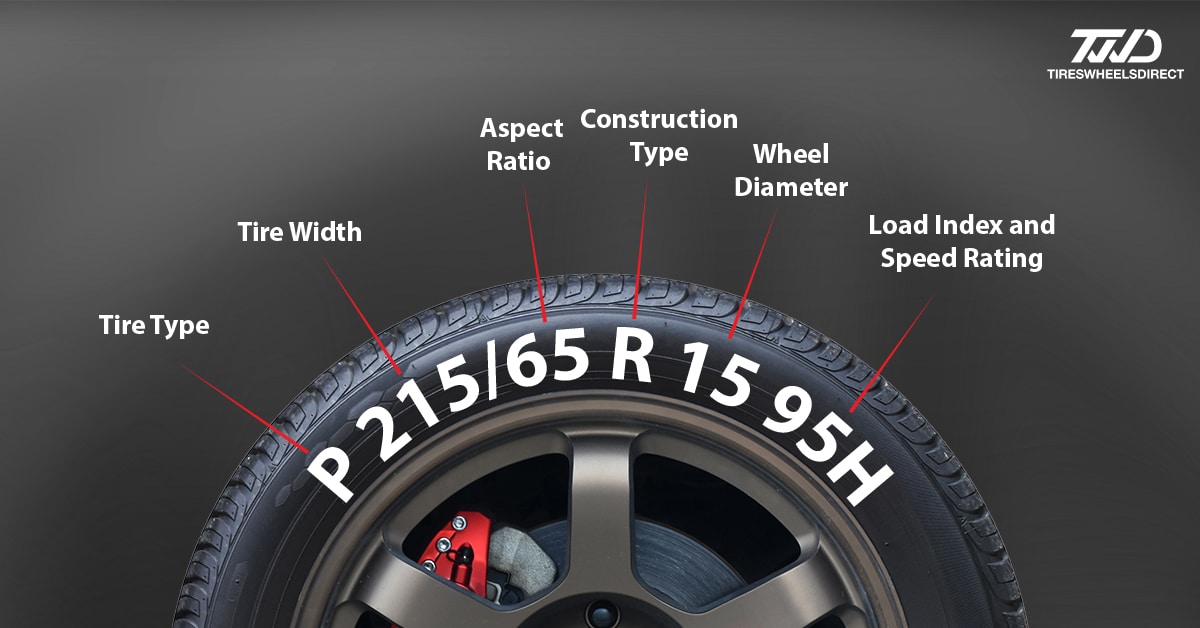
Every tire has a code that looks something like “P205/55R16 95H.” The “95H” part is called the service description. It has two important pieces:
- 95: The load index
- H: The speed rating
Let’s look at each part in detail.
The Load Index: What Does 95 Mean?
The load index is a number that tells you the maximum weight the tire can safely carry. In this case, “95” is the load index.
Here’s how it works:
- The load index is not the weight itself, but a code.
- You need a chart to convert the code to actual weight in kilograms or pounds.
For a load index of 95:
- The maximum load is 690 kg (1521 lbs) per tire.
So, if your car has four tires, the total weight all tires can support is 2760 kg (6044 lbs). But remember, you must consider the weight is divided among all the tires and includes passengers, cargo, and the vehicle itself.
Why Is The Load Index Important?
Choosing the wrong load index can lead to:
- Tire blowouts if overloaded
- Unstable handling
- Faster tire wear
- Legal or insurance issues
Manufacturers recommend a load index based on the car’s design. Always use tires with at least the same load index as listed in your car manual or on the driver’s door sticker.
Common Load Index Numbers And Their Meaning
To help you see how 95 compares to other values, here’s a quick table:
| Load Index | Load Capacity (kg) | Load Capacity (lbs) |
|---|---|---|
| 91 | 615 | 1356 |
| 94 | 670 | 1477 |
| 95 | 690 | 1521 |
| 98 | 750 | 1653 |
| 100 | 800 | 1764 |
As you can see, a higher number means more weight capacity.
The Speed Rating: What Does H Mean?
The speed rating is a letter that shows the maximum speed the tire can handle safely, under its maximum load.
For “H”:
- The tire can safely go up to 210 km/h (130 mph).
Common Speed Ratings
Here’s a comparison of some common speed ratings:
| Speed Rating | Maximum Speed (km/h) | Maximum Speed (mph) | Typical Use |
|---|---|---|---|
| T | 190 | 118 | Family sedans, minivans |
| H | 210 | 130 | Sport sedans, coupes |
| V | 240 | 149 | Performance cars |
| W | 270 | 168 | High-performance cars |
| Y | 300 | 186 | Supercars |
Why Is The Speed Rating Important?
- Safety: Using a tire with a lower speed rating than your car needs can cause tire failure at high speeds.
- Handling: Higher speed ratings often mean better grip and control.
- Legal/Warranty: Some countries and manufacturers require you to use tires with the correct speed rating.
Tip: Even if you never drive at these speeds, always match your tire’s speed rating to your car’s needs.
Why Tire Codes Like 95h Matter
Many drivers think any tire that fits is good enough. This is a mistake. The right load index and speed rating are key for:
- Safety: Too low a load index can cause tire bursts; too low a speed rating can cause overheating.
- Insurance: Wrong tires may void your insurance in an accident.
- Warranty: Car and tire warranties may require specific codes.
- Handling: The right codes ensure your car turns, brakes, and drives as designed.
Car makers choose tire codes after testing. Using the wrong ones changes how your car behaves, especially in emergencies.
How To Find The Right Tire Code For Your Car
Finding the right tire code is not just about size. Here’s how to make sure you get it right:
- Check your owner’s manual: The book in your glove box lists the recommended tire size, load index, and speed rating.
- Look at the door sticker: Most cars have a sticker on the driver’s door jamb with this info.
- Do not just copy what’s on your old tires: Someone might have installed the wrong ones before you.
- Consider your driving needs: If you carry heavy loads or drive at high speeds, you may need higher ratings.
Non-obvious tip: If you switch to winter or all-terrain tires, check if the speed rating is lower. In some countries, it’s legal to use winter tires with a slightly lower speed rating, but always check the rules.
Real-world Examples: Using 95h Tires
Let’s look at some real situations where the 95H code matters.
Scenario 1: Family Sedan
You own a Toyota Camry, which often uses 215/60R16 95H tires. The “95H” means each tire can carry 690 kg, and is safe up to 210 km/h. This is more than enough for most family needs, and matches the car’s specs.
Scenario 2: Upgrading Wheels
You want to put bigger wheels on your car. You find a tire that fits the rim, but its code is 89T. The load index (89) is lower than 95, and the speed rating (T) is also lower. This tire may not be safe for your car, even if it fits.
Scenario 3: Heavy Loads
You drive a carpool or carry heavy cargo often. Your car’s manual says you need at least a load index of 95. Choosing a lower index puts you at risk, especially when the car is full.
Scenario 4: High-speed Driving
You sometimes drive on highways at high speed. Your car needs at least an “H” speed rating. A lower rating might overheat and fail at those speeds.
Credit: tireswheelsdirect.com
The Difference Between 95h, 95v, And 95t
You might see similar codes with different letters. Here’s what changes:
- 95H: Load 690 kg, speed up to 210 km/h
- 95V: Load 690 kg, speed up to 240 km/h
- 95T: Load 690 kg, speed up to 190 km/h
The number (95) stays the same, so all these tires can carry the same weight. The letter changes the safe top speed.
Non-obvious insight: Choosing a higher speed rating (like “V” instead of “H”) can improve handling, but may cost more and wear faster. For city driving, an “H” is often enough.
Can You Change Your Tire’s Load Index Or Speed Rating?
Many drivers ask if they can use a higher or lower load index or speed rating.
- Higher load index/speed rating: Safe, but may be more expensive and stiffer ride.
- Lower load index/speed rating: Not recommended. This can be dangerous and may void your car’s warranty or insurance.
Important: If you change tire type (for example, to winter tires), check local laws. Some areas allow a lower speed rating in winter, but you must put a sticker on your dashboard to remind you.

Credit: vatire.com
How Tire Codes Affect Performance And Comfort
Tire codes do more than just set limits. They also affect how your car feels to drive.
- Higher load index: The tire is often stiffer, which can reduce comfort.
- Higher speed rating: Usually means better grip, but may wear faster and cost more.
- Lower ratings: Softer ride, but less control at high speed or heavy loads.
Expert tip: Always balance comfort, safety, and performance. Do not chase the highest numbers unless you really need them.
How Tire Codes Are Tested
Tire codes are not guesses. Manufacturers test tires in labs and on tracks to set these limits.
- Load index testing: The tire is loaded to its max weight, then run for hours at set speeds.
- Speed rating testing: The tire is run at increasing speeds in a controlled environment until it shows signs of failure.
These tests follow standards set by organizations like the European Tyre and Rim Technical Organisation (ETRTO) and the U.S. Department of Transportation. For more on how these codes are set, check the Wikipedia Tire Code page.
Credit: www.firestonecompleteautocare.com
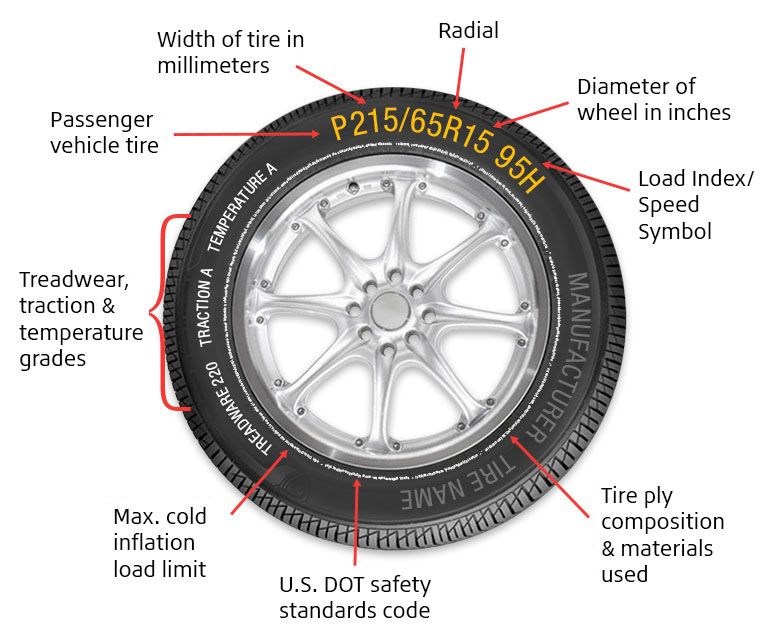
How To Read A Full Tire Sidewall
The “95H” is just part of the tire’s sidewall code. Here’s an example:
- P215/60R16 95H
- P = Passenger car
- 215 = Tire width in mm
- 60 = Aspect ratio (height/width)
- R = Radial construction
- 16 = Rim diameter in inches
- 95 = Load index
- H = Speed rating
Common Mistakes When Choosing Tires
Even experienced drivers can make errors with tire codes. Here are some common mistakes:
- Ignoring the load index: Some pick tires just for size, forgetting weight limits.
- Choosing a lower speed rating: To save money, but risking safety.
- Mixing codes: Using different codes on front and rear tires—this can cause uneven wear or poor handling.
- Trusting old tires: Assuming the current tires are correct, when they may not be.
- Not checking after upgrades: New wheels or suspension parts may need different codes.
Pro tip: Always check both the load index and speed rating, not just size.
When Should You Replace Your Tires?
Knowing your tire code is important, but so is knowing when to replace your tires.
- Tread depth: Less than 1.6 mm (2/32 inch) means it’s time to change.
- Age: Tires older than 6 years, even if not worn, may be unsafe.
- Damage: Bulges, cuts, or cracks are signs to replace now.
- Uneven wear: Can mean wrong tire codes or other problems.
Frequently Asked Questions
What Happens If I Use A Tire With A Lower Load Index Than Recommended?
Using a lower load index means your tires cannot safely support your car’s weight. This increases the risk of blowouts, especially when carrying heavy loads or driving at high speeds. It can also affect your insurance coverage.
Can I Use A Tire With A Higher Speed Rating Than My Car Needs?
Yes, you can use a higher speed rating. In fact, it may give you better handling. However, these tires may wear faster and cost more. It is important to keep the load index the same or higher as recommended.
Is It Okay To Mix Tires With Different Speed Ratings On The Same Car?
Mixing speed ratings is not recommended. It can cause uneven handling, especially in emergencies. Always use the same speed rating (and load index) on all four tires for best safety and performance.
How Do I Find The Correct Tire Code For My Car?
Check your vehicle owner’s manual or the sticker inside the driver’s door. These will list the recommended tire size, load index, and speed rating. Do not just copy what is currently on your car.
Does The “h” Speed Rating Mean I Should Drive At 210 Km/h?
No, the “H” rating means the tire is tested to handle up to 210 km/h safely, but it does not mean you should drive at that speed. Always follow local speed limits and drive safely for road conditions.
Choosing the correct 95H tires for your car is more than just picking something that fits. It’s about safety, performance, and peace of mind. Take the time to check your codes, and you’ll enjoy a smoother, safer ride for years to come.