Fitting the right tires on your vehicle isn’t just about looks—it’s about safety, performance, and comfort. Many people wonder if they can use 15 inch tires on 16 inch rims to save money or change their vehicle’s stance. This question might seem simple, but the answer is more complex. In this article, you’ll find a clear, step-by-step explanation on why wheel and tire sizing matters, the risks of mismatching, and what truly happens if you attempt this swap. If you’re thinking about changing your tire size, read on to understand all the details before making a decision.
Why Tire And Rim Size Must Match
Tires and rims are designed to fit together with extreme precision. The diameter of a tire is measured by the size of the rim it’s meant to fit. A 15 inch tire is made for a 15 inch rim, not a 16 inch one. The reason is simple: the tire’s inner bead—the part that sits on the rim—is sized to lock tightly onto the rim’s edge. If the tire is too small or too large, it simply won’t fit or seal properly.
There’s no safe way to force a 15 inch tire onto a 16 inch rim. Even if you could stretch the rubber, it would not seal, risking air leaks and blowouts. This isn’t just a recommendation—it’s a rule for all modern vehicles.
The Science Behind Tire And Rim Sizes
Car manufacturers spend years engineering the right combination of tire and rim for every model. The size numbers you see on your tire’s sidewall (like 205/65R15) tell you the width, aspect ratio, and rim diameter. The last number (15 in this case) always means the rim diameter in inches.
Let’s look at what happens if you try to fit a 15 inch tire onto a 16 inch rim:
- The rim is too big for the tire’s opening.
- The tire can’t “seat” on the rim, so it won’t hold air.
- Even trying to force the fit will damage both the tire and rim.
15 Key Items To Consider Before Attempting This Swap
If you are tempted to try putting 15 inch tires on 16 inch rims, you need to understand all the risks and consequences. Here are 15 important things you must know, explained one by one.
1. Actual Sizing Standards
Tire and rim sizes are not suggestions—they’re international standards. Every 15 inch tire is engineered to fit a rim that is exactly 15 inches in diameter at the bead. A 16 inch rim is one full inch larger in diameter at this point. This means the tire bead simply cannot stretch to fit.
2. Safety Risks
Trying to install a mismatched tire and rim is extremely dangerous. If you somehow force the tire onto the rim, the bead can’t seal. This often causes sudden air loss (blowout) at speed, which can lead to accidents. In some cases, the tire might “pop off” the rim completely while driving.
3. Mounting Difficulty
No professional tire shop will mount a 15 inch tire on a 16 inch rim. Specialized equipment is designed to work with correct sizes only. Even if you tried at home, it would be nearly impossible and would likely destroy the tire.
4. Air Pressure Loss
A tire’s bead must seal against the rim to hold air. With a 1 inch gap, the air will leak instantly. Even temporary inflation is impossible. This is not a slow leak—your tire will not hold air at all.
5. Potential For Rim Damage
Forcing the wrong tire onto a rim often bends or scratches the rim’s edge. This can ruin expensive alloy or steel wheels. Once a rim is damaged, it may not hold air with any tire.
6. Tire Bead Stretching
Even if you try to heat or stretch the tire bead to fit, you’ll weaken the tire structure. The bead is reinforced with steel wires that are not designed to stretch. Any attempt to do so risks internal damage, making the tire unsafe even if it “looks” OK.
7. Handling And Performance
Mismatched tires and rims destroy the car’s handling. You’ll feel poor steering response, vibration, and much less grip. In emergencies, the car may not respond as you expect, increasing crash risk.
8. Legal And Insurance Issues
In many countries, fitting mismatched tires and rims is illegal. If you have an accident, your insurance may refuse to pay because your car was not “roadworthy.” Police can also issue fines for using unsafe equipment.
9. Tire Shop Policies
Professional shops follow strict guidelines for tire mounting. They will check your tire and rim sizes before any work. If you bring mismatched parts, they will refuse service—not just for your safety, but for their legal protection.
10. Vehicle Warranty Concerns
Most car warranties require that you use recommended tire and rim sizes. If you cause damage with the wrong setup, your warranty could be voided. This could leave you paying for expensive repairs yourself.
11. Tpms Sensor Issues
Many cars today have Tire Pressure Monitoring Systems (TPMS). These sensors require a proper seal between tire and rim. With an improper fit, the system will always show a warning or may stop working, making it impossible to monitor tire pressure accurately.
12. Speedometer And Odometer Accuracy
The overall diameter of your tire affects your speedometer and odometer. If you somehow changed rim and tire sizes incorrectly, your readings would be wrong. This could cause you to drive faster than you think, risking tickets and accidents.
13. Ride Comfort
A proper tire and rim combination gives the smoothest ride. Mismatched parts can cause harshness, vibration, and even tire “bounce. ” Over time, this damages your suspension and makes driving uncomfortable.
14. Resale Value Impact
If you modify your car with unsafe tire/rim combinations, you’ll hurt its resale value. Buyers and dealers avoid cars with non-standard wheels, and some may refuse to buy altogether.
15. Alternatives To Consider
If you want a different look or performance, the safe way is to buy a proper wheel and tire package. Choose 15 inch rims with 15 inch tires, or 16 inch rims with 16 inch tires. This way, everything fits, works safely, and often improves your driving experience.
Comparing 15 Inch And 16 Inch Tire/rim Combinations
To help you see the practical differences, here’s a side-by-side comparison of typical 15 inch and 16 inch setups for a mid-size car.
| Feature | 15 Inch Setup | 16 Inch Setup |
|---|---|---|
| Rim Diameter | 15 inches | 16 inches |
| Typical Tire Size | 195/65R15 | 205/55R16 |
| Overall Diameter | 25.0 inches | 24.9 inches |
| Ride Comfort | Softer | Stiffer |
| Handling | Good | Better |
| Cost | Lower | Higher |
As you can see, both options work well when matched correctly. Problems only arise if you try to mix them.

Credit: www.reddit.com
Why The Bead Matters Most
The bead is the hidden hero of every tire. It’s a thick, reinforced edge lined with steel wire, designed to snap firmly onto the rim. The bead’s job is to keep the tire seated and hold air under high pressure and speed. A 15 inch bead is precisely 1 inch smaller in diameter than a 16 inch rim. This small difference is critical—there’s no room for error.
Here’s a quick look at bead fit:
| Rim Size | Tire Bead Size | Will it Fit? |
|---|---|---|
| 15 inch | 15 inch | Yes, perfect fit |
| 16 inch | 15 inch | No, impossible |
| 16 inch | 16 inch | Yes, perfect fit |
Tire And Rim Markings Explained
When choosing new tires or wheels, always check the markings:
- Tire sidewall: The last number (e.g., 205/65R15) shows the rim diameter in inches.
- Rim marking: Usually stamped or engraved on the back, like “16×6.5J”.
Both numbers must match for safe mounting.
Credit: postletire.com
What If You Need Smaller Tires?
If you want smaller tires for winter driving or off-road use, you must also buy smaller rims. For example, swap both your 16 inch rims and tires for a 15 inch set. Never try to fit a smaller tire on a larger rim.
Real-world Examples
Many drivers have tried to swap sizes and ended up with ruined tires, bent rims, and big repair bills. Tire shops often share stories about people attempting to “make it work,” but it always ends in failure. The best advice is to avoid shortcuts and stick with recommended sizes.
Non-obvious Insights Most People Miss
- Aftermarket wheel packages: If you want a new look, many companies sell matched wheel and tire sets. These are engineered for your car’s bolt pattern and fit perfectly. It’s often cheaper and safer than trying to mix and match.
- Spare tires: Even your spare tire is carefully matched to your car’s rim size. Never try to put a “donut” spare on a larger rim.
Professional Advice For Tire Changes
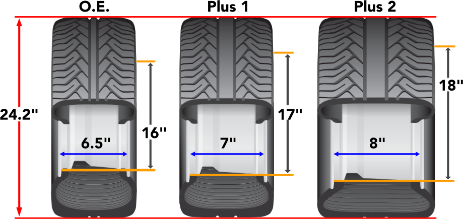
If you want to upsize or downsize your wheels, consult a pro. Tire shops can suggest the best plus sizing options—like going from 15 to 16 inch wheels with the right tires. They’ll also help you keep your car’s handling, comfort, and safety.
For more details about tire and rim sizing standards, you can check this Wikipedia article on tire code.

Credit: www.discountedwheelwarehouse.com
Frequently Asked Questions
Can I Physically Fit A 15 Inch Tire On A 16 Inch Rim?
No, it’s not possible. The tire’s bead is simply too small to fit over a larger rim. Trying will only damage both parts and is unsafe.
What If I Use Tire Mounting Tools Or Heat To Stretch The Tire?
Even with tools or heat, stretching a 15 inch tire to fit a 16 inch rim will damage the bead and the tire structure. The tire will not seal or hold air and will be unsafe.
Are There Any Exceptions Or Special Adapters I Can Use?
No, there are no adapters or tricks to make a 15 inch tire fit a 16 inch rim. You must use matching sizes. Adapters are for changing bolt patterns, not tire/rim fit.
Can I Use A 16 Inch Tire On A 15 Inch Rim?
No, the same rule applies in reverse. The bead of a 16 inch tire is too large to seal on a 15 inch rim. Always match tire size to rim size.
What Should I Do If I Want Smaller Or Larger Tires?
Buy a matching set of rims and tires in your desired size. This ensures proper fit, safety, and performance.
Choosing the correct tire and rim combination is critical for your car’s safety and your peace of mind. Never attempt to fit a 15 inch tire on a 16 inch rim. Instead, follow manufacturer guidelines, and consult professionals for any upgrades or changes.
Your car, your wallet, and your safety will thank you.