
Continental Tires Vs Goodyear Tires: The Ultimate Comparison
Choosing the right tires for your car is a serious decision. Your tires are the only part of your vehicle that touches the road. They affect your safety, how your car handles, and even how much fuel you use. If you are considering Continental tires or Goodyear tires, you are already looking at two of the most respected brands in the world. But which one is truly better for your needs?
There is no simple answer. Both companies have long histories, advanced technology, and loyal customers. But their products are not identical. The best choice depends on what you drive, where you live, and what you expect from your tires. This article breaks down everything you need to know, from real-world performance to price and warranty.
By the end, you will feel confident choosing between Continental and Goodyear.
Brand Histories And Reputation
When it comes to trust, both brands have strong stories. Continental was founded in Germany in 1871. It is now one of the world’s top five tire makers. Known for its focus on safety and innovation, Continental supplies tires for premium car brands like BMW, Mercedes, and Audi.
Goodyear started in the United States in 1898. Today, it is one of the largest tire companies globally. Goodyear is famous for its racing history, including the legendary Goodyear Blimp. The company has a reputation for durable tires and strong all-season options.
Non-obvious insight: Continental is sometimes picked by carmakers as original equipment (OE), especially for luxury vehicles. This means their tires are chosen for new cars leaving the factory, which is a sign of trust in quality. Goodyear, meanwhile, has a big presence in the American market and NASCAR, which often influences buyers who value sportiness and American engineering.
Product Lineup And Offerings
Both brands offer a wide range of tires for different vehicles and needs. Here’s how they compare:
Continental
- PremiumContact Series: Focuses on comfort and wet grip for family cars and sedans.
- SportContact Series: Designed for high-performance and sports cars.
- EcoContact: Prioritizes fuel efficiency and low rolling resistance.
- CrossContact: Aimed at SUVs and crossovers.
- WinterContact: Specializes in winter traction.
Goodyear
- Assurance Series: Known for all-season reliability and long tread life.
- Eagle Series: Targets performance cars and sporty driving.
- EfficientGrip: Focuses on fuel efficiency.
- Wrangler: Built for trucks, SUVs, and off-road use.
- UltraGrip: Designed for winter conditions.
Non-obvious insight: Continental often includes “ContiSeal” technology in some models, which can self-seal small punctures. Goodyear has “RunOnFlat” technology, allowing you to drive short distances after a puncture. Not all models have these features, so check the details before buying.
Performance: Dry Grip, Wet Grip, And Handling
How Do Continental And Goodyear Compare In Real-world Driving?
Dry Road Performance
Both brands make excellent tires for dry roads. Independent tests often show Continental with a slight edge in steering response, especially in their SportContact line. These tires give a precise, sporty feel.
Goodyear’s Eagle series matches well but sometimes feels a bit softer. This is not a bad thing—it can mean a more comfortable ride. For everyday driving, both are excellent, but if you love sharp cornering, Continental might have a small advantage.
Wet Road Performance
Wet grip is critical for safety. Continental is known for excellent wet braking, thanks to advanced tread patterns and special rubber compounds. Many European tire tests place Continental at or near the top for wet conditions.
Goodyear also performs well, especially with their Assurance WeatherReady and Vector 4Seasons lines. These tires use “3D TredLock” technology to bite into wet surfaces. However, in head-to-head tests, Continental often stops a few feet shorter in emergency wet braking.
Handling And Control
Both companies use high-tech designs to give you control in corners and at high speeds. If you drive a sports car or want maximum grip, look at Continental’s SportContact or Goodyear’s Eagle F1 tires. The differences are small, and most drivers will not notice unless pushing their car to the limits.
Comfort And Noise
No one likes a loud, bumpy ride. Tire comfort depends on the design, rubber compound, and tread pattern.
Continental’s PremiumContact and EcoContact series are tuned for a quiet, smooth ride. The tread blocks are designed to reduce road noise. Many users say Continental tires are among the quietest, especially at highway speeds.
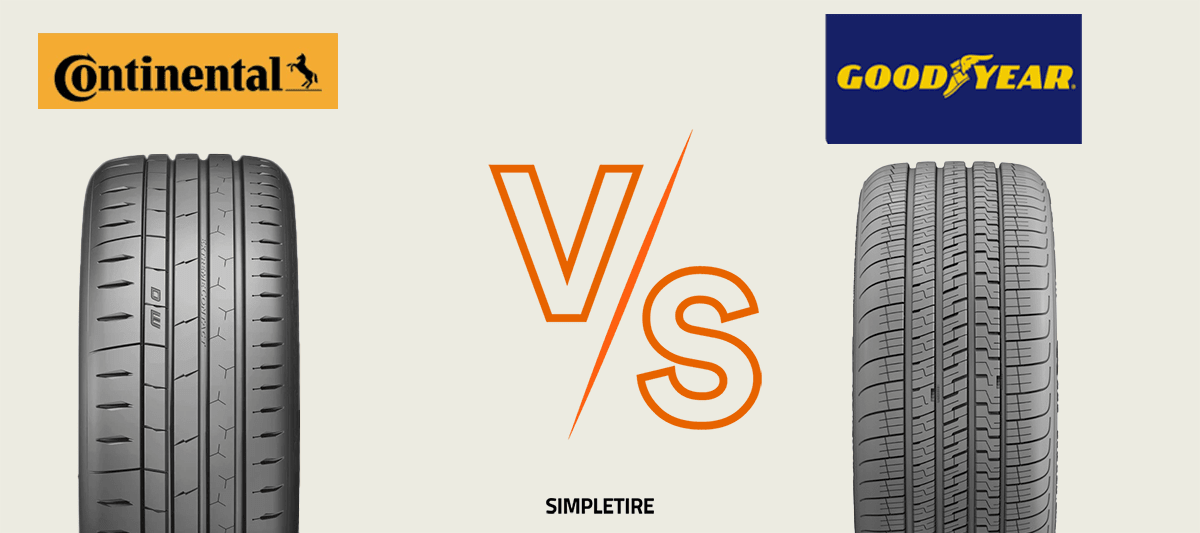
Goodyear’s Assurance ComfortDrive and EfficientGrip also focus on comfort. Goodyear sometimes uses a foam layer inside the tire to absorb sound. In practice, both brands are very good, but Continental often receives slightly higher scores in independent comfort tests.
Credit: simpletire.com
Tread Life And Durability
Tread life is how long your tires last before they need replacement. It depends on your driving, the roads, and how well you maintain your tires. But some brands do better than others.
Goodyear is famous for long-lasting tires, especially in the Assurance and Wrangler series. Many Goodyear tires come with mileage warranties of 60,000 to 80,000 miles. This is attractive if you drive a lot and want to save money over time.
Continental also makes durable tires, but their focus is sometimes more on performance than maximum lifespan. Some of their high-performance tires may wear faster, especially if driven aggressively. However, their touring and eco-friendly lines compete well in tread life.
A non-obvious insight: Tire rotation, alignment, and keeping proper air pressure are just as important as the brand you pick. Even the best tire will wear out quickly if not cared for.
All-season, Summer, And Winter Tire Choices
Where you live and the weather matter a lot. Here’s how both brands perform in each category:
All-season Tires
- Goodyear Assurance: Known for good year-round grip and long life.
- Continental TrueContact Tour: Strong wet and dry grip, with good comfort.
Summer Tires
- Continental SportContact: Top-rated for grip and steering response.
- Goodyear Eagle F1 Asymmetric: Excellent for sporty cars and dry roads.
Winter Tires
- Goodyear UltraGrip: Popular for snow and slush, uses special tread for ice.
- Continental WinterContact: Highly rated in Europe for snowy and icy roads.
If you live where winters are harsh, a dedicated winter tire is a smart investment. All-season tires are a compromise and may not be safe in heavy snow.

Credit: www.youtube.com
Price Comparison: Value For Money
Tire prices can change based on size, model, and where you buy. But here’s a general comparison:
- Continental tires are often slightly more expensive, especially their premium lines. Expect to pay more for advanced technology and European engineering.
- Goodyear is sometimes a bit cheaper, especially for common sizes and models. Their large network allows for more deals and sales.
However, the price difference is not always big. Sometimes, a Goodyear tire with advanced features can cost more than a basic Continental model. The key is to compare the exact model for your car.
Below is a typical price range for both brands (prices are for reference only and can change):
| Brand | All-Season (per tire) | Performance (per tire) | Winter (per tire) |
|---|---|---|---|
| Continental | $120 – $190 | $160 – $250 | $130 – $200 |
| Goodyear | $110 – $180 | $150 – $230 | $120 – $190 |
Non-obvious insight: Sometimes, local tire shops offer installation deals or rebates that can make a more expensive tire end up costing less overall. Always ask about total price, including mounting and balancing.
Safety And Braking Performance
Tire safety comes down to how quickly you can stop, especially in emergencies. Both brands invest heavily in safety.
Independent tests by groups like ADAC and Consumer Reports often show Continental with a small edge in wet braking. This is due to their focus on advanced tread patterns and special silica rubber compounds.
Goodyear is not far behind and sometimes wins in dry braking or snow handling, especially with the UltraGrip line.
Here are some typical stopping distances from 60 mph (wet road, new tire):
| Tire Model | Stopping Distance (feet) |
|---|---|
| Continental PremiumContact 6 | 120 ft |
| Goodyear Assurance WeatherReady | 125 ft |
| Continental SportContact 7 | 118 ft |
| Goodyear Eagle F1 Asymmetric 5 | 123 ft |
These differences may seem small, but even a few feet can make a big difference in a real-world emergency.
Warranty And Customer Support
Warranties give you peace of mind. Both brands offer strong warranty coverage, but there are differences.
- Goodyear usually offers longer mileage warranties, especially on touring tires (up to 80,000 miles).
- Continental often offers 60,000–70,000-mile warranties on their touring and eco lines, but less on high-performance tires.
Both brands include road hazard protection on some tires, but not all. Check the details for your chosen model.
Customer support is strong for both, with wide dealer networks and online help. Goodyear has more locations in the United States, which can make finding service easier.
A non-obvious insight: Always register your tires online after buying. This speeds up warranty claims and recalls.
Technology And Innovation
Both companies spend millions on research. Here are some of their key technologies:
Continental
- ContiSeal: Repairs small punctures automatically.
- ContiSilent: Foam layer inside tire for less noise.
- Black Chili Compound: Special rubber for better grip.
Goodyear
- RunOnFlat: Drive up to 50 miles after a puncture.
- SoundComfort Technology: Reduces noise inside the car.
- ActiveBraking: Tread design that shortens stopping distances.
Both brands are working on smart tires with sensors to measure pressure and wear in real time. This could become standard in the next few years.
Environmental Impact
Tire production and disposal can hurt the environment. Both companies are working to reduce their impact.
- Continental uses more renewable materials and aims to make tires from recycled bottles and dandelion rubber.
- Goodyear is building tires with soybean oil and silica from rice husk ash, which uses less petroleum.
Both companies recycle old tires and are working to make tires last longer, which reduces waste.
Non-obvious insight: Low rolling resistance tires (like Continental EcoContact and Goodyear EfficientGrip) can improve your car’s fuel economy by up to 4%, saving money and reducing emissions.
Real-world User Reviews
It’s easy to focus on test results, but what do real drivers say?
Continental users often praise the quiet ride, strong wet grip, and “confident” feeling at high speeds. Some note faster tread wear on sportier models.
Goodyear owners like the long tread life, good value for money, and solid performance in all weather. Some report more road noise on certain models, especially as the tires get older.
Both companies have millions of happy customers, but it is smart to read reviews for your specific tire size and car model before buying.
Credit: www.youtube.com
Which Tire Is Best For You?
Here’s how to decide:
- If you drive a luxury or performance car, or you want the best wet grip and quiet ride, Continental is often the top pick.
- If you want long life, a good warranty, and value for money, Goodyear is a great choice.
- For off-road or truck tires, Goodyear’s Wrangler line is a classic.
- If you care about fuel savings and eco-friendliness, both have strong options.
Remember, the best tire is the one that fits your needs, not just the brand with the best marketing.
Side-by-side Comparison Summary
To make your choice clearer, here’s a direct feature comparison:
| Feature | Continental | Goodyear |
|---|---|---|
| Dry Grip | Excellent | Very Good |
| Wet Grip | Top-rated | Strong |
| Comfort/Noise | Very Quiet | Quiet |
| Tread Life | Good | Excellent |
| Warranty | Up to 70,000 miles | Up to 80,000 miles |
| Price | Slightly Higher | Competitive |
| Innovation | Strong | Strong |
| Environmental Efforts | Advanced | Advanced |
Frequently Asked Questions
Which Brand Is Better Overall: Continental Or Goodyear?
Both are among the best tire brands in the world. Continental is often praised for wet grip and quiet ride, while Goodyear is known for long tread life and value. The best choice depends on your car, driving style, and priorities.
Are Continental Tires More Expensive Than Goodyear?
In many cases, Continental tires cost a bit more, especially their high-end or performance models. Goodyear offers more price options, but prices overlap depending on the specific tire.
Which Tires Last Longer, Continental Or Goodyear?
Goodyear is famous for longer tread life, with some models covered by up to 80,000-mile warranties. Continental tires also last long, especially their touring models, but high-performance versions may wear faster.
Are Continental Or Goodyear Tires Better For Winter?
Both brands offer excellent winter tires. Continental’s WinterContact and Goodyear’s UltraGrip are highly rated in snow and ice. For harsh winters, either brand is a safe choice, but always use a dedicated winter tire for best safety.
Where Can I Find Reliable Tire Test Results For These Brands?
Check trusted sources like Tire Rack for independent tests, user reviews, and expert ratings. They compare Continental and Goodyear tires in real-world conditions.
Choosing between Continental and Goodyear is not always easy, but with the information above, you can make a smart, confident decision. The right tire will keep you safe, comfortable, and happy on every journey.