When you’re standing in front of a wall of tires, two names often stand out: Continental and Hankook. Both are global brands, each with decades of experience and millions of loyal drivers. But which one is right for you? The answer isn’t as simple as picking the most famous brand or the cheapest price. The real difference lies in the details—performance in different conditions, technology, safety, lifespan, and the value you get for your money.
Choosing the right tire has a huge impact on how your vehicle feels on the road. It affects safety, comfort, and even fuel costs. This article digs deep into every angle of the Continental vs Hankook tires debate. You’ll learn how each brand performs in real-world situations, what sets them apart, and how to match the right tire to your driving style. You’ll also find expert insights, surprising facts, and practical tips most beginners overlook. By the end, you’ll be ready to make a confident, informed decision—no matter if you’re a city commuter, a road trip lover, or someone who faces tough weather.
Continental And Hankook: Brand Backgrounds
Understanding the roots of each company helps you see what drives their products.
Continental is a German company founded in 1871. It is one of the world’s top five tire manufacturers, known for high-end technology and innovation. They’ve been supplying tires for car makers like BMW, Mercedes, and Audi for years. Continental is famous for safety features, eco-friendly designs, and tires that handle well on European roads.
Hankook started in South Korea in 1941. While younger than Continental, Hankook is now one of the largest tire companies globally. They supply original equipment tires to brands like Hyundai, Kia, and even some Ford and Volkswagen models. Hankook is best known for affordable prices, steady quality, and a focus on making tires for all types of drivers.
Both brands have a huge range, but their strengths and priorities are different. Continental often leads in advanced tech and premium performance, while Hankook shines in value and reliability.
Tire Performance: Dry, Wet, And Snow
How your tires handle in different conditions can save lives. Let’s break down how Continental and Hankook compare in three key situations.
Dry Road Handling
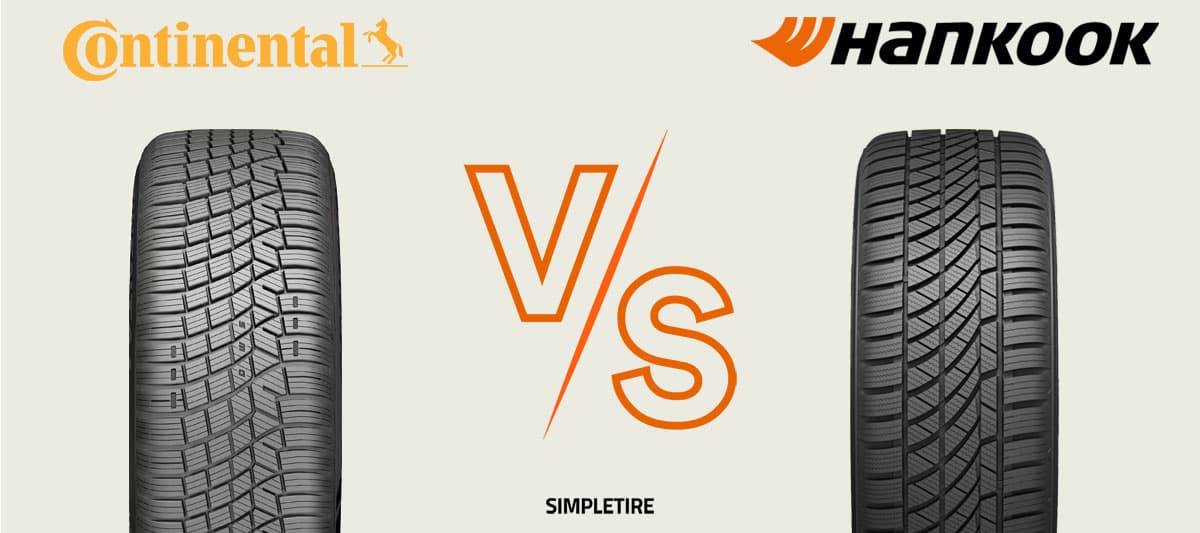
Continental tires are often praised for sharp steering and strong grip. Their tread designs and rubber blends help drivers feel in control, especially at higher speeds or during quick turns.
Hankook tires are stable and predictable on dry roads. While not as sporty as Continental, they offer a comfortable and safe ride for everyday driving.
Example: In tests by European auto magazines, Continental’s PremiumContact 6 outperformed Hankook’s Ventus Prime3 in cornering and braking on dry pavement, stopping up to 1-2 meters shorter from 100 km/h.
Wet Road Safety
Continental invests heavily in wet grip technology. Special tread patterns push water away fast, reducing the risk of hydroplaning. Their silica-rich compounds boost wet road traction, giving drivers confidence even in heavy rain.
Hankook has improved its wet weather tires in recent years. Models like the Kinergy 4S2 offer good wet grip for the price, but in head-to-head tests, Continental usually brakes shorter and stays more stable.
Non-obvious insight: Many drivers don’t realize that wet grip often matters more than dry grip. Most accidents happen in wet conditions, so these differences can be crucial.
Snow And Winter Performance
Continental has won many awards for its winter tire lineup, especially the WinterContact series. These tires use flexible compounds that stay soft in freezing weather, plus small biting edges that grab snow and ice.
Hankook makes reliable winter tires, such as the Winter i*cept evo2. They perform well in light snow and cold, but expert tests show Continental often delivers better braking and cornering on ice.
Practical tip: Winter tires are only as good as their age. Both brands recommend changing winter tires every 5-6 years, even if they look fine.
Tire Technology And Innovation
Both brands invest in research and development, but their focus areas are different.
Continental is a leader in new technology. They introduced innovations like ContiSeal (a self-sealing tire for small punctures) and ContiSilent (noise-reducing foam inside the tire). Their run-flat tires let you keep driving after a puncture, giving extra peace of mind. Many Continental models feature sensors that connect to your car’s electronics for real-time tire monitoring.
Hankook is fast catching up. Their Sound Absorber tech also cuts road noise, and their Aqua Driving Control helps maintain grip on wet roads. Hankook recently launched smart tires that communicate with vehicle systems, but these are mainly seen in newer electric vehicles and concept cars.
Non-obvious insight: Most drivers don’t use all the advanced features they pay for. Unless your car supports these technologies, the extra cost may not be worth it.
Price And Value For Money
Let’s face it—price matters to almost everyone. Here’s how Continental and Hankook compare in terms of cost and what you get for your money.
Continental is positioned as a premium brand. Their tires often cost 15–30% more than similar Hankook models. The extra price covers advanced technology, longer warranties, and higher performance in demanding conditions.
Hankook is often seen as the smart choice for budget-conscious drivers. You get steady performance and safety at a lower price. For city driving and normal weather, Hankook delivers great value.
Here’s a quick look at typical prices for popular tire sizes (as of 2023):
| Size | Continental (USD) | Hankook (USD) |
|---|---|---|
| 205/55 R16 | 110–130 | 85–100 |
| 225/45 R17 | 135–160 | 100–120 |
| 195/65 R15 | 95–110 | 75–90 |
Practical advice: For high-performance cars or extreme weather, the extra cost for Continental may be worth it. For everyday use, Hankook often makes more sense.
Tread Life And Durability
How long will your tires last? It depends on the brand, model, driving style, and road conditions.
Continental tires are engineered for high mileage, especially their touring and eco-focused models. Many drivers report getting 40,000–70,000 miles from Continental tires, with even tread wear and strong sidewalls.
Hankook tires are usually built for 35,000–60,000 miles. Their tread compounds are durable, but they may wear a bit faster under aggressive driving or on rough roads. However, Hankook’s all-season tires often come with competitive mileage warranties.
Example: The Continental TrueContact Tour has an 80,000-mile warranty, while the Hankook Kinergy PT offers up to 75,000 miles. The real-world difference is often smaller than the numbers suggest, as tire care plays a big role.
Non-obvious insight: Regular tire rotation and proper inflation can add 10,000+ miles to the life of any tire, regardless of brand.
Comfort And Noise
Comfort isn’t just a luxury—it affects your daily drive. Let’s see how these brands compare.
Continental puts a big emphasis on ride comfort, using special materials to reduce vibrations and road noise. Their ContiSilent technology, available on some models, uses a foam layer to cut noise inside the cabin by up to 9 decibels.
Hankook also works to make tires quieter and smoother. Their Optimo and Kinergy lines are designed for daily comfort, though a few budget models can be a bit noisier on rough roads.
Insight for beginners: The quietest tire isn’t always the best for performance. Sometimes, sportier tires are a bit louder due to their tread pattern.
Credit: simpletire.com
Popular Models Compared
To make things easier, here’s a side-by-side look at some of the most popular tire models from each brand.
| Segment | Continental | Hankook |
|---|---|---|
| All-Season Touring | TrueContact Tour | Kinergy PT |
| Performance Summer | PremiumContact 6 | Ventus S1 evo3 |
| Winter/Snow | WinterContact TS 860 | Winter i*cept evo2 |
| All-Terrain/SUV | CrossContact LX25 | Dynapro AT2 |
Quick takeaway: Each brand has a model for almost every need, but Continental’s premium options often edge out Hankook in expert tests, especially for wet grip and winter handling. Hankook shines in value and dependability, especially for everyday cars.
Warranty And After-sale Support
A good warranty can make a big difference if something goes wrong.
Continental usually offers 60,000 to 80,000-mile treadwear warranties on passenger tires, plus a limited warranty for 6 years. They also include a 12-month road hazard policy on some models.
Hankook matches closely, with 60,000 to 75,000-mile treadwear warranties and a 6-year limited warranty. In some regions, Hankook includes a 30-day free trial—if you’re not happy, you can exchange the tires.
Non-obvious insight: Warranties don’t cover all damage. Most exclude road hazards, curb hits, or improper maintenance. Always read the fine print.
Environmental Impact
Eco-friendly tires are growing in importance. Both brands are making progress, but their approach differs.
Continental leads with eco-innovation. Their EcoContact range is designed for low rolling resistance, which can boost fuel economy by up to 5%. Continental is also investing in dandelion rubber, a sustainable alternative to traditional rubber.
Hankook focuses on making tires lighter and more energy-efficient. Their Kinergy Eco2 uses special compounds to cut rolling resistance and lower CO2 emissions. While both brands recycle old tires, Continental is more aggressive in promoting green materials and processes.
Practical tip: Low rolling resistance tires can save up to 60 liters of fuel over their lifetime, according to industry studies.
Original Equipment (oe) Partnerships
Automakers trust these brands to put their tires on new cars. This says a lot about quality.
Continental supplies OE tires for luxury brands like BMW, Mercedes-Benz, Audi, and Porsche. Their tires are chosen for their balance of safety, comfort, and performance.
Hankook is the official OE supplier for Hyundai, Kia, Ford, and some Volkswagen models. More recently, Hankook has started supplying tires for electric vehicles, like the Porsche Taycan and Volkswagen ID.4.
Insight for buyers: If your car was delivered with Continental or Hankook tires, replacing them with the same brand often keeps the original feel and performance.

Credit: www.youtube.com
User Reviews And Expert Ratings
What Do Real Drivers And Professionals Say?
Continental tires often receive high marks for safety, wet grip, and quietness. In magazine tests, they frequently rank at or near the top. For example, the Continental PremiumContact 6 won the 2022 Auto Bild All-Season Tire Test.
Hankook scores well for value and reliability. Many users say Hankook tires last long and perform well for daily driving. Some experts note that Hankook has narrowed the gap with premium brands in recent years.
Non-obvious insight: User reviews can be biased by driving style and local road conditions. Always check several sources.
When To Choose Continental
Continental is a strong pick when you:
- Drive in areas with heavy rain or snow.
- Value top safety and the latest technology.
- Own a high-performance or luxury car.
- Want a longer treadwear warranty.
- Don’t mind paying a premium for maximum performance.
Example: If you often drive on fast highways or mountain roads, Continental’s grip and stability can make a noticeable difference.
When To Choose Hankook
Hankook is a smart choice if you:
- Want good performance without a high price tag.
- Mostly drive in cities or mild climates.
- Need reliable tires for daily use.
- Have a compact, mid-size, or family vehicle.
- Value comfort and a quiet ride.
Example: For city commuters who mainly drive short distances, Hankook offers everything you need without extra cost.
Common Mistakes When Choosing Tires
Even experienced drivers make these errors:
- Choosing by price alone: Cheap tires can cost more in the long run if they wear out quickly or don’t grip in emergencies.
- Ignoring your car’s needs: High-performance cars need tires that match their power and weight.
- Forgetting about climate: Summer tires are dangerous in snow; winter tires are noisy and wear fast in heat.
- Not checking manufacturing date: Old tires, even if unused, can be unsafe.
- Skipping regular maintenance: Even the best tires need rotation, alignment, and correct pressure.
Real-world Comparison: Owner Experiences
Drivers often share stories that don’t show up in lab tests. For example, some report that their Continental tires lasted over 60,000 miles with steady grip, while others say Hankook tires handled potholes better without sidewall damage. Fleet owners sometimes choose Hankook for large vehicles to save on costs, while sports car drivers stick with Continental for the best cornering.
Non-obvious insight: Tires that perform well on test tracks may feel different on rough city roads. Always consider your own driving habits.
How To Decide: Key Factors To Consider
Before you buy, answer these questions:
- What’s your climate? If you face lots of rain or snow, Continental’s advanced grip is worth it.
- What’s your budget? If you need to save money without losing safety, Hankook is a good bet.
- How do you drive? Aggressive drivers benefit from Continental’s sporty feel, while calm drivers enjoy Hankook’s comfort.
- What’s your car? Match tire rating (speed/load) to your vehicle’s needs.
- How long do you keep tires? If you drive a lot, invest in a higher-mileage model.
Side-by-side Summary
Here’s a quick overview to help you compare:
| Feature | Continental | Hankook |
|---|---|---|
| Price | Premium | Affordable |
| Wet Grip | Excellent | Good |
| Dry Handling | Very Good | Good |
| Tread Life | Long | Moderate–Long |
| Comfort/Noise | Very Quiet | Quiet |
| Eco-Friendliness | High | Moderate |
| Warranty | 60–80k miles | 60–75k miles |
Frequently Asked Questions
Is Continental Really Better Than Hankook?
Both brands are excellent, but Continental often scores higher in independent tests for wet grip, winter handling, and advanced technology. Hankook is a great option for value and steady performance. The best choice depends on your needs and budget.
Are Hankook Tires Safe For Highway Driving?
Yes, Hankook tires are safe and reliable for highways. They meet all safety standards and perform well at legal speeds. For extra grip at high speed, premium Continental models may be a better fit.
How Long Do Hankook And Continental Tires Last?
With proper care, Continental tires usually last 40,000–70,000 miles, and Hankook tires last 35,000–60,000 miles. Rotation, alignment, and correct inflation are key for both.
Do Both Brands Offer Run-flat Tires?
Yes, Continental has a wide range of run-flat and self-sealing tires. Hankook also offers run-flat models, but mainly for newer cars and certain regions. Check your vehicle’s compatibility before buying.
Where Can I Find Independent Tire Test Results?
You can find in-depth, unbiased tire tests from organizations like Auto Bild, Tire Rack, and Consumer Reports. For more details, check the Tire Rack Test Results.
Credit: simpletire.com
Final Thoughts
Choosing between Continental and Hankook comes down to what matters most: ultimate performance and innovation or strong value and everyday reliability. If you want the very best in safety, comfort, and technology—and are willing to pay more—Continental is hard to beat. If you need dependable, affordable tires for daily driving, Hankook offers impressive quality for the price.
Remember, the right tire makes every drive safer and more enjoyable. Take time to match your choice to your vehicle, climate, and driving style. With either Continental or Hankook, you’re choosing a brand trusted by millions worldwide. Make your decision with confidence, and enjoy the ride.