Getting a flat tire on the road can turn a good day into a stressful one. Many drivers quickly look for the spare tire in their trunk, but not all spares are the same. Some cars come with a full size spare tire, while others include a donut spare, also called a space-saver or temporary spare. Both options help you get moving again, but they serve different roles and can affect your driving safety and convenience. If you want to be prepared for emergencies, it’s important to know the strengths and weaknesses of each type. This guide will break down the differences between full size spare tires and donuts, using real-world examples, simple terms, and practical advice. By the end, you’ll know which option best fits your needs and how to handle a flat tire the smart way.
What Is A Full Size Spare Tire?
A full size spare tire is the same size as the regular tires on your car. It matches your other wheels in diameter, width, and sometimes even tread. This means you can drive your car with a full size spare just like you would with the original tire. There’s no need to rush to a repair shop right away.
Key Characteristics
- Same size and shape as your main tires
- Often mounted on a matching wheel (steel or alloy)
- Can be placed on any wheel position without causing handling issues
- Usually has similar tread depth and pattern
When You Get A Full Size Spare
Full size spares are common in older vehicles, trucks, SUVs, and some larger sedans. Manufacturers used to include them as standard, but today, many cars use donuts to save space and weight.
Advantages
Having a full size spare means you can:
- Drive at normal speeds without special limits
- Continue your journey without urgent repairs
- Rotate the spare into regular tire maintenance
- Feel confident in bad weather or long trips
Disadvantages
But there are some downsides:
- Takes up more trunk space, reducing cargo room
- Heavier, which can lower fuel efficiency a little
- More expensive to replace or maintain
A full size spare is ideal if you live far from repair shops, travel long distances, or need extra peace of mind.
What Is A Donut Spare Tire?
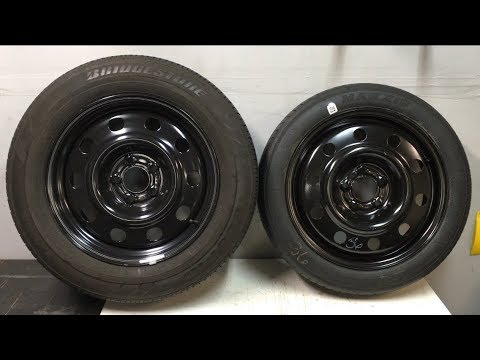
A donut spare tire is a small, lightweight, temporary tire. It’s much thinner and smaller than your regular tires. Car companies use donuts mainly to save space and reduce the weight of the car, which helps with fuel economy.
Key Characteristics
- Narrower and smaller than standard tires
- Light steel wheel with shallow tread
- Designed for short-term use only
- Clearly marked with speed and distance limits
When You Get A Donut
Donuts are common in modern sedans, hatchbacks, and many compact or midsize SUVs. Car makers started using them widely in the 1980s as cars got smaller and fuel rules changed.
Advantages
A donut spare tire offers:
- Saves trunk space, giving you more room for luggage
- Lighter weight, which helps with fuel efficiency
- Lower cost for car manufacturers (and sometimes for you)
Disadvantages
The main problems with donuts:
- Speed limit—usually 50 mph (80 km/h) or less
- Distance limit—often 50–70 miles (80–110 km)
- Reduced handling, especially in rain, snow, or sharp turns
- Not suitable for long trips or high speeds
Donuts are a good solution if you mostly drive in cities, have repair shops nearby, and want to save on space.
Full Size Spare Tire Vs Donut: Direct Comparison
To really see the differences, let’s compare both options side by side.
| Feature | Full Size Spare Tire | Donut Spare Tire |
|---|---|---|
| Size | Same as main tires | Much smaller and thinner |
| Weight | Heavier | Lighter |
| Driving Distance | Unlimited (like original tires) | 50–70 miles (80–110 km) |
| Speed Limit | No special limit | 50 mph (80 km/h) max |
| Handling & Safety | Normal | Reduced, especially in bad weather |
| Storage Space | Takes up more room | Compact |
| Cost | More expensive to buy & maintain | Cheaper |
Safety And Performance: What Really Matters
Handling And Braking
A full size spare lets your car drive and brake as usual, so you don’t lose control in tough situations. A donut, because it’s smaller and less stable, can make your car pull to one side. This gets worse if you need to stop quickly or turn sharply.
Speed And Distance Limits
Donuts are not made for high speeds or long distances. Driving too fast or too far can cause the donut to heat up, wear out, or even fail. Always check the sticker on your donut for the exact limits. Most say “Max 50 mph / 80 km/h, Max 50 miles / 80 km”.
Weather Conditions
Full size spares handle rain, snow, and rough roads much better. Donuts have less grip, so driving in bad weather becomes risky. If you use a donut, drive slowly and avoid sudden moves.
Emergency Situations
If you get a flat tire late at night, far from help, a full size spare is safer. Donuts are fine for cities or short trips, but less ideal in remote areas.
Space, Weight, And Fuel Efficiency
Trunk Space
A full size spare can take up a big part of your trunk, especially in compact cars. This means less room for bags or groceries. Some sedans have a special well for a full size spare, but many newer cars don’t.
Donuts save lots of space, letting you carry more cargo. This is a big reason why car makers prefer donuts in small cars.
Weight Effects
Car weight affects fuel use. A full size spare can add 20–30 pounds (9–14 kg) compared to a donut. This extra weight may lower your fuel economy by a tiny amount, but for most drivers, it’s not a big deal.
Donuts keep the car lighter, which helps with mileage, especially in small cars.
Cost And Maintenance Differences
Purchase And Replacement
- Full size spare: Costs about the same as your regular tire—usually $100–$250 depending on the brand, wheel, and size.
- Donut: Cheaper, often $50–$100, since they use less material and a simple wheel.
Maintenance Needs
A full size spare needs the same care as your main tires: check air pressure, rotate, and inspect for cracks. Many people forget the spare, so it can go flat from sitting unused.
Donuts also need occasional checks, but since they’re used less, they often sit for years and may dry out or lose pressure. Some donuts expire after 6–10 years, even if unused.
Long-term Costs
A non-obvious cost: if you use a donut and forget to fix your main tire quickly, you may damage your car’s suspension or brakes. Driving too long on a donut can lead to expensive repairs. With a full size spare, this risk is much lower.
Real-world Scenarios And Examples
Long Road Trips
Imagine you’re driving cross-country. A flat tire in a remote area means you need a spare you can trust. A full size spare lets you continue your trip until you find a good repair shop, even if it’s hours away.
With a donut, you must find help quickly, which can be stressful.
City Driving
If you mostly drive in the city, a donut is usually enough. Repair shops are nearby, and you can fix your main tire the same day. The lighter, smaller donut is practical for daily urban drivers.
Harsh Weather Or Bad Roads
If you live where it snows or rains often, a full size spare is safer. Donuts struggle on wet or icy roads, increasing your risk of slipping or losing control.
Rarely Used Cars
If your car sits unused for months, check your spare often. Both full size and donut spares can lose air or age out. But donuts, with their thinner rubber, are more likely to crack or dry out unseen.
Common Myths And Misunderstandings
Myth 1: “you Can Drive Normally On A Donut.”
Many people think they can use a donut like a regular tire. This is dangerous. Donuts are only for emergencies, not regular driving. Using a donut too long can damage your car and put you at risk.
Myth 2: “full Size Spares Always Last As Long As Regular Tires.”
A full size spare often sits unused for years. Rubber breaks down over time, so even if the tread looks good, the tire can still be unsafe after 6–10 years. Check the spare’s age before trusting it.
Myth 3: “donuts Are Useless In Emergencies.”
Donuts can save the day if used correctly. They’re not meant for long drives, but they help you reach a repair shop safely.
Myth 4: “all Cars Come With Spare Tires.”
Some new cars have no spare tire at all—just a repair kit with sealant and an air pump. Always check your car before a long trip.
How To Choose The Right Spare Tire For Your Needs
Consider Your Driving Habits
- Long-distance drivers: Choose a full size spare if possible, or upgrade your car.
- City drivers: A donut is usually enough, but know your limits.
- Off-roaders or rural drivers: Always carry a full size spare.
Check Your Car’s Space
Not all trunks fit a full size spare. Measure before buying an upgrade. Some SUVs have spare mounts under the car or on the tailgate.
Know Your Car’s Spare Type
Check your owner’s manual or look in the trunk. Practice changing the tire at home so you’re not surprised during an emergency.
Upgrade Options
Some drivers buy a matching wheel and tire to use as a full size spare, even if their car came with a donut. This costs more and may need a new tire well or mounting hardware. Others carry portable air compressors and tire sealants for extra backup.
How To Use A Spare Tire Safely
Steps For Changing A Tire
- Stop safely: Pull over on flat ground, away from traffic.
- Turn on hazards: Make your car visible.
- Apply the parking brake.
- Check the spare: Make sure it’s inflated and undamaged.
- Use the jack and tools: Loosen lug nuts, lift the car, and replace the flat tire.
- Tighten lug nuts: Do this in a star pattern for even pressure.
- Lower the car and check the spare again.
After Installing The Spare
- If it’s a donut, drive slowly and head to a repair shop right away.
- If it’s a full size spare, you can continue driving normally, but get the flat tire fixed soon.
Extra Tips
- Check your spare’s air pressure every few months.
- Don’t overload your car with a donut spare installed.
- Remember: Some cars have locking lug nuts—keep the key handy.
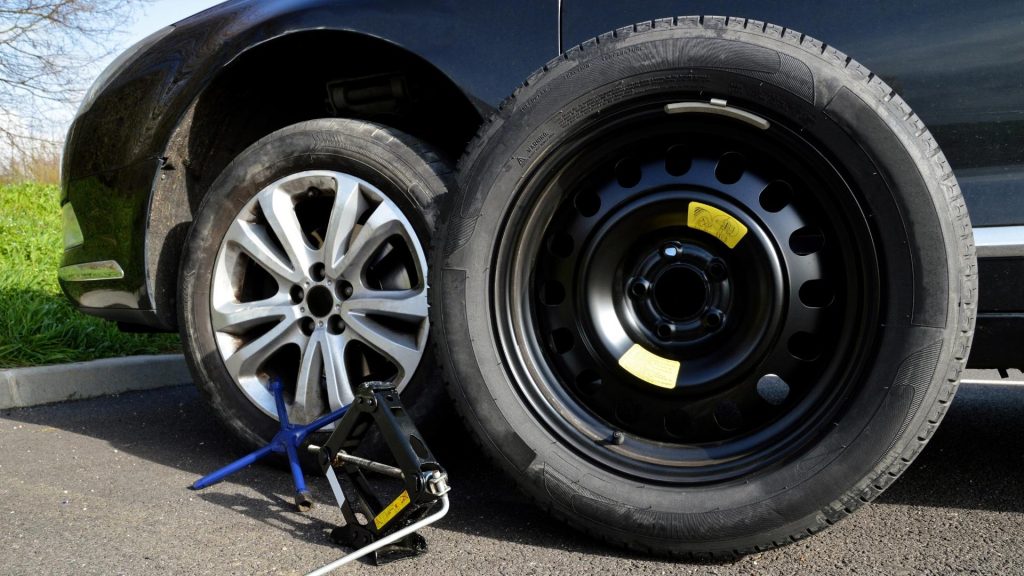
Credit: carfromjapan.com
Risks Of Driving Too Long On A Donut
Many people ignore the warning labels on donuts. Here’s what can happen if you drive too far or too fast:
- Overheating: The thin rubber can overheat, causing a blowout.
- Brake damage: The smaller tire makes your car uneven, which can stress the brakes and suspension.
- Less grip: Rain or sharp turns become dangerous.
- Insurance problems: If you crash with a donut used longer than recommended, insurance may not cover damages.
Don’t use a donut for everyday driving. It’s a short-term solution only.
Do Some Cars Not Have A Spare Tire?
Yes. Since 2017, more than 35% of new cars in the US don’t include any spare tire. Instead, they may have:
- Tire repair kits (sealant and compressor)
- Run-flat tires (can drive short distances after a puncture)
- Emergency roadside service packages
Manufacturers do this to save weight, improve fuel economy, and lower costs. But for drivers, this can be risky, especially in remote areas. Always check your car before a trip—don’t assume you have a spare.
Credit: www.youtube.com
Environmental Impact
Full size spares require more raw materials and energy to make, and they add weight to cars, which can affect fuel use. Donuts use less rubber and metal, so they’re “greener” in that sense. However, a donut’s short lifespan means it may end up in a landfill sooner, especially if not used.
Choosing a spare tire also affects how much cargo you can carry, which has an indirect effect on your car’s carbon footprint. These are small differences for most drivers, but they matter if you want to reduce your environmental impact.
Practical Insights Most Drivers Miss
- Check the age of your spare tire—not just the air pressure. Rubber breaks down over time, so even an unused full size spare can be unsafe after 6–10 years. Look for the DOT code on the sidewall to find the date of manufacture.
- Practice changing your spare at home, not just in emergencies. Many people discover too late that their jack or wrench is missing, or that the spare is stuck in the trunk. A practice run can save time and stress.

Credit: www.youtube.com
Summary Table: When To Choose Which Spare
Here’s a quick reference for deciding between a full size spare and a donut:
| Driver Type | Best Spare Option | Reason |
|---|---|---|
| Long-distance/Remote area | Full size | Unlimited range, better safety |
| City/Urban | Donut | Easy access to repairs, saves space |
| Frequent bad weather driving | Full size | Better handling, safer |
| Small car/limited trunk space | Donut | Fits better, lighter |
Frequently Asked Questions
Why Do New Cars Often Come With Donuts Instead Of Full Size Spares?
Car makers want to save weight and space to improve fuel efficiency. Donuts are lighter, smaller, and cheaper. This helps cars pass fuel economy rules and gives drivers more trunk space.
Can I Replace My Donut With A Full Size Spare?
Yes, but you need to check if your car’s trunk can fit a full size spare and if the mounting hardware works. Sometimes, you’ll need a new wheel well or tools. Make sure to use a tire that matches your car’s original size.
How Long Can A Donut Spare Tire Last Before It Needs To Be Replaced (even If Unused)?
Most donut spares expire after 6–10 years, even if you never use them. Rubber ages and becomes unsafe. Check the date code on the sidewall to see how old your spare is.
Is It Safe To Drive In The Rain Or Snow With A Donut Spare?
It’s not recommended. Donuts have less grip and handle poorly in wet or snowy conditions. If you must use a donut in bad weather, drive slowly, avoid sudden moves, and replace your main tire as soon as possible.
What If My Car Has No Spare Tire?
Some new cars include a tire repair kit or run-flat tires instead of a spare. Read your owner’s manual to see what you have. If you drive in remote areas, consider buying a spare, a portable air compressor, or a roadside assistance plan. For more tips on car safety, see this NHTSA tire safety guide.
Having a flat tire is never fun, but being prepared makes all the difference. Whether you choose a full size spare or a donut, know your car, check your spare regularly, and practice safe driving. This way, you’ll be ready for any road surprise and can travel with confidence.