Goodyear Vs Firestone Tires: An In-depth Comparison For Drivers
When it comes to tires, two names often stand out: Goodyear and Firestone. Both brands have been around for over a century, and each has its loyal customer base. Whether you drive daily to work, enjoy road trips, or need tires for your truck or SUV, choosing between Goodyear and Firestone can feel overwhelming. Both companies promise safety, durability, and performance, but which one truly delivers what you need?
This guide will break down everything you should know about Goodyear vs Firestone tires. You’ll discover their histories, main tire types, performance in real-world scenarios, price differences, warranties, and even expert and user opinions. By the end, you’ll know exactly which brand fits your driving needs and budget.
The History Behind The Brands
Before comparing the tires themselves, it helps to understand the background of both companies. Their histories shape their approach to innovation and quality.
Goodyear: From Rubber Pioneer To Global Leader
Goodyear Tire & Rubber Company was founded in 1898 in Akron, Ohio. The company started with bicycle and carriage tires, quickly moving into the automobile market. Goodyear became known for innovation, introducing the first tubeless tire and being the first to use synthetic rubber during World War II. Today, Goodyear operates in more than 20 countries and is recognized for premium, high-performance tires.
Firestone: American Tradition With A Racing Edge
Firestone Tire and Rubber Company began in 1900, also in Akron, Ohio. Firestone was one of the first companies to mass-produce tires, supplying Ford Motor Company in the early days. The brand is strongly linked to motorsports, especially the Indianapolis 500. Now, Firestone is part of Bridgestone Corporation, which boosts its technology and global reach.
Key Insight: While Goodyear remains independent, Firestone benefits from Bridgestone’s research and resources. This difference affects their tire designs and technology.
Types Of Tires Offered
Both brands offer a wide range of tires for various vehicles and driving conditions. Here’s how their main categories compare.
Passenger Car Tires
Both Goodyear and Firestone produce all-season, summer, and winter tires for cars.
- Goodyear Assurance line is popular for all-season use, known for quiet rides and good wet traction.
- Firestone Champion Fuel Fighter offers durability and low rolling resistance for fuel savings.
Goodyear often leads in advanced tread patterns for noise reduction, while Firestone focuses on affordability and consistent performance.
Truck And Suv Tires
If you drive a truck or SUV, tire strength and grip matter.
- Goodyear Wrangler series is famous for off-road ability and strong sidewalls.
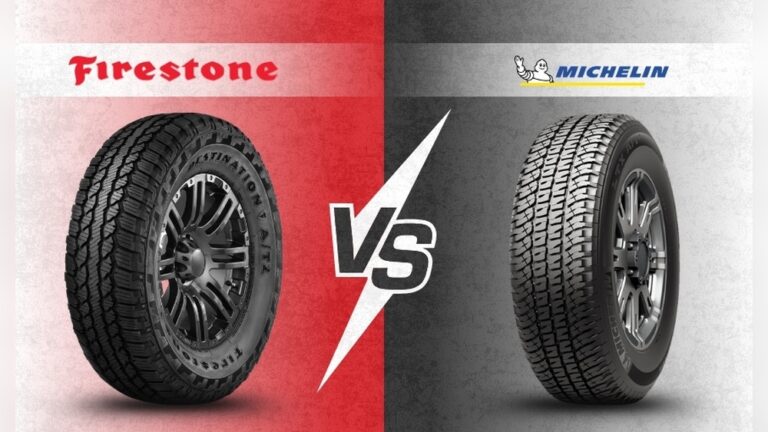
- Firestone Destination series balances on-road comfort with light off-road use.
Goodyear’s SUV and truck tires tend to have more tread options, especially for off-road enthusiasts.
Performance Tires
Drivers who value handling and speed often look at performance tires.
- Goodyear Eagle line offers summer and ultra-high-performance options, used on sports cars and premium sedans.
- Firestone Firehawk is the main performance line, focusing on grip and control.
Goodyear performance tires often cost more but deliver higher speed ratings and advanced rubber compounds.
Winter And All-weather Tires
For snow and ice, both brands have special lines:
- Goodyear Ultra Grip features biting edges and special winter rubber.
- Firestone Winterforce series is a favorite for reliable snow traction.
Non-obvious insight: Goodyear’s winter tires often use a silica-based compound, which stays flexible in cold weather. Firestone’s Winterforce, while effective, may wear faster if used year-round.
Commercial Tires
Both brands serve commercial vehicles, but Goodyear has a larger share in long-haul and fleet tires, thanks to advanced monitoring systems.
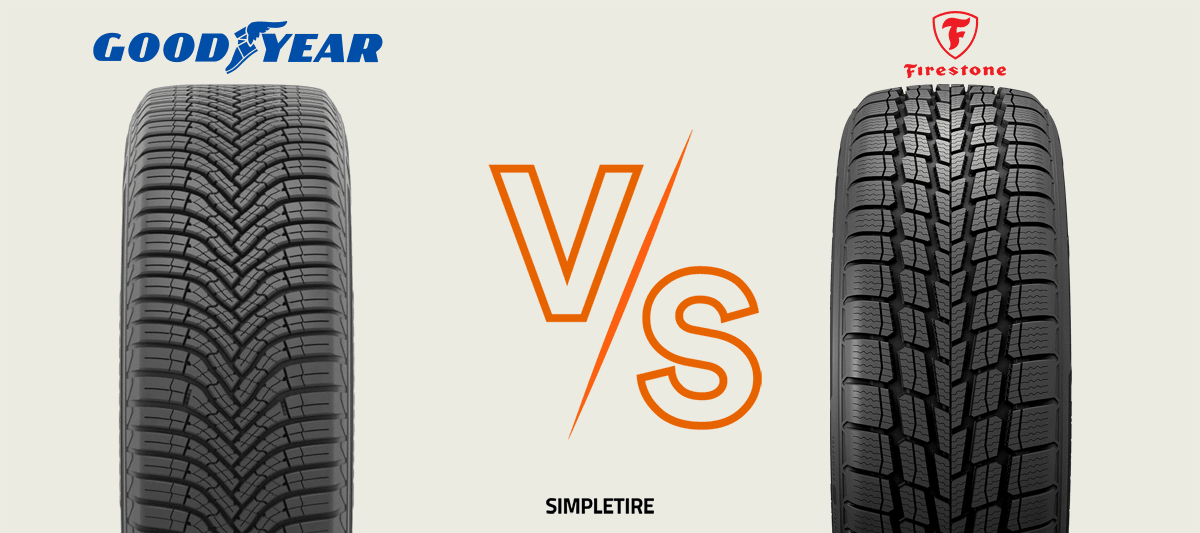
Credit: simpletire.com
Comparing Performance: Real-world Scenarios
How do these brands perform where it matters—on the road? Let’s compare real-world situations based on independent tests, user reviews, and industry data.
Wet And Dry Traction
Goodyear tires often test slightly higher for wet grip, especially in the Assurance and Eagle lines. This is due to advanced tread designs that push water away and reduce hydroplaning.
Firestone tires provide reliable dry traction, especially for daily driving, but can sometimes lag behind Goodyear in emergency wet braking.
Handling And Steering Response
Sports drivers notice Goodyear’s edge in steering precision and cornering stability. Firestone’s Firehawk series comes close but may not give the same high-speed confidence.
Ride Comfort And Noise
If a quiet, smooth ride is your priority, Goodyear’s Assurance and ComfortDrive lines are well-reviewed for low road noise. Firestone’s tires can be a bit firmer, especially on rough roads, but still offer reasonable comfort for most drivers.
Non-obvious insight: Tire noise is not only about the tread pattern. Goodyear often uses sound-absorbing foam inside some models—a feature rarely found in Firestone’s lineup.
Off-road And All-terrain
Goodyear’s Wrangler tires are famous for rugged terrain. They handle rocks, mud, and gravel with ease. Firestone’s Destination A/T2 is a strong competitor for light off-roading but may not last as long under harsh conditions.
Winter And Snow
Both brands perform well in snow, but Goodyear’s Ultra Grip often wins independent tests for icy roads. Firestone’s Winterforce is popular in snowy regions, but its tread may become noisy on dry pavement.
Durability And Tread Life
How long will your tires last? This depends on your driving style, road conditions, and the specific tire model.
Goodyear tires are known for longer tread life warranties, often reaching 65,000–80,000 miles on touring models. Firestone typically offers warranties in the 50,000–70,000 mile range.
However, some Goodyear performance tires wear faster due to their softer compounds. Firestone’s strength is in value-focused models that balance cost and durability.
Practical tip: Rotating your tires every 6,000–8,000 miles helps both brands reach their maximum lifespan.
Price Comparison: Are Goodyear Tires More Expensive?
Price is a big factor for many buyers. Here’s a snapshot of average costs for popular models in 2024:
| Tire Model | Goodyear Price (USD) | Firestone Price (USD) | Category |
|---|---|---|---|
| Assurance All-Season | $120–$150 | Champion Fuel Fighter: $105–$130 | All-Season |
| Wrangler All-Terrain Adventure | $170–$220 | Destination A/T2: $145–$190 | All-Terrain |
| Eagle Sport All-Season | $145–$185 | Firehawk AS: $120–$160 | Performance |
| Ultra Grip Winter | $110–$140 | Winterforce 2: $95–$125 | Winter |
As you can see, Goodyear tires are usually more expensive, sometimes by 10–20%. You are paying for advanced materials, research, and extra features like sound-absorbing technology.
Firestone offers strong value, especially for drivers who want reliable tires without premium pricing.
Non-obvious insight: Sometimes, local rebates or seasonal sales can narrow the price gap. Always check for promotions from both brands.
Warranty And Customer Support
Warranties show how much confidence a company has in its tires.
- Goodyear: Offers limited treadwear warranties up to 80,000 miles, plus a 30-day satisfaction guarantee on many models. Road hazard protection is available at extra cost.
- Firestone: Most tires come with 50,000–70,000 mile warranties and a similar 90-day buy-and-try guarantee.
Both brands have nationwide dealer networks, making warranty claims and support easy.
Practical tip: Keep all purchase and rotation records—these are often required for warranty claims.
Technology And Innovation
Tire brands compete on more than just rubber—they invest in new technologies to boost safety and performance.
Goodyear Innovations
- SoundComfort Technology: Reduces road noise by up to 50% on select models.
- RunOnFlat: Lets you drive up to 50 miles after a puncture.
- DuPont Kevlar: Some Wrangler tires include a Kevlar layer for extra puncture resistance.
Firestone Innovations
- Fuel Fighter Technology: Lowers rolling resistance for better fuel economy.
- Uni-T (Ultimate Network of Intelligent Tire Technology): Improves tire shape and rubber mixing for even wear.
Goodyear leads in cutting-edge features, but Firestone focuses on practical benefits like fuel savings and even tread wear.
User Reviews And Expert Ratings
What Do Real Drivers And Automotive Experts Say?
- Goodyear: Often praised for handling, quiet rides, and high mileage. Some users mention higher prices and firmer rides on performance models.
- Firestone: Wins points for value, consistent everyday performance, and solid winter traction. Some users report more road noise as tires wear.
In expert tests (like Consumer Reports and Tire Rack), Goodyear usually scores higher for all-around performance. Firestone is often recommended as a smart budget pick.
Real example: On Tire Rack’s 2024 survey, the Goodyear Assurance ComfortDrive scored 4.6/5 for comfort, while the Firestone Champion Fuel Fighter scored 4.3/5—close, but Goodyear edged ahead in wet grip and ride noise.

Credit: monstertires.com
Safety And Environmental Considerations
Both companies invest in safety and sustainability.
- Goodyear uses eco-friendly compounds and recycles more than 10 million tires annually.
- Firestone, with Bridgestone, aims to be carbon neutral by 2050 and uses renewable materials in some models.
Non-obvious insight: Goodyear’s advanced run-flat and noise-canceling tech may give you extra peace of mind in emergencies or on long trips.
Common Mistakes When Choosing Between Goodyear And Firestone
- Focusing only on price: Cheaper tires can cost more in the long run if they wear faster or perform poorly in emergencies.
- Ignoring your climate: If you live in a snowy area, prioritize winter or all-weather tires over standard all-season models.
- Choosing the wrong category: Performance tires are not always best for everyday commuting. Pick a tire that matches your driving style.
- Forgetting about warranty: A longer warranty can save you money, but only if you keep up with required maintenance.
- Not checking tire age: Always buy fresh tires (less than two years old) from the date of manufacture.
Which Tire Brand Is Right For You?
Here’s a summary to help you decide:
| Feature | Goodyear | Firestone |
|---|---|---|
| Performance | High, premium options | Good, value-focused |
| Durability | Longer tread life on most models | Competitive, but slightly lower |
| Price | More expensive | More affordable |
| Innovation | Leads in tech | Solid, practical features |
| Winter | Excellent, especially Ultra Grip | Very good for price |
| Warranty | Up to 80,000 miles | Up to 70,000 miles |
Choose Goodyear if:
- You want top performance, quiet rides, or longest tread life.
- You drive in wet, icy, or challenging conditions.
- You’re willing to pay more for advanced features.
Choose Firestone if:
- You need good, reliable tires on a budget.
- You drive mostly in normal conditions.
- You value straightforward performance and solid winter options.
Experience-based tip: If you’re unsure, visit a trusted tire dealer and ask to see both brands side-by-side. Sometimes, the feel and look of a tire can help you decide.
Frequently Asked Questions
Are Goodyear Tires Better Than Firestone For All Vehicles?
Not always. Goodyear often wins for high-performance cars and premium SUVs, thanks to advanced technology and longer warranties. However, Firestone offers strong value for everyday vehicles and is a smart choice for drivers who want solid performance without a high price tag. The “better” tire depends on your vehicle, driving habits, and budget.
Do Goodyear Tires Last Longer Than Firestone?
Generally, yes. Goodyear offers longer treadwear warranties on many models—up to 80,000 miles. Firestone warranties are usually in the 50,000–70,000 mile range. However, real-world lifespan depends on your maintenance habits, road conditions, and driving style.
Which Brand Is Safer In Rain And Snow?
Goodyear often leads in wet and snow traction, especially with the Ultra Grip and Assurance WeatherReady lines. Firestone’s Winterforce is also well-rated for snow. For rain, Goodyear’s advanced tread designs reduce hydroplaning more effectively in most tests.
Is Firestone Cheaper Than Goodyear?
Yes. On average, Firestone tires cost 10–20% less for similar models. This makes them attractive for budget-conscious drivers. However, you may miss out on some of Goodyear’s advanced features.
Where Can I Find Reliable Test Results For Goodyear And Firestone Tires?
Many independent organizations test and review tires. For unbiased ratings, check the Tire Rack or visit the official Consumer Reports website. They regularly compare Goodyear, Firestone, and other brands on safety, comfort, and value.

Credit: www.youtube.com
Final Thoughts
Choosing between Goodyear and Firestone tires is not just about picking a name. Both offer quality, but their strengths fit different drivers. Goodyear is for those who want the latest technology, top safety, and the longest life—at a higher price. Firestone is the smart choice for drivers who want reliable performance and good value, especially for everyday cars and light trucks.
The best tire is one that matches your driving needs, climate, and budget. Take time to compare specific models, read real driver reviews, and talk to a trusted tire professional. With the right choice, you’ll drive safer, longer, and with more confidence—no matter which brand you pick.