Every driver faces a moment when something feels different behind the wheel. Maybe the car pulls to one side, or the steering feels heavy. Often, the reason is simple: a problem with your tires. But what is really going on—do you have a low tire or a flat tire? These terms sound similar, but they mean different things and require different actions. Understanding the difference is important not only for your safety but also for your car’s health and your wallet.
Many drivers, especially new ones, confuse a low tire with a flat tire. This mistake can lead to bigger problems, like damage to the tire, the wheel, or even the car’s suspension. In this guide, you’ll learn exactly what makes a tire “low” versus “flat,” why it matters, how to spot the difference, and what steps you should take in each case.
You’ll also discover insights most beginners miss, such as how temperature changes affect tire pressure and why simply refilling a low tire may not always solve the problem.
Let’s break down everything you need to know about low tire vs flat tire, so you can handle any situation confidently—whether you’re on a busy highway, a quiet backroad, or just leaving your driveway.
What Does “low Tire” Really Mean?
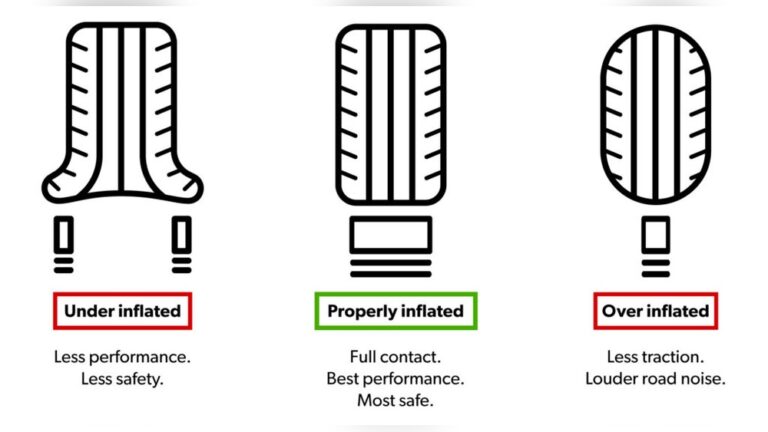
A low tire means that the air pressure inside your tire is below the recommended level. Every car has a specific tire pressure, usually measured in pounds per square inch (PSI), that the manufacturer recommends. You can often find this number on a sticker inside the driver’s door or in the owner’s manual.
Low tire pressure does not mean the tire is completely empty or unusable. The tire still holds some air and can usually support the car’s weight, at least for a short time. However, driving on low tires has its risks.
Common Causes Of Low Tire Pressure
- Natural air loss: Tires slowly lose air over time, even if there’s no visible damage. This is normal and can be around 1-3 PSI per month.
- Temperature changes: Cold weather causes air to contract, lowering tire pressure. For every 10°F (5.5°C) drop in temperature, tires can lose about 1 PSI.
- Minor punctures: A small nail or screw can cause slow leaks, which may not be obvious at first.
- Valve stem issues: The small rubber valve where you add air can become loose or cracked, letting out air.
- Damaged wheels: Hitting a pothole or curb can bend the wheel rim, causing a slow leak.
Signs You Have A Low Tire
- The tire looks slightly squashed at the bottom, but not completely flat.
- The TPMS (Tire Pressure Monitoring System) warning light turns on. This dashboard light is shaped like a horseshoe with an exclamation point.
- Steering feels a bit heavier or the car drifts to one side.
- You hear a thumping noise, especially at low speeds.
Risks Of Driving On Low Tires
Driving with low tire pressure reduces your control of the car, increases stopping distance, and wears out the tires faster. Low pressure also makes the tire hotter, which can lead to a blowout on the road. Even if the tire is not “flat,” ignoring low pressure can turn a small problem into a big, expensive one.
What Is A “flat Tire”?
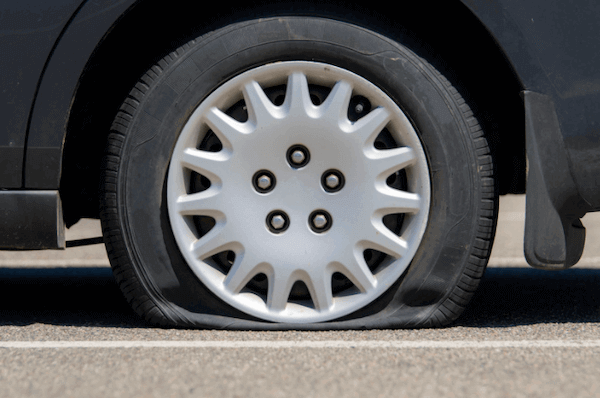
A flat tire means the tire has lost almost all its air. The sidewalls may touch the ground, and the tire cannot support the car’s weight. Sometimes, a flat happens suddenly, such as after hitting a sharp object. Other times, it’s the result of a slow leak that was not fixed.
Causes Of Flat Tires
- Punctures by sharp objects: Nails, screws, glass, or metal can cut into the rubber, causing a rapid loss of air.
- Blowouts: When a tire suddenly bursts, usually due to damage, overheating, or extremely low pressure.
- Rim separation: If the tire bead loses its seal with the wheel rim, air can escape quickly.
- Valve failure: A broken or missing valve core can empty a tire in seconds.
- Severe sidewall damage: Hitting potholes, curbs, or debris can tear the sidewall, making the tire unusable.
How To Spot A Flat Tire
- The tire is completely or nearly collapsed against the ground.
- You hear a loud “flap-flap” noise while driving.
- The car feels hard to steer or control.
- The car leans to one side.
- In extreme cases, you may see the rim touching the road.
Dangers Of Driving On A Flat Tire
Driving on a flat tire is unsafe. You can damage the wheel, the suspension, and the tire itself beyond repair. Even driving a short distance can turn a repairable puncture into a situation where you need a new tire or wheel.
Always stop as soon as it’s safe.
Low Tire Vs Flat Tire: Key Differences
Knowing the difference between a low tire and a flat tire helps you decide what to do next. Here’s a clear side-by-side comparison:
| Feature | Low Tire | Flat Tire |
|---|---|---|
| Air Pressure | Below recommended, but some air remains | Almost no air, usually 0 PSI |
| Appearance | Looks soft or squashed, but not collapsed | Completely collapsed, sidewall touches ground |
| Driveability | Possible for short distance, but risky | Unsafe, should not drive |
| Causes | Slow leak, temperature, valve issue | Puncture, blowout, bead/rim damage |
| Solution | Inflate, check for leaks, repair if needed | Replace with spare, repair or replace tire |
Why The Difference Matters
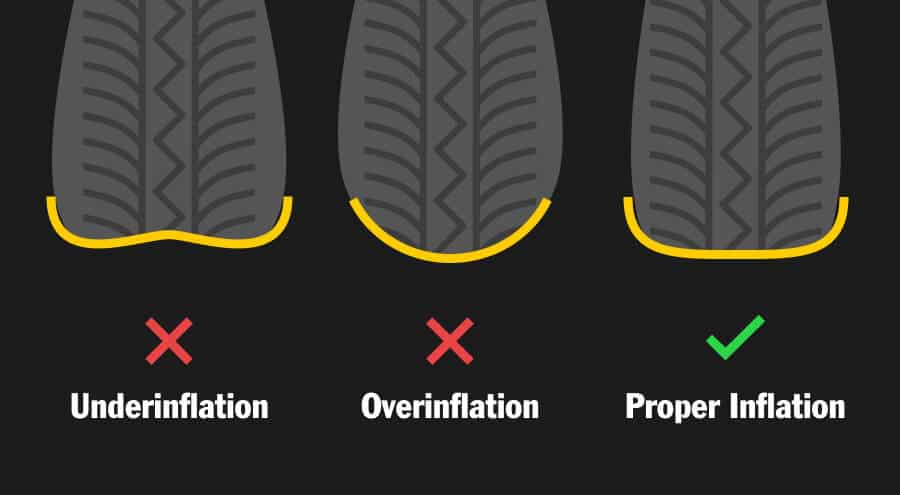
At first, you might think any underinflated tire can be treated the same way—just add air and go. But this is a common mistake.
- Low tire: Often, you can safely drive to a gas station to add air, but you should check for leaks or damage as soon as possible. Don’t assume the problem is fixed just by refilling.
- Flat tire: You should not drive at all. Using a flat tire even for a short distance can destroy the tire and damage your wheel.
Ignoring the difference can cost you more money and put you at risk. For example, if you keep driving on a low tire, it can quickly become flat. If you drive on a flat, you may need a new wheel and tire instead of just a simple repair.
Credit: www.vipauto.com
How To Check Tire Pressure
Measuring tire pressure is easy, but many drivers forget to do it regularly. Here’s how to do it correctly:
- Wait until your tires are cold (car has not been driven for at least 3 hours).
- Find the recommended tire pressure (usually on a sticker inside the driver’s door).
- Remove the cap from the tire’s valve stem.
- Press a tire pressure gauge onto the valve and read the number.
- Compare it to the recommended PSI. If it’s too low, add air. If it’s too high, release some air.
- Replace the valve cap.
Many modern cars have a TPMS system that warns you if any tire is low. However, these systems often warn you only when a tire is 25% or more below normal—so it’s still smart to check manually every month.
What To Do If You Have A Low Tire
A low tire does not always mean an emergency, but you should never ignore it. Here’s what you should do:
- Check all four tires: Sometimes, more than one may be low.
- Add air: Fill the tire to the recommended PSI, which is usually free at gas stations.
- Recheck pressure: Sometimes, a tire loses air quickly after being filled. This could mean a puncture or valve issue.
- Inspect for damage: Look for nails, screws, or cuts on the tire. If you see anything, get it checked by a professional.
- Drive carefully: If the tire stays low after being filled, visit a tire shop soon.
Non-obvious Insight: The “penny Test”
Many drivers only focus on pressure, but tread depth is also important. Insert a penny into your tire’s tread, head down. If you can see all of Lincoln’s head, your tread is too low and you should replace the tire.
When To Seek Help
If your tire keeps losing air after refilling, or if you find damage, do not delay. A slow leak can turn into a flat tire at high speed, which is much more dangerous.
What To Do If You Have A Flat Tire
If you find your tire is flat, do not drive on it. Here’s what you should do:
- Pull over safely: If you’re on the road, signal and move to a safe spot away from traffic.
- Turn on hazard lights: This warns other drivers.
- Set the parking brake: Prevents your car from rolling.
- Change the tire: Use your spare (donut) if you have one, or call for roadside assistance.
- Do not drive on a flat: Even for a short distance; it can ruin the tire and wheel.
Changing A Flat Tire: Step-by-step
- Loosen the lug nuts (but don’t remove them yet).
- Place the jack under the car’s lift point and raise the car.
- Remove the lug nuts and flat tire.
- Put on the spare tire, hand-tighten the nuts.
- Lower the car and tighten the nuts in a crisscross pattern.
- Drive slowly and get your tire repaired or replaced as soon as possible.
Non-obvious Insight: Not All Spares Are Equal
Many new cars use a “donut” spare, which is smaller and not designed for long distances or high speeds. Some cars come with a “tire repair kit” instead. Always check what your car has before you need it.
The Role Of Tpms: Tire Pressure Monitoring Systems
Modern cars often have a TPMS that lights up when a tire is low. This system is helpful, but it has limits.
- It only warns you when pressure is much lower than recommended.
- Some systems do not tell you which tire is low.
- A TPMS light does not always mean a flat—sometimes it’s just cold weather.
Regular manual checks are still important, especially before long trips or if you notice changes in how your car drives.

Credit: www.reddit.com
How Low Is Too Low? Understanding Psi And Danger Levels
A common question is: at what PSI is a tire considered “flat”? Most passenger vehicles recommend 32-35 PSI. Here’s a quick guide:
| PSI Reading | Status | Action Needed |
|---|---|---|
| 30-32 | Slightly low | Add air soon |
| 25-29 | Low | Add air immediately, check for leaks |
| 16-24 | Very low | Check for damage, refill, drive carefully |
| 0-15 | Flat | Do not drive, change tire or call for help |
Remember, these numbers are only a guideline. Always follow your car’s specific recommendations.
How Temperature Affects Tire Pressure
Many drivers don’t realize that cold weather can drop tire pressure by several PSI overnight. This is not usually a sign of a leak. In the winter, check your tires more often, especially after a cold snap. In hot weather, pressure can rise, but this is less risky than low pressure.
If your TPMS light comes on only in the morning and turns off after driving, it’s likely just temperature. Still, always check with a gauge to be sure.
Common Myths About Low And Flat Tires
Many people believe things about tires that simply aren’t true. Here are some myths to avoid:
- “If my TPMS light is off, my tires are fine.” False—TPMS only warns at 25% below normal.
- “A little low pressure is not a big deal.” False—Even 5 PSI low can shorten tire life by 25%.
- “I can drive a short distance on a flat.” False—Even a few yards can ruin a tire.
- “All flats are from nails or glass.” False—Valve stems, beads, and even age can cause flats.
Repairing Vs Replacing Tires
When can you repair a tire, and when do you need a new one? Here are some guidelines:
- Repair: Small punctures (less than 1/4 inch) in the tread area can often be plugged or patched.
- Replace: Sidewall damage, big holes, or if you drove on a flat tire (rim may have cut the tire inside).
- Professional help: Always get a repair checked by a professional. Do not use “fix-a-flat” cans as a long-term solution.
Credit: www.chapelhilltire.com
Real-world Examples
Imagine you’re driving to work and your TPMS light comes on. You check and find one tire at 26 PSI. You add air and the light goes off. But the next day, it’s low again. You take the car to a shop and find a small nail in the tread.
Because you acted quickly, a simple repair saves your tire.
Now, imagine you ignore the light, and a week later, your tire is completely flat in the parking lot. The tire is ruined and needs replacing—a much more expensive fix.
Cost Differences: Low Tire Vs Flat Tire
Catching a low tire early usually means you only pay for air (often free) or a simple repair ($10-$25). Ignoring it until the tire is flat may mean buying a new tire ($80-$200+) and possibly a new wheel ($100+). Acting early always saves money.
Preventing Low And Flat Tires
You can avoid most tire problems with a few simple habits:
- Check your tire pressure every month.
- Inspect tires for nails or cuts regularly.
- Rotate your tires every 6,000-8,000 miles to ensure even wear.
- Avoid potholes and debris whenever possible.
- Replace tires when the tread is worn.
These steps only take a few minutes but can prevent breakdowns and expensive repairs.
When To Call For Help
Sometimes, it’s safer to call for professional help:
- You’re not comfortable changing a tire.
- The car is in a dangerous location (like a highway).
- The spare tire is missing or flat.
- You see damage to the wheel, not just the tire.
Most roadside assistance plans cover flat tire changes. Having a plan can give you peace of mind.
Important Differences For Modern Cars
Some cars now come without a spare tire—using run-flat tires or repair kits instead. Run-flat tires can drive short distances even when flat, but you still need to fix or replace them quickly. Always know what your car is equipped with.
The Environmental Impact
Properly inflated tires save fuel. The U. S. Department of Energy says that for every 1 PSI drop in pressure, gas mileage decreases by about 0. 2%. This means low tires cost you more at the pump and increase your carbon footprint.
Keeping tires at the right pressure is good for your wallet and the planet.
Trusted Resources For More Information
If you want to learn more about tire safety and pressure, the National Highway Traffic Safety Administration offers in-depth guides and tips.
Frequently Asked Questions
What Is The Main Difference Between A Low Tire And A Flat Tire?
A low tire still has some air and may be safe to drive a short distance if you add air quickly. A flat tire has almost no air and cannot support the car’s weight. Driving on a flat is dangerous and should be avoided.
Can I Drive With A Low Tire?
You can drive a short distance to add air or reach a repair shop, but it is risky. Your car will not handle as well, and the tire could become flat quickly. Never ignore a low tire warning.
What Should I Do If My Tire Is Flat On The Highway?
Pull over safely, turn on your hazard lights, and call for roadside assistance if you cannot change the tire yourself. Do not try to drive on a flat, even for a short distance.
Why Does My Tire Keep Going Flat After I Fill It?
This usually means you have a slow leak from a puncture, damaged valve, or rim. Adding air is only a temporary fix. Visit a tire shop to find and repair the leak.
How Often Should I Check My Tire Pressure?
Check your tire pressure at least once a month and before long trips. Also, check more often in cold weather or if your car’s handling feels different.
Keeping your tires properly inflated and knowing the difference between a low tire and a flat tire helps you stay safe, save money, and avoid stressful roadside emergencies. With this knowledge, you can handle tire problems confidently—before they become bigger issues.