Toyo Tires Vs Yokohama Tires: A Complete Comparison for Smart Drivers
Choosing the right tires can change how your car feels, how safe you are, and how much you spend in the long run. Two names often come up for quality, value, and performance: Toyo Tires and Yokohama Tires. Both brands have a long history, a strong reputation, and fans around the world. But which one is better for your needs? This article takes a deep look, from their background and technology to real-world performance, price, and what makes each unique. If you want to make a smart tire choice, keep reading.
Company Background And Reputation
Understanding where each brand comes from helps you see why they do things differently.
Toyo Tires
Toyo Tire Corporation was founded in 1945 in Japan. Today, it is a global company with manufacturing plants in the USA, China, Japan, and Malaysia. The brand is known for innovation, especially in all-terrain and performance tires. Toyo has won awards in motorsport, off-roading, and design. Their focus is on durability, grip, and value.
Yokohama Tires
Founded in 1917, Yokohama Rubber Company is also based in Japan. It is one of the world’s top tire makers and has a presence in over 120 countries. Yokohama is famous for cutting-edge technology and green practices. They have a strong place in motorsports, especially for high-performance and eco-friendly tires.
Reputation Comparison
Both brands are respected worldwide, but Toyo is often linked to rugged tires for trucks and SUVs, while Yokohama has a strong name in passenger car and sporty tires. In global customer satisfaction surveys, both usually score high, but Yokohama tends to win slightly more awards for comfort and environmental focus.
Product Range And Options
Let’s compare what each brand offers. Both have a wide range, but their strengths are different.
Toyo Tires Lineup
Toyo focuses on:
- All-terrain and mud-terrain tires (popular for trucks and SUVs)
- Ultra high performance (UHP) tires for sports cars
- Touring tires for comfort and long life
- Commercial truck and light truck tires
Popular models include:
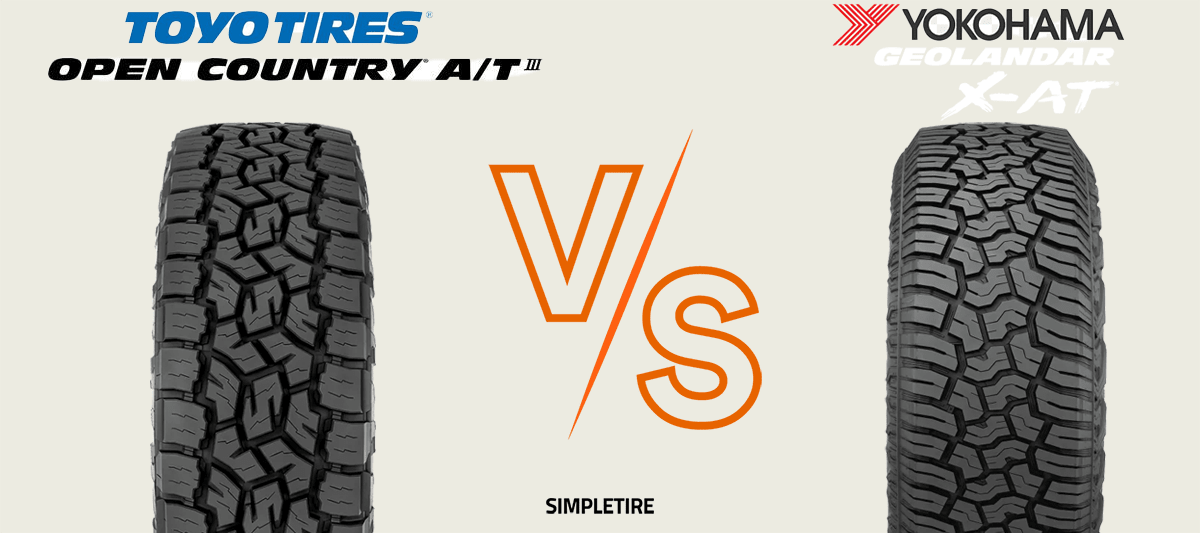
- Toyo Open Country A/T III (all-terrain)
- Toyo Proxes Sport (UHP)
- Toyo Extensa A/S II (all-season)
- Toyo Observe GSi-6 (winter)
Yokohama Tires Lineup
Yokohama is known for:
- High-performance street tires and racing tires
- Eco-friendly tires with low rolling resistance
- Touring and comfort-focused tires
- Winter tires
Top models:
- Yokohama ADVAN Sport V105 (UHP)
- Yokohama AVID Ascend GT (touring/all-season)
- Yokohama Geolandar A/T G015 (all-terrain)
- Yokohama iceGUARD iG53 (winter)
Range Comparison Table
Here’s a quick look at both brands’ main strengths:
| Category | Toyo Tires | Yokohama Tires |
|---|---|---|
| All-Terrain/Mud-Terrain | Very Strong | Good |
| Performance/Sports | Good | Very Strong |
| Touring/Comfort | Good | Very Strong |
| Eco-Friendly | Average | Very Strong |
| Commercial/Truck | Very Strong | Good |
| Winter Tires | Strong | Very Strong |
Insight: If you drive a truck or SUV and go off-road often, Toyo is usually the leader. For city and highway comfort or green technology, Yokohama is often ahead.

Credit: www.discountedwheelwarehouse.com
Performance: Real-world And Test Results
Performance is what matters most for many drivers. Let’s break it down:
Dry And Wet Grip
- Toyo: Many Toyo tires are designed for stability and grip on dry roads, especially their performance and truck tires. However, in independent tests, their wet grip is sometimes a step behind Yokohama’s top models.
- Yokohama: Known for excellent wet braking and handling, especially in passenger car and UHP tires. Their silica blends and tread designs often win in magazine shootouts.
Ride Comfort And Noise
- Toyo: Generally quiet and smooth for trucks and SUVs. Some all-terrain models can be a bit louder due to aggressive treads.
- Yokohama: Focuses on low road noise and soft rides, especially in the AVID and Geolandar lines. Many city drivers notice less cabin noise with Yokohama.
Tread Life And Durability
- Toyo: Famous for long-lasting tread, especially on all-terrain and touring tires. Their mileage warranties are often 50,000–65,000 miles.
- Yokohama: Also offers strong tread life, with some models reaching up to 85,000 miles (like the AVID Ascend GT). However, their sporty tires may wear faster.
Snow And Ice
- Toyo: The Observe line is well-rated for snow and ice, with special rubber for cold weather. Open Country tires also handle light snow well.
- Yokohama: The iceGUARD series is a leader in winter grip, especially on ice. Geolandar tires also perform well in snow.
Performance Data Table
Here’s a comparison based on independent magazine and testing site data:
| Performance Area | Toyo Tires (Avg. Score/5) | Yokohama Tires (Avg. Score/5) |
|---|---|---|
| Dry Grip | 4.2 | 4.4 |
| Wet Grip | 4.0 | 4.5 |
| Ride Comfort | 4.1 | 4.5 |
| Tread Life | 4.3 | 4.2 |
| Snow/Ice | 4.1 | 4.4 |
Non-obvious tip: Tire shops often recommend Toyo for heavy trucks and towing, but for hybrid or electric cars, Yokohama’s low rolling resistance tires can save more fuel.
Technology And Innovation
Both brands invest a lot in research. But their focus areas are a bit different.
Toyo’s Key Technologies
- Nano Balance Technology: This blends rubber at a microscopic level for better grip and wear.
- T-Mode Simulation: Used to test and design tires on computers before production, improving safety and performance.
- Multi-Wave Sipes: Tiny cuts in the tread that improve snow traction and reduce uneven wear.
Yokohama’s Key Technologies
- BluEarth Technology: Eco-friendly tires that use orange oil in the rubber to reduce rolling resistance and fuel use.
- Advanced Silica Blends: Improve wet grip without making the tire wear faster.
- Adaptive Tread Patterns: Change shape slightly as the tire wears, keeping performance more consistent.
Practical Insight: Many drivers don’t realize Yokohama’s eco tires are made with less petroleum, which can matter for those wanting a greener choice.
Price And Value
Money matters, so let’s look at what you get for your budget.
General Price Range
- Toyo: Mid-range pricing. Most common passenger car tires cost about $90–$180 each. Off-road and UHP tires can go up to $350 per tire.
- Yokohama: Also mid-range, sometimes slightly cheaper for standard car tires ($80–$170 each), but their performance and specialty tires are priced about the same as Toyo.
Warranty And Support
Both brands offer strong warranties. Toyo often gives a 45,000–65,000 mile treadwear warranty, depending on the model. Yokohama’s warranties are similar, with some touring tires going up to 85,000 miles.
Cost Comparison Example
Let’s compare two similar all-season touring tires for a popular sedan (e.g., Honda Accord):
| Tire Model | Price (each) | Treadwear Warranty |
|---|---|---|
| Toyo Extensa A/S II | $110 | 60,000 miles |
| Yokohama AVID Ascend GT | $115 | 85,000 miles |
Non-obvious tip: Always check for rebates and promotions, as both brands often have seasonal deals that can save $50–$100 per set.
Environmental And Sustainability Focus
Modern drivers care about the planet. Here’s how each brand measures up.
Toyo
Toyo has taken steps to reduce emissions in its factories and uses some recycled materials. However, their main focus is durability, which reduces waste by needing fewer replacements.
Yokohama
Yokohama leads in this area. Their BluEarth line is made to save fuel and has a lower carbon footprint. The company also plants trees and uses renewable materials in some tires. They have won global awards for their green efforts.
Practical Insight: If a tire lasts longer (like Toyo’s), it means fewer tires in landfills. But if you want the lowest rolling resistance for fuel savings, Yokohama is usually ahead.

Credit: www.discountedwheelwarehouse.com
Motorsports, Off-road, And Special Use
The true test for any tire is how it performs in extreme conditions.
Toyo In Motorsports And Off-road
- Used in Baja 1000 (one of the world’s toughest off-road races)
- Sponsored teams in Formula Drift and off-road racing
- Open Country tires are a favorite for lifted trucks and adventure vehicles
Yokohama In Motorsports
- Used in Super GT and World Touring Car Cup
- Partnered with major racing teams for decades
- ADVAN tires are legendary for street and track use
Insight: If you want tires inspired by racing, both brands deliver, but Toyo leans off-road, while Yokohama is more about circuit racing and street performance.
Customer Reviews And Real-world Feedback
It’s not just about lab tests. What do real users say?
- Toyo: Owners of trucks, SUVs, and crossovers often praise Toyo for toughness and value. They report fewer punctures and good tread life. Some mention the noise can be higher on aggressive off-road models.
- Yokohama: Many sedan and sports car owners love the quiet ride and wet grip. Some say their high-performance tires wear out a bit faster, but the comfort and handling make up for it.
Non-obvious tip: Online reviews can be skewed by local road conditions. A Toyo tire might be perfect in Texas but too noisy in a small European city with cobblestone streets.
Credit: simpletire.com
Common Mistakes When Choosing Between Toyo And Yokohama
- Focusing only on price. A cheaper tire may wear out faster or handle poorly in bad weather.
- Ignoring your driving style. If you never go off-road, Toyo’s rugged tires are not needed. If you tow often, you may want the extra strength.
- Overlooking warranty details. Always check if the warranty matches your expected yearly mileage.
- Not checking for local availability. Some models may not be in stock in your region, causing delays or extra costs.
- Missing the importance of fuel savings. For hybrid or electric cars, rolling resistance matters more.
Which Brand Is Right For You?
There is no single winner, but some guidelines can help.
- Choose Toyo if:
- You drive a truck, SUV, or crossover
- You need a tire for off-road, towing, or rough roads
- You want long-lasting value and don’t mind a little more road noise
- Choose Yokohama if:
- You want a quiet, comfortable ride for city or highway
- You drive a sedan, coupe, or sports car
- You care about fuel efficiency and eco-friendly technology
- You need top wet grip or winter performance
Practical Example: If you’re a contractor with a Ford F-150, Toyo’s Open Country is a safe bet. If you drive a Toyota Camry and commute daily, Yokohama AVID or BluEarth will likely please you more.
Frequently Asked Questions
Are Toyo Tires Better Than Yokohama Tires For Trucks?
Toyo tires are often preferred for trucks and SUVs because of their tough construction and durability. Their Open Country line is especially popular for heavy use, off-roading, and towing. Yokohama also makes good truck tires, but Toyo usually gets the edge in this area.
Which Brand Is Quieter, Toyo Or Yokohama?
Yokohama is usually the winner for a quiet ride, especially in their touring and comfort-focused models. Their technology reduces road noise, making them a top choice for sedans and highway driving.
Do Toyo Or Yokohama Tires Last Longer?
It depends on the specific model, but Toyo’s all-terrain and touring tires are known for long tread life. Yokohama’s best touring tires also last a long time (up to 85,000 miles), but their high-performance tires may wear faster due to softer rubber.
Which Brand Is Better For Winter Driving?
Both brands make excellent winter tires. However, Yokohama’s iceGUARD series is often rated higher for ice and deep snow. Toyo’s Observe is also very good, especially in slush and cold temperatures.
Where Can I Find Trusted Reviews And Tests On These Brands?
For detailed, unbiased reviews and test results, check sources like Tire Rack, Consumer Reports, and Wikipedia. These provide lab results, customer feedback, and professional tests.
Choosing between Toyo Tires and Yokohama Tires is easier when you know your needs and driving habits. Both brands offer quality, safety, and innovation. Focus on what matters most to you—whether it’s long life, comfort, off-road strength, or eco-friendliness—and you’ll make a choice you can trust for miles to come.