Owning a Kia Telluride means enjoying a comfortable, safe, and modern SUV. But to keep your Telluride running smoothly, you need to pay attention to basic maintenance. One of the easiest—and most overlooked—tasks is checking your tire pressure. Many drivers don’t realize how much tire pressure affects fuel economy, handling, and even safety. This article will help you understand how to see tire pressure on your Kia Telluride, why it matters, and how to use the car’s built-in features to make sure your tires are always in good shape. If you’re new to checking tire pressure or unsure about the technology in your Telluride, you’ll find clear explanations, practical advice, and a few tips that most beginners miss.
Why Tire Pressure Matters For Your Kia Telluride
Many drivers ignore tire pressure until there’s a problem. But your Kia Telluride depends on the right tire pressure for several reasons:
- Safety: Under-inflated tires can cause poor handling and longer stopping distances. Over-inflated tires increase the risk of blowouts.
- Fuel Efficiency: Properly inflated tires help your Telluride use less fuel. According to the U.S. Department of Energy, under-inflated tires can reduce gas mileage by up to 3%.
- Tire Life: Low or high pressure wears tires unevenly, meaning you’ll have to replace them sooner.
- Comfort: Correct tire pressure gives you a smoother ride. Too much or too little air makes your SUV feel rough or bouncy.
Most Telluride owners don’t realize that even a small drop in tire pressure can make a big difference—just 1 PSI below recommended can affect performance.
Built-in Tire Pressure Monitoring System (tpms)
Your Kia Telluride comes with a TPMS (Tire Pressure Monitoring System), which helps you keep track of air pressure in each tire. This feature is standard on all recent Telluride models.
How Tpms Works
The TPMS uses sensors inside each tire. These sensors send information to your car’s dashboard. If a tire drops below the recommended pressure, the system gives you a warning.
There are two main types of TPMS:
- Direct TPMS: Uses sensors in each tire to measure actual pressure.
- Indirect TPMS: Uses ABS sensors to detect changes in tire rotation.
The Telluride uses direct TPMS, which is more accurate. It shows exact pressure for each tire, not just a warning light.
Seeing Tire Pressure On The Kia Telluride Dashboard
You don’t need special tools to check your tire pressure. The Telluride’s dashboard shows the information right in front of you.
Step-by-step Guide
- Turn on your car: Either start the engine or turn the key to “ON.”
- Find the Menu Button: On your steering wheel, locate the button marked “Menu” or “Mode.”
- Navigate to Vehicle Information: Use the arrow buttons to scroll through options until you see “Vehicle Information” or “Tire Pressure.”
- Select Tire Pressure Screen: Press “OK” or the select button.
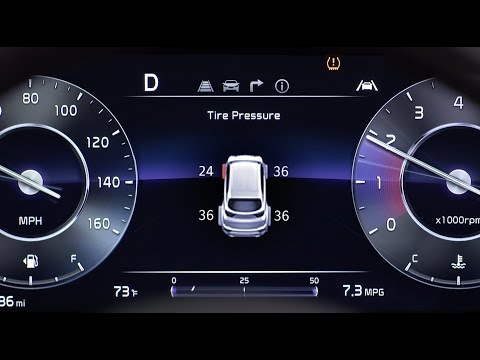
- View Tire Pressure: The dashboard will show the pressure for each tire—usually in PSI (pounds per square inch).
If the pressure is normal, numbers appear in white. If pressure is low, numbers turn yellow or red, and you’ll see a warning icon.
Example
Let’s say your dashboard shows:
- Front Left: 34 PSI
- Front Right: 33 PSI
- Rear Left: 32 PSI
- Rear Right: 31 PSI
If your manual says the recommended pressure is 35 PSI, you know the rear tires need more air.
Recommended Tire Pressure For Kia Telluride
The right pressure depends on your Telluride model and the tires installed. Always check your owner’s manual or the sticker inside the driver’s door.
For most Telluride models, the recommended pressure is:
- Front Tires: 35 PSI
- Rear Tires: 35 PSI
If you use different tires (for snow or off-road), check the tire sidewall for recommended PSI.
Comparison Of Recommended Vs. Actual Tire Pressure
Here’s a quick comparison for understanding the impact of different PSI levels:
| PSI Level | Effect on Driving | Risks |
|---|---|---|
| 35 PSI (Recommended) | Optimal handling, safety, fuel efficiency | None |
| 32 PSI | Softer ride, reduced fuel efficiency | Possible tire wear, handling issues |
| 38 PSI | Stiffer ride, increased responsiveness | Higher risk of blowout, uneven tire wear |
Checking Tire Pressure Manually
While the dashboard is helpful, sometimes the sensors fail, or you want to double-check. Here’s how you can check tire pressure manually:
Tools You Need
- Tire pressure gauge (digital or analog)
- Air compressor (optional, for inflating tires)
Steps
- Park on a flat surface: Make sure your car is not tilted.
- Remove the valve cap: Twist off the cap from the tire’s valve stem.
- Press the gauge onto the valve: Hold firmly until the reading appears.
- Check the reading: Compare with recommended PSI.
- Add or release air as needed: Use an air compressor or let air out if necessary.
- Replace the cap: Screw it back on securely.
Why Manual Checks Matter
Sometimes, TPMS sensors are slow to update or malfunction. Manual checks help catch issues early. Also, if you rotate tires, the system may need time to adjust.
Understanding Tpms Warnings
When your Telluride’s TPMS detects low pressure, it shows a warning. This warning is important and should not be ignored.
Common Tpms Warning Signs
- Yellow tire icon: Means one or more tires are under-inflated.
- Red icon or flashing light: Indicates serious pressure loss or sensor malfunction.
- Dashboard message: Sometimes you’ll see “Check tire pressure.”
What To Do When Warning Appears
- Stop safely: Don’t keep driving with low pressure.
- Check which tire is affected: The dashboard shows which tire is low.
- Inspect tire for damage: Look for nails, cuts, or bulges.
- Inflate tire: Add air to reach recommended PSI.
- Reset the TPMS: Some models require a TPMS reset after inflating.
Most drivers miss the last step—resetting the system. If you don’t, the warning may stay on even after fixing the tire.

Credit: www.reddit.com
Resetting The Tpms On Kia Telluride
Sometimes, after inflating your tires, the warning light stays on. This is common and easy to fix.
How To Reset
- Drive your car for 10-30 minutes at 30 mph or faster. The system usually resets itself.
- If the light stays on, turn off the engine and restart.
- For stubborn warnings, check your owner’s manual for the TPMS reset button. Some models have a reset option in the dashboard menu.
Extra Tip
If you change all four tires, or rotate them, the system may need several miles to update. Don’t panic if the numbers seem wrong at first.
Seasonal Changes And Tire Pressure
Temperature affects tire pressure. Every 10°F drop in temperature lowers tire pressure by about 1 PSI. In winter, your tires can lose several PSI overnight. In summer, pressure can increase.
Table: Tire Pressure Changes By Temperature
| Temperature Change | PSI Change |
|---|---|
| -20°F (cold morning) | -2 PSI |
| +20°F (hot afternoon) | +2 PSI |
Check tire pressure at least once a month and before long trips. Most Telluride owners don’t realize that checking only when the warning light comes on is risky.
Credit: www.youtube.com
Common Mistakes When Checking Tire Pressure
Even experienced drivers make mistakes. Avoid these to keep your Telluride safe:
- Checking pressure when tires are hot: Always check when tires are cold, before driving. Heat increases pressure readings.
- Ignoring small differences: Even 2 PSI below recommended can affect safety.
- Trusting TPMS too much: If a sensor fails, you might miss a slow leak.
- Not checking spare tire: The spare also has a sensor but is often forgotten.
- Failing to reset TPMS: After fixing pressure, always make sure the system updates.
How Tire Pressure Affects Your Telluride’s Features
Modern SUVs like the Telluride use smart systems. Low tire pressure can affect:
- All-wheel drive performance: Uneven pressure changes how power is sent to the wheels.
- ABS and traction control: These systems rely on tire data.
- Emergency braking: Low pressure increases stopping distance.
Many drivers don’t realize that low pressure can confuse the car’s computers, leading to wrong warnings or less effective safety features.
When To Replace Tpms Sensors
TPMS sensors last about 5-7 years or 60,000–100,000 miles. Signs of a dying sensor include:
- Frequent warning lights
- Incorrect readings
- Sensors not updating after inflation
If you change tires or get new wheels, make sure the new sensors are compatible. Some cheap sensors don’t work well with Telluride’s system.
Table: Tpms Sensor Lifespan
| Sensor Type | Average Lifespan | Replacement Cost |
|---|---|---|
| OEM Sensor | 5-7 years | $50-$80 per sensor |
| Aftermarket Sensor | 3-5 years | $30-$50 per sensor |
Practical Tips For Kia Telluride Owners
- Keep a digital tire gauge in your glove box for emergencies.
- Check tire pressure after big temperature changes or before road trips.
- If your TPMS warning comes on often, ask a mechanic to check for leaks or sensor problems.
- When filling tires, use the recommended PSI—not what feels “right.” Too much air is as dangerous as too little.
- Rotate your tires every 7,500 miles to keep wear even and sensors accurate.
Credit: www.reddit.com
Frequently Asked Questions
What Is The Recommended Tire Pressure For The Kia Telluride?
Most Telluride models require 35 PSI for both front and rear tires. Always check your owner’s manual or the sticker inside the driver’s door for your exact model.
Can I Drive With A Tpms Warning Light On?
It’s not safe to drive with a TPMS warning. Low tire pressure can cause poor handling and increase the risk of tire failure. Stop and check your tires as soon as possible.
How Do I Reset The Tpms After Inflating My Tires?
Usually, driving for 10–30 minutes at normal speed will reset the system. If the warning light stays on, restart the engine or check your dashboard for a reset option. Consult your manual for model-specific instructions.
Does Tire Pressure Change With Temperature?
Yes. For every 10°F drop in temperature, tire pressure drops about 1 PSI. In winter, check your tires more often because cold air reduces pressure.
Where Can I Find More Information About Tpms And Tire Safety?
For in-depth details about TPMS and tire safety, visit the National Highway Traffic Safety Administration.
Keeping your Kia Telluride’s tires at the right pressure is simple but critical. With the dashboard display and TPMS, checking is easy. Don’t ignore warning lights, and make manual checks a habit—especially before long trips or after big temperature changes.
Safe tires mean safer driving, better fuel economy, and longer-lasting wheels. Give your Telluride the attention it deserves, and it will reward you with comfortable, confident rides for years to come.