If you work with tractors, loaders, or other heavy machines, you have probably heard about R1 tires and R4 tires. Each type is made for different jobs and surfaces. Choosing between them can affect your machine’s performance, how long the tires last, and even your safety. Many people find tire types confusing, and mistakes can lead to wasted money or poor results. This article will help you understand R1 and R4 tires clearly, so you can decide which is best for your needs.
What Are R1 Tires?
R1 tires are also called agricultural tires or tractor tires. They are made for farm work, mainly on soil and fields. These tires have deep, sharp lugs (the raised parts on the tread) that dig into soft ground.
Farmers use R1 tires because they give strong traction on dirt, mud, and loose soil. The deep lugs help the tire grip, so the tractor does not slip. R1 tires are not made for roads or hard surfaces. If you drive them on pavement, they wear out quickly and can feel uncomfortable.
Key Features Of R1 Tires
- Deep lugs: Usually 1.5–2 inches deep, good for soft earth.
- Wide spacing between lugs: Helps push mud away and prevents clogging.
- Narrow tire shape: Cuts through soil better.
- Soft rubber compound: Flexible for gripping uneven surfaces.
Common Uses For R1 Tires
- Plowing fields
- Planting crops
- Harvesting
- Pulling heavy farm tools
You will see R1 tires on tractors that work in large fields, gardens, and muddy areas. They are less common for construction or landscaping.
What Are R4 Tires?
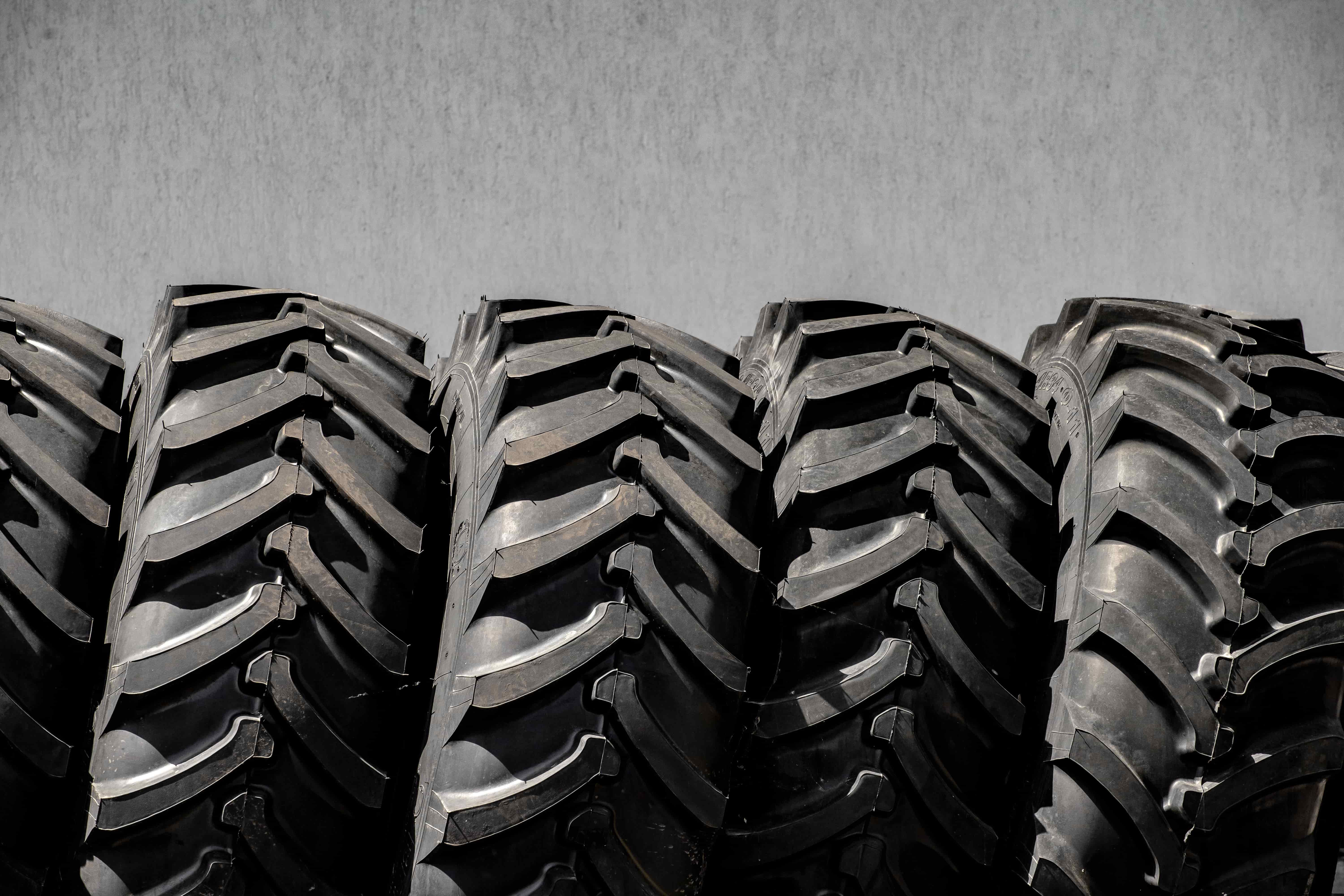
R4 tires are known as industrial tires. They are made for machines like backhoes, loaders, and some compact tractors. R4 tires are designed to be tough and to handle different surfaces, including dirt, gravel, and pavement.
These tires have shorter, wider lugs compared to R1. The tread is less aggressive, so they do not dig into soil as much. Instead, R4 tires balance traction with durability. They last longer if you drive on hard surfaces, and they can handle heavy loads.
Key Features Of R4 Tires
- Medium-depth lugs: Usually 1–1.5 inches deep.
- Wide, flat tread: More contact with hard ground.
- Thicker rubber: Resists cuts, cracks, and wear.
- Heavier build: Supports heavy machinery.
Common Uses For R4 Tires
- Construction sites
- Landscaping
- Moving materials
- Loader work
- Light farming on mixed surfaces
R4 tires are popular on machines that switch between dirt and pavement. They are not as good in deep mud as R1, but they offer better performance on hard surfaces.
Credit: commercial.wonderlandtire.com
R1 Tires Vs R4 Tires: Main Differences
Understanding how R1 and R4 tires differ is important for making the right choice. Here is a clear comparison:
| Feature | R1 Tires | R4 Tires |
|---|---|---|
| Tread Depth | 1.5–2 inches (deep lugs) | 1–1.5 inches (medium lugs) |
| Tread Shape | Sharp, narrow lugs | Wide, flat lugs |
| Best Surface | Soft soil, mud | Mixed ground, gravel, pavement |
| Durability | Wears quickly on hard surfaces | Lasts longer on hard surfaces |
| Traction | Excellent in mud | Good on mixed surfaces |
| Common Use | Farming | Construction, landscaping |
| Price (average) | Lower | Higher |
Performance Differences
R1 tires give maximum grip on soft soil. If you often work in muddy fields or loose dirt, R1 tires will help your machine move without slipping. R4 tires are more balanced. They grip well on dirt, but also perform on gravel and pavement.
If your work takes you from fields to roads or construction sites, R4 tires are a safer choice.
Wear And Lifespan
R1 tires are not made for hard surfaces. If you drive them on concrete or asphalt, the lugs will wear down fast. R4 tires have thicker rubber and a stronger build. They last longer, especially if you drive on mixed surfaces.
Load Capacity
R4 tires can carry heavier loads. Their thicker sidewalls and strong rubber help support machines like backhoes and loaders. R1 tires can handle farm tools, but not the same weight as R4.
Choosing The Right Tire For Your Needs
Picking between R1 and R4 tires depends on your work. Here are important questions to ask:
- Where do you drive most?
- Mostly fields and soil: R1 tires are best.
- Mixed surfaces, roads, gravel: R4 tires are better.
- What is your main job?
- Farming, planting, harvesting: R1 tires give better traction.
- Construction, landscaping, loader work: R4 tires are more durable.
- Do you carry heavy loads?
- Heavy materials, tools: R4 tires handle more weight.
- Light farm work: R1 tires are enough.
- What is your machine type?
- Tractors: Both R1 and R4 can fit, but choose based on work.
- Loaders, backhoes: R4 tires are usually standard.
Real-world Example
A farmer who works in muddy fields should use R1 tires. If the same person also moves materials on gravel roads, R4 tires might be better. Mistakes happen when people use R1 tires on hard surfaces—these tires wear out fast, and the machine may slip.

Credit: www.youtube.com
R1 Tires: Pros And Cons
Understanding the strengths and weaknesses of R1 tires helps you decide if they fit your needs.
Pros
- Top traction in mud and soil: Great for plowing and planting.
- Self-cleaning lugs: Mud falls off easily, keeping grip strong.
- Lower price: Usually less expensive than R4.
Cons
- Poor performance on pavement: Wear out quickly, uncomfortable ride.
- Lower load capacity: Not made for heavy machines.
- Limited use: Not suitable for construction or landscaping.
Practical Insight
Many beginners think R1 tires can be used everywhere. This is a mistake. If you work on concrete, R1 tires will cost you more in the long run because you will replace them often.
R4 Tires: Pros And Cons
R4 tires are made for flexibility and strength. Here is what you need to know:
Pros
- Durable on hard surfaces: Lasts much longer on roads and gravel.
- High load capacity: Can handle heavy machines and materials.
- Good for mixed jobs: Works well for landscaping, loader work, and light farming.
Cons
- Less traction in deep mud: May slip in very soft soil.
- Higher price: Costs more than R1 tires.
- Heavier build: Can affect fuel use.
Practical Insight
A common mistake is using R4 tires in muddy fields. While they do not get stuck easily, they can slip and waste fuel. For deep mud, R1 tires are better.
R1 Vs R4 Tires: Cost Comparison
Cost matters, especially for small farms and businesses. Let’s compare typical prices and costs over time.
| Tire Type | Average Price (per tire) | Estimated Lifespan (hours) | Replacement Cost (over 5 years) |
|---|---|---|---|
| R1 | $180–$300 | 800–1200 | $800–$1200 |
| R4 | $250–$450 | 1200–1800 | $1000–$1600 |
R4 tires cost more upfront, but they last longer, especially on hard surfaces. If you drive mostly on soil, R1 tires will save you money. If you switch surfaces often, R4 tires are a smarter investment.
R1 Vs R4 Tires: Safety Considerations
Safety is not just about tire grip. It also includes stability, handling, and machine control. Here are key points:
- R1 tires can cause instability on hard surfaces. The deep lugs make the ride rough, and the machine can wobble.
- R4 tires provide a stable ride on pavement and gravel. The wide tread helps prevent tipping.
- Using the wrong tire type can increase the risk of accidents. If you farm near roads, switching to R4 tires is safer.
Example
One landscaping company used R1 tires for a loader that moved rocks on gravel. The tires wore out in six months, and the loader slid on slopes. After switching to R4 tires, the loader was stable, and tires lasted two years.
Tire Maintenance Tips
No matter which tire you choose, care is important. Here’s how to keep your tires in good shape:
- Check air pressure weekly: Low pressure causes uneven wear.
- Clean tires after use: Mud and debris can damage lugs.
- Inspect for cracks and cuts: Replace damaged tires quickly.
- Rotate tires if possible: Helps them wear evenly.
- Store machines out of sun: Sunlight ages rubber faster.
Many people ignore tire care, but simple habits can double your tire lifespan.
R1 Vs R4 Tires: Environmental Impact
Tire choice affects more than your wallet. It can affect the environment, too.
- R1 tires dig deep into soil, which can cause erosion if used too much.
- R4 tires are heavier and use more rubber, but they last longer, which means fewer tires end up as waste.
If you work on sensitive land, use R1 tires with care. For jobs that need long-lasting tires, R4 tires reduce waste.
R1 Vs R4 Tires: Which Is Better For Compact Tractors?
Compact tractors are popular for small farms, landscaping, and estates. Choosing the right tire type is important.
| Factor | R1 Tires | R4 Tires |
|---|---|---|
| Traction | Best for soft soil | Good for mixed surfaces |
| Comfort | Rough on pavement | Smoother ride |
| Durability | Shorter lifespan | Longer lifespan |
| Common Jobs | Plowing, tilling | Loader work, landscaping |
If you use your compact tractor for farming, R1 tires are better. For mixed jobs, such as moving dirt or gravel, R4 tires will give you more comfort and last longer.
R1 Vs R4 Tires: Resale Value
If you plan to sell your machine later, tire choice can affect the price.
- Machines with R4 tires often sell for more, especially for construction or landscaping buyers.
- Machines with R1 tires are more valuable for farmers.
A mistake beginners make is buying a machine with the wrong tire type for their future buyer. Think ahead if you plan to sell.

Credit: www.reddit.com
R1 Vs R4 Tires: Weather Performance
Weather can change how tires perform.
- R1 tires work well in wet and muddy conditions. They can handle rainy seasons.
- R4 tires are safer in dry weather and on icy pavement, where deep lugs can lose grip.
If you work in areas with heavy rain or mud, R1 tires are best. For places with dry seasons or icy roads, R4 tires are safer.
Common Myths About R1 And R4 Tires
Many people believe things that are not true about these tires. Here are some myths:
- R1 tires can do everything: Not true. They are not safe for pavement.
- R4 tires are only for construction: Not true. They work well for mixed farming and landscaping.
- R4 tires cannot handle mud: They do okay in light mud, but not deep fields.
Learning the facts helps you make a smarter choice.
Non-obvious Insights: What Most Beginners Miss
- Tire pressure matters more than you think. Both R1 and R4 tires can lose grip if not inflated correctly. Under-inflated tires wear faster and can cause accidents.
- Lug shape affects fuel use. Deep, sharp lugs on R1 tires require more power to pull, which can increase fuel costs if used on hard ground.
- Tire rotation is often ignored. Rotating tires, especially R4, can double their lifespan. Few owners do this, but it saves money.
R1 Vs R4 Tires: Expert Recommendations
If you are still unsure, here is expert guidance:
- Farmers: Choose R1 for maximum traction unless you drive on roads often.
- Construction and landscaping: R4 tires are best, as they last longer and support heavy loads.
- Compact tractor owners: Think about your main jobs. If you switch surfaces often, R4 tires are safer.
For more technical details, see Michelin Agriculture Tire Guide.
Frequently Asked Questions
What Is The Main Difference Between R1 And R4 Tires?
R1 tires are made for soft soil and farming. They have deep lugs for traction in mud. R4 tires are designed for construction, landscaping, and mixed surfaces. They are tougher and last longer on hard ground.
Can I Use R1 Tires On Pavement?
You can, but it is not recommended. R1 tires wear out quickly on pavement. They also make the ride rough and less safe. If you drive on roads often, use R4 tires.
Are R4 Tires Good For Farming?
R4 tires work for light farm jobs and mixed surfaces. They are not as good as R1 tires in deep mud or loose soil. For serious farming, R1 tires give better traction.
How Long Do R1 And R4 Tires Last?
R1 tires last about 800–1200 hours if used on soil. R4 tires last 1200–1800 hours on mixed ground. Lifespan depends on care and surface type.
What Is The Best Tire For Compact Tractors?
It depends on your work. If you farm or work in muddy areas, R1 tires are best. For landscaping, loader work, or jobs on pavement, R4 tires are better.
Choosing between R1 and R4 tires is not always easy, but clear knowledge makes the decision simpler. Think about your main jobs, your machine, and where you drive. With this guide, you can pick the best tire for your needs, avoid common mistakes, and save money in the long run.