When you need new tires, the options can feel overwhelming. Two names often come up: Kumho Tires and Bridgestone. Both brands are known around the world, but they have different strengths, prices, and reputations. How do you choose between them? Picking the right tire is about more than just price—it’s about safety, comfort, and how your car handles on the road. Whether you drive every day or just want reliable tires for the weekend, understanding the differences is important.
Let’s explore how Kumho and Bridgestone compare in quality, technology, price, and real-world performance. You’ll discover what makes each brand unique, see the results of direct comparisons, and learn which might be the best fit for your car and your driving style.
By the end, you’ll have a clear idea of what to expect from both brands and feel confident in your choice.
Brand Overview: Kumho And Bridgestone
Before comparing specific products, it’s helpful to know a bit about each company’s background and global reputation.
Kumho Tires
Kumho Tire is based in South Korea and started in 1960. Over the years, Kumho has grown to become one of the top ten tire makers in the world. The brand is known for affordable prices and steady quality, making it a popular choice for drivers who want value.
Kumho invests in research and development, with technology centers in Korea, the US, China, and Germany. They supply original equipment tires for brands like Hyundai, Kia, and Volkswagen. Kumho’s focus is on making tires that perform well in all conditions but cost less than premium brands.
Bridgestone
Bridgestone is a Japanese company founded in 1931. Today, it’s the largest tire manufacturer globally. Bridgestone is famous for advanced technology, high-quality materials, and a wide range of tires for cars, trucks, motorcycles, and even airplanes.
The brand is the original equipment supplier for many luxury and performance car brands, including Mercedes-Benz, BMW, and Toyota. Bridgestone has a reputation for durability, safety, and innovation. Their products often cost more, but they’re seen as a top-tier choice worldwide.
Product Range And Variety
Both Kumho and Bridgestone offer a wide selection of tires. However, the range and focus of their products are different.
Kumho’s Lineup
Kumho offers tires for:
- Passenger cars: Like the Kumho Solus and Ecsta lines
- SUVs and crossovers
- Light trucks
- All-season, summer, and winter tires
Kumho’s variety is good, but the brand specializes in everyday tires for city and highway driving. They have some sporty and off-road models, but not as many as some bigger brands.
Bridgestone’s Lineup
Bridgestone has a larger selection, including:
- Performance tires: Potenza series for sports cars
- Touring and comfort: Turanza line
- All-season and all-weather
- Winter and snow: Blizzak series is famous worldwide
- Off-road and all-terrain: Dueler line for SUVs and trucks
- Commercial and specialty tires
Bridgestone covers more vehicle types and driving needs. If you have a sports car or need heavy-duty off-road tires, Bridgestone likely has more options.
Price Comparison
One of the biggest differences between Kumho and Bridgestone is price. Here’s how they compare for a common size—205/55R16, used on many sedans.
| Brand | Model | Type | Average Price (USD) |
|---|---|---|---|
| Kumho | Solus TA31 | All-Season | $90 |
| Bridgestone | Turanza QuietTrack | All-Season | $140 |
| Kumho | Ecsta PS31 | Summer | $100 |
| Bridgestone | Potenza RE980AS | Ultra High Performance | $160 |
Kumho tires are usually 30-40% cheaper than equivalent Bridgestone models. This makes them attractive for drivers on a budget. However, with Bridgestone, you often pay for advanced technology and longer tread life.
Performance And Handling
A tire’s main job is to keep you safe and comfortable on the road. Let’s break down how Kumho and Bridgestone perform in real-world conditions.
Dry Road Performance
- Kumho: Most Kumho tires provide good grip and stable handling on dry roads. Models like the Ecsta PS31 and Solus TA31 perform well for everyday driving. They’re responsive, but not as sharp as high-end performance tires.
- Bridgestone: Tires like the Potenza and Turanza lines deliver excellent cornering, quick steering response, and strong grip, especially at higher speeds. Bridgestone performance models often win in tests for sporty driving.
Wet Road Performance
Wet grip is crucial for safety. Here’s how the two brands compare:
- Kumho: Newer Kumho models use advanced tread compounds that handle rain well. However, in heavy downpours or when worn, Kumho tires sometimes lose traction sooner than top-tier brands.
- Bridgestone: Bridgestone’s wet-weather technology, like the Blizzak’s unique rubber and the Turanza’s water-evacuation channels, set the standard for wet grip. They resist hydroplaning and maintain good braking distances, even in storms.
Winter And Snow
- Kumho: Offers winter tires such as the WinterCraft series, which perform well in light snow and cold. They’re better than all-seasons but may not match the grip of premium snow tires in deep snow or on ice.
- Bridgestone: The Blizzak line is famous for winter grip. Bridgestone invests heavily in cold-weather rubber and tread designs, making these tires a top pick in icy and snowy conditions.
Noise And Comfort
- Kumho: Most Kumho tires are quiet and smooth on highways. Their tread patterns reduce road noise, but as the tires wear, some models get louder.
- Bridgestone: Bridgestone excels in comfort. Models like the Turanza QuietTrack use noise-blocking technology and soft sidewalls for a plush, quiet ride—even as they age.
Longevity And Tread Life
How long a tire lasts affects value. Here’s a look at typical treadwear warranties and test results.
| Brand | Model | Treadwear Warranty (Miles) | Real-World Average Lifespan (Miles) |
|---|---|---|---|
| Kumho | Solus TA31 | 60,000 | 45,000–55,000 |
| Bridgestone | Turanza QuietTrack | 80,000 | 65,000–75,000 |
| Kumho | Ecsta PS31 | 40,000 | 35,000–40,000 |
| Bridgestone | Potenza RE980AS | 50,000 | 45,000–50,000 |
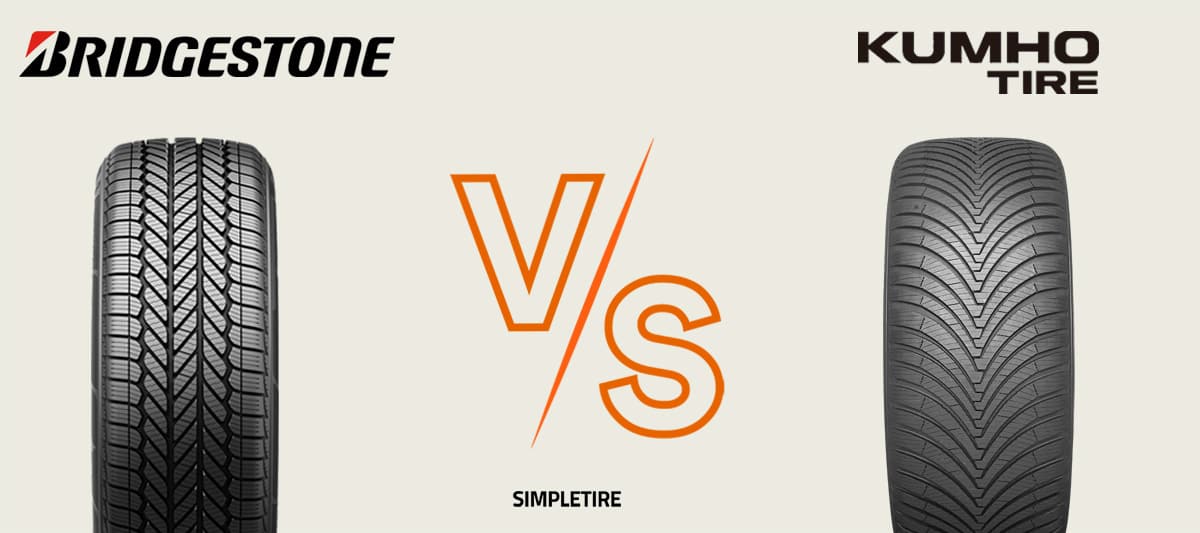
Bridgestone tires usually last longer, which can balance out their higher price over time.
Credit: simpletire.com
Technology And Innovation
Innovation sets a brand apart. Here’s how Kumho and Bridgestone push tire technology.
Kumho’s Innovations
- ESCOT Technology: Improves tread stiffness and heat distribution for even wear.
- Compound Blending: Kumho mixes natural and synthetic rubbers for better grip and longer life.
- 3D Sipe Patterns: On winter tires, these help with ice and snow grip.
- Run-flat Options: Some Kumho tires can keep running after a puncture, but the selection is limited.
Bridgestone’s Innovations
- NanoPro-Tech: Bridgestone controls rubber molecules to reduce rolling resistance and improve grip.
- DriveGuard Technology: Allows you to keep driving up to 50 miles after a puncture.
- Noise Cancelling: Special foam and tread designs for a quiet ride.
- Ologic Technology: Used in electric vehicles, improves efficiency without losing grip.
- Multi-Cell Compound: The Blizzak winter tire uses this for better grip on ice.
Non-obvious insight: Kumho’s technology often focuses on making their tires last longer for the price, while Bridgestone’s innovations aim to improve safety, performance, and comfort—even at higher costs.
Warranty And Customer Support
Warranty terms can give peace of mind. Here’s a direct comparison:
| Brand | Workmanship Warranty | Road Hazard Coverage | Customer Support |
|---|---|---|---|
| Kumho | 6 Years | Limited, varies by dealer | Online/Phone, good reputation |
| Bridgestone | 5 Years | Available for some models | Online/Phone, global support |
Both brands offer solid warranties, but Kumho sometimes provides a slightly longer coverage period. However, Bridgestone’s worldwide network makes it easier to get help in more countries.
Non-obvious insight: Warranty claims with both companies usually require proof of regular tire rotation and maintenance. Skipping tire rotations can void your warranty—something many drivers overlook.
User Reviews And Road Tests
What do real drivers and independent testers say? Looking at user reviews and professional tests gives a clearer picture.
Kumho Tires: User Feedback
- Strengths: Most drivers praise Kumho for value, quiet rides, and good handling in normal conditions.
- Weaknesses: Some mention faster tread wear or reduced performance in heavy rain as tires age.
- Typical comment: “Great tire for the price. Handles well, but wore out a bit sooner than expected.”
Bridgestone Tires: User Feedback
- Strengths: Bridgestone gets high marks for comfort, wet and dry grip, and longevity.
- Weaknesses: The main complaint is price, with some drivers saying the difference isn’t always worth it for basic cars.
- Typical comment: “Excellent grip and super quiet. More expensive, but worth it for peace of mind.”
Road Test Results
In independent tests by publications like Consumer Reports and Tire Rack:
- Bridgestone often ranks in the top three for wet/dry grip, braking distance, and noise.
- Kumho usually ranks in the middle—above some budget brands but below premium ones.
Value For Money
When considering price, performance, and lifespan, which brand offers the best value?
- Kumho is a strong choice if you want affordable tires that perform well for city or family cars. They’re especially good if you don’t drive aggressively or put on high mileage every year.
- Bridgestone is better if you want maximum safety, the quietest ride, or expect to keep your car for many years. Their tires last longer and handle tough conditions with more confidence.
Example: If you drive 12,000 miles a year, a Bridgestone tire might last six years, while a Kumho could last four. Over time, the cost difference narrows, especially when you factor in fewer tire changes and possibly lower fuel use due to better rolling resistance.

Credit: www.youtube.com
Environmental Impact
Tire companies are now focusing on sustainability. Here’s how Kumho and Bridgestone compare:
- Kumho uses eco-friendly materials in some lines and aims to reduce emissions at their factories.
- Bridgestone invests heavily in recycled materials, and their “Ecopia” line is made to lower rolling resistance, saving fuel and reducing CO2.
- Bridgestone also leads in research for alternative rubber sources, like guayule plants, to reduce dependency on traditional rubber.
If sustainability is important to you, Bridgestone’s global efforts are more advanced, but Kumho is catching up.
Which Brand Is Best For You?
There is no one-size-fits-all answer. Here are some scenarios to help you decide:
- Budget-conscious driver: Choose Kumho. You’ll get good quality for less money.
- Luxury or performance car owner: Bridgestone has more options and better performance, especially at high speeds or in bad weather.
- Winter driving: Bridgestone’s Blizzak beats most Kumho winter tires for grip and safety.
- City commuter: Kumho offers smooth, quiet rides at a lower price.
- Long highway trips: Bridgestone lasts longer and stays comfortable, saving you in the long run.
- Off-road or heavy SUV: Bridgestone’s Dueler series offers more rugged options.

Credit: www.blackcircles.com
Common Mistakes When Buying Tires
- Ignoring tire size and type: Always check your car’s manual for the correct size and load rating.
- Focusing only on price: Cheaper tires can cost more over time if they wear out quickly or reduce fuel efficiency.
- Neglecting weather conditions: Buy tires designed for your local climate. All-season isn’t always the best for snowy regions.
- Skipping regular rotation: This is key for warranty and for getting the most life from your tires.
- Not checking manufacture date: Tires older than six years, even if unused, can become unsafe.
Frequently Asked Questions
How Do Kumho And Bridgestone Compare In Terms Of Safety?
Both brands meet international safety standards. Bridgestone often scores higher in independent braking and wet grip tests. Kumho is safe for daily driving but may not perform as well as Bridgestone in emergency situations or extreme conditions.
Are Kumho Tires Good For High-performance Cars?
Kumho makes performance tires like the Ecsta PS31 and Ecsta PA51, which are good for sporty driving on a budget. However, for the highest speeds and track use, Bridgestone’s Potenza series offers better grip, control, and durability.
Which Brand Is More Eco-friendly?
Bridgestone leads in environmental efforts, with a strong focus on recycling and sustainable materials. Their Ecopia line is designed to reduce fuel use and CO2 emissions. Kumho is improving in this area but does not match Bridgestone’s level yet. For more on eco-friendly tires, see the Bridgestone Environmental Initiatives.
Do Both Brands Offer Run-flat Tires?
Yes, both Kumho and Bridgestone offer run-flat options. Bridgestone’s DriveGuard is one of the most popular run-flat designs, allowing you to drive up to 50 miles after a puncture. Kumho has run-flat models, but the selection is smaller.
Is The Higher Price Of Bridgestone Tires Worth It?
For many drivers, the higher price of Bridgestone is justified by longer tread life, better comfort, and advanced safety in bad weather. If you drive a lot or in tough conditions, the extra cost can mean fewer replacements and more peace of mind. For budget drivers or city cars, Kumho offers excellent value.
In the end, choosing between Kumho Tires and Bridgestone depends on your priorities. Both brands have strengths and weaknesses. Focus on what matters most to you—safety, price, performance, or longevity—and you’ll make the right choice for your needs.