Pirelli Tires Vs Goodyear Tires
Choosing the right tires for your car can feel complicated. Both Pirelli and Goodyear are trusted names, but their strengths are not identical. With so many options, features, and reviews out there, it’s easy to get overwhelmed. This article breaks down the differences between Pirelli and Goodyear tires, focusing on performance, safety, price, durability, and more. Whether you drive for daily commuting, enjoy spirited weekend trips, or need reliable tires for rough weather, you’ll find clear and practical information here. By the end, you’ll know which brand fits your needs best—and why.
Brand Backgrounds
Understanding where these companies come from helps explain their philosophies and strengths.
Pirelli: Italian Innovation
Founded in 1872 in Milan, Pirelli has over 150 years of tire-making history. The brand is famous for its connection to high-end cars and motorsports, especially Formula One. Pirelli focuses on advanced materials and cutting-edge designs. The company invests heavily in research, pushing for tires that perform well at high speeds and look stylish.
Goodyear: American Reliability
Goodyear began in 1898 in Akron, Ohio. It’s one of the biggest tire makers in the world. Goodyear is known for broad innovation, but especially for building tough, reliable tires for everyday drivers. The brand also supplies tires for racing, trucks, and airplanes. Goodyear’s approach is about durability, safety, and making tires that last under many different conditions.
Tire Types And Model Ranges
Both brands offer a wide range, but they have different strengths.
Pirelli’s Focus
Pirelli makes:
- High-performance summer tires (P Zero, Cinturato)
- Ultra-high-performance all-season tires
- Winter tires for sports cars (Sottozero, Ice Zero)
- Luxury SUV/crossover tires (Scorpion series)
- Electric vehicle (EV) tires (Elect models)
Pirelli is often chosen for premium and sports cars. Some models, like the P Zero, are original equipment on Ferrari, Lamborghini, and Porsche.
Goodyear’s Range
Goodyear covers:
- All-season tires (Assurance, Eagle, EfficientGrip)
- Winter/snow tires (Ultra Grip)
- Performance tires (Eagle F1 series)
- Touring tires for comfort and mileage
- Truck/SUV tires (Wrangler, Fortera, Endurance)
- Run-flat and fuel-saving tires
Goodyear tends to dominate the mid-range and mass market. Their tires are fitted as standard on many sedans, SUVs, and trucks.
Key Differences In Performance
When people compare these two brands, they often care about performance under real driving conditions.
Dry Road Handling
Pirelli’s high-performance tires, especially the P Zero series, are famous for sharp steering and road grip. If you drive a sports car or want a tire that responds quickly, Pirelli excels here. Goodyear’s performance tires are strong too, but usually focus on a balance of grip and comfort, not just speed.
Wet Road Performance
Goodyear has a reputation for excellent wet weather control. Many Goodyear tires use unique tread designs and compounds that push water aside and resist hydroplaning. Pirelli is also good in the wet, but some models (especially older ones) can struggle compared to Goodyear in heavy rain.
Winter And Snow
For snow and ice, Goodyear’s Ultra Grip line is a leader. These tires offer strong traction, even in harsh winter climates. Pirelli’s Sottozero and Ice Zero are well-respected, but Goodyear tends to win in real-world winter tests, especially for everyday cars and SUVs.
Comfort And Noise
Goodyear’s touring tires are engineered for a quiet, smooth ride. If you want comfort on highways and city streets, Goodyear is hard to beat. Pirelli’s high-performance models can be noisier, especially at higher speeds, but their touring and luxury lines are catching up.
Longevity And Wear
Goodyear tires often last longer, especially in the all-season and touring categories. The company uses special compounds to slow tread wear. Pirelli’s high-performance tires can wear out faster, especially if driven aggressively, but their new technology is closing the gap.
Head-to-head: Popular Models Compared
To make things clearer, here is a direct comparison of two top-selling models from each brand.
| Feature | Pirelli P Zero | Goodyear Eagle F1 Asymmetric 5 |
|---|---|---|
| Type | Ultra-high-performance summer | Ultra-high-performance summer |
| Dry Grip | Excellent (9/10) | Very Good (8.5/10) |
| Wet Grip | Very Good (8/10) | Excellent (9/10) |
| Ride Comfort | Good (7/10) | Very Good (8/10) |
| Tread Life | Average (6/10) | Good (8/10) |
| Price Range (USD) | $180–$350 | $160–$320 |
Non-obvious insight: Many drivers overlook that the P Zero is often selected by carmakers to meet very specific handling needs. But this also means it’s “tuned” for certain cars—so the same tire may behave differently on a BMW than on a Mercedes.

Credit: www.youtube.com
Safety Features And Technology
Both companies invest in safety, but their methods differ.
Pirelli’s Innovations
- Run Flat Technology: Lets you drive up to 50 miles after a puncture.
- Seal Inside: Automatically seals small punctures.
- Noise Cancelling System: Built-in foam to reduce road noise.
- Elect Series: Specially designed for electric cars—quieter and more efficient.
Goodyear’s Technologies
- SoundComfort: Reduces interior noise by up to 50%.
- Duraseal: Self-seals punctures in commercial tires.
- ArmorGrip and ActiveBraking: Improve grip and shorten stopping distance.
- Assurance WeatherReady: Adapts to changing road conditions.
Non-obvious insight: Technologies like Pirelli’s “Elect” are not just about efficiency—they also help EVs handle the extra weight of batteries, which many standard tires aren’t built for.
Durability And Mileage
How long a tire lasts depends on many factors, but the company’s design matters.
Pirelli
Pirelli’s sports tires are made for grip, not maximum mileage. Expect treadwear warranties from 30,000–50,000 miles for all-season models, and sometimes less for summer options. Their touring and SUV tires, like the Scorpion line, now last much longer thanks to new rubber blends.
Goodyear
Goodyear stands out for longevity. Many of their all-season tires come with warranties from 50,000–85,000 miles. The Assurance ComforTred Touring, for example, is rated for up to 80,000 miles. This matters for drivers who cover a lot of ground every year.
66cf26d6840f3.png)
Credit: www.fasttrackemarat.com
Price Comparison And Value For Money
Price can be a deciding factor, but value is about more than just cost.
| Category | Pirelli (Average Price per Tire) | Goodyear (Average Price per Tire) |
|---|---|---|
| Performance/Summer | $180–$350 | $160–$320 |
| All-Season/Touring | $120–$220 | $100–$210 |
| Winter | $140–$260 | $110–$200 |
| SUV/Truck | $160–$300 | $130–$270 |
Pirelli is generally more expensive, especially for sports or luxury models. Goodyear offers more choices for budget-conscious buyers, but also has high-end options.
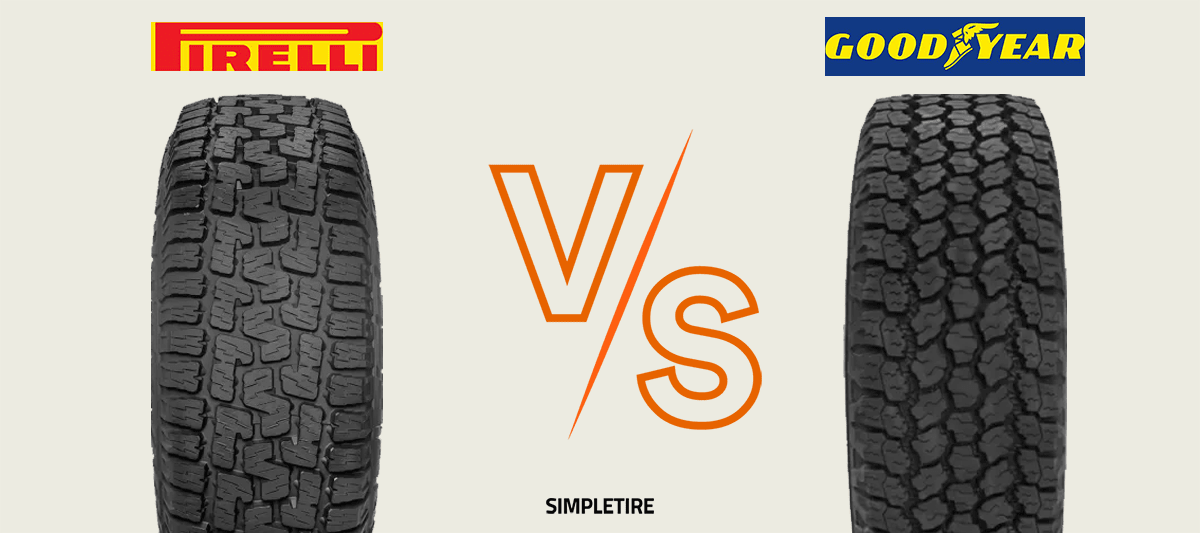
Ride Quality And Everyday Experience
Most drivers care about how their car feels day to day. Here, the difference is noticeable.
Pirelli
- Sharp steering: Especially on P Zero and Cinturato lines.
- Sporty feel: You feel more of the road, which some drivers love.
- Can be firmer: May not suit those who want a soft, cushioned ride.
Goodyear
- Soft, quiet ride: Especially on Assurance and EfficientGrip lines.
- Less “road feel”: More isolated from bumps and noise.
- Family-friendly: Great for long highway trips or city driving.
Credit: simpletire.com
Noise Levels
Noise is a common complaint with new tires. Tests and user reviews show:
- Pirelli: Performance tires can be noisy on rough roads. Touring models and EV-specific designs (like P7 Cinturato Elect) are much quieter.
- Goodyear: Touring and all-season models are among the quietest on the market. Their “SoundComfort” line is especially quiet, helping reduce fatigue on long drives.
Environmental Impact
Tire companies now face pressure to become more eco-friendly.
Pirelli’s Approach
- Uses less oil and more silica in tires to reduce rolling resistance and emissions.
- Some models are made with natural rubber and recycled materials.
- Focus on EV tires to help electric cars go farther per charge.
Goodyear’s Approach
- Developed a tire made from 70% sustainable materials.
- Uses soybean oil in some models to replace petroleum.
- Focuses on low rolling resistance to save fuel.
For eco-minded buyers, both brands are making progress, but Goodyear’s efforts in mass-market sustainability are a little ahead.
Suitability For Vehicle Types
Pirelli and Goodyear don’t fit every car equally well.
Pirelli Is Best For:
- Sports cars (Ferrari, Porsche, Lamborghini, BMW M)
- Luxury sedans (Audi, Mercedes-Benz, Maserati)
- Electric vehicles (Tesla, Porsche Taycan)
- Drivers who want sporty feel
Goodyear Is Best For:
- Family sedans and hatchbacks (Toyota, Honda, Ford)
- SUVs and crossovers (Jeep, Ford, Chevrolet)
- Pickup trucks (F-150, Silverado, RAM)
- Drivers who want comfort and value
Practical tip: If your car came with Pirelli or Goodyear from the factory, it’s often smart to stick with that brand, as the suspension and handling are “tuned” for those tires.
Warranty And Customer Support
Warranties are a sign of confidence in a product.
Pirelli Warranties
- Most all-season and touring tires: 45,000–65,000 miles
- Performance tires: None or limited
- Road hazard coverage: Optional (extra cost)
Goodyear Warranties
- All-season/touring tires: 50,000–85,000 miles
- Performance/summer tires: 30,000–45,000 miles
- Road hazard: Often included for first year
Goodyear’s longer warranties and easier claims process give it an edge for everyday drivers.
User Reviews And Real-world Feedback
Looking at owner reviews reveals patterns missed in lab tests.
Pirelli
- Praised for handling and style on sports cars.
- Criticized for price and sometimes faster wear.
- Mixed winter reviews: Some models not suited for deep snow.
Goodyear
- Praised for quietness, comfort, and value.
- Criticized for “soft” feel on sporty cars.
- Strong snow and rain performance.
Example: A BMW owner on a forum noted that switching from Pirelli P Zero to Goodyear Eagle F1 made the ride softer and quieter but less “connected.”
Motorsports And Oem Partnerships
Both brands are involved in racing, but their strategies differ.
- Pirelli: Official tire of Formula 1, World Rally Championship, and original equipment for top sports car brands. Focuses on speed, grip, and innovation.
- Goodyear: History in NASCAR, Le Mans, and endurance racing. More focused on durability and versatility.
This affects what tech ends up in their consumer tires. For example, Pirelli’s motorsport experience leads to tires with sharper response, while Goodyear’s racing history helps them build tires that last longer at high speeds.
Availability And Service Network
Buying and servicing tires should be easy.
- Goodyear has a bigger dealer/service network in North America and many other regions.
- Pirelli is widely available but may require specialty dealers, especially for high-end models.
This means Goodyear is often easier to find and service, especially in smaller towns.
Common Mistakes When Choosing Between Pirelli And Goodyear
- Matching tires to the wrong car: Don’t put ultra-high-performance Pirelli tires on a family sedan just for the brand name.
- Ignoring climate: Goodyear often wins for winter and all-season; Pirelli shines in dry, sporty conditions.
- Overpaying for unused features: Sports car tires on a commuter car are a waste unless you truly need the extra grip.
- Not checking the date code: New tires can sit in shops for years—always check the manufacture date for freshness.
- Skipping alignment after install: Both brands’ tires can wear quickly if your car’s suspension isn’t aligned properly.
When To Choose Pirelli
- You drive a sports or luxury car.
- You want the best dry road grip and responsive handling.
- You prioritize style and want a tire that matches your car’s image.
- You need a tire designed specifically for your high-end car or EV.
When To Choose Goodyear
- You want comfort, quiet, and long life.
- You drive in wet, snowy, or mixed climates.
- You are budget-focused but still want quality.
- You need a tire for everyday cars, SUVs, or trucks.
Final Thoughts
Both Pirelli and Goodyear make excellent tires, but their strengths serve different drivers. Pirelli excels in performance and prestige—ideal for those who love driving and own premium cars. Goodyear stands out for everyday value, comfort, and durability, making it a top choice for families, commuters, and those who face tough weather. The right choice depends on your vehicle, driving style, and priorities. If possible, consult your car’s manual and ask a trusted tire dealer for advice. If you want to explore more detailed tire tests and rankings, see the independent reviews at Tire Rack.
Frequently Asked Questions
What Is The Main Difference Between Pirelli And Goodyear Tires?
Pirelli focuses on high-performance tires for sports and luxury cars, offering sharp handling and style. Goodyear is known for making long-lasting, comfortable tires for a wide range of vehicles, with better options for everyday driving and rough weather.
Which Brand Lasts Longer: Pirelli Or Goodyear?
Generally, Goodyear tires last longer, especially in the all-season and touring segments. Some Goodyear models are rated for up to 85,000 miles, while Pirelli’s performance tires usually wear out faster due to their softer rubber.
Are Pirelli Tires Good In The Snow?
Some Pirelli winter tires like the Sottozero and Ice Zero are good on snow and ice, especially for sports cars. However, Goodyear’s Ultra Grip line usually performs better for regular cars and SUVs in harsh winter conditions.
Are Goodyear Tires More Affordable Than Pirelli?
Yes, Goodyear tires are generally less expensive than Pirelli, especially in the all-season and touring categories. Pirelli’s performance and luxury models cost more due to advanced materials and motorsport technology.
Which Brand Is Better For Electric Vehicles (evs)?
Pirelli has a special “Elect” line for EVs, focusing on low noise and efficiency. Goodyear also offers EV-compatible tires, but Pirelli’s experience with high-performance EVs gives it a slight edge for premium electric cars.