Choosing the right tire for your wheelbarrow may not seem like a big decision, but it can make a huge difference in how much work you do and how long your wheelbarrow lasts. Many people are surprised by how much easier or harder yard tasks feel simply based on tire type. The two main options you’ll find are flat free tires and pneumatic tires. Each has its own strengths, weaknesses, and ideal uses. Whether you’re a gardener, a builder, or just want to move firewood more easily, understanding the differences will help you make a smart choice.
Let’s explore what makes each tire unique, how they perform in real-life scenarios, and which one might be best for your needs.
What Is A Flat Free Wheelbarrow Tire?
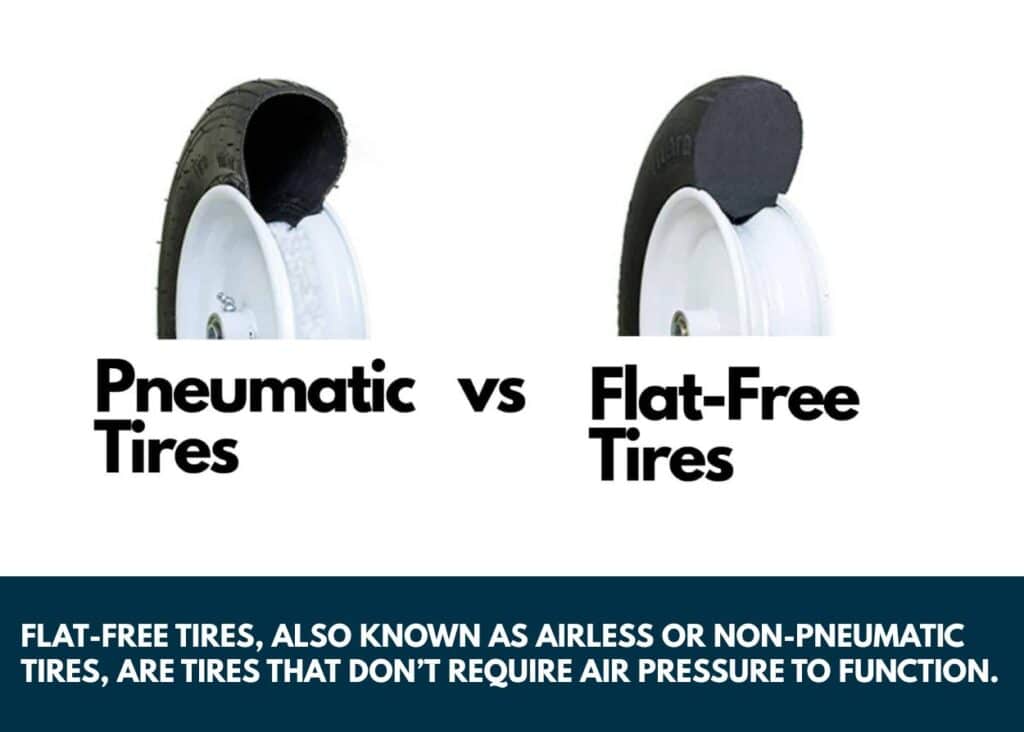
A flat free tire is a solid tire designed to never go flat. Instead of air, these tires are filled with foam, rubber, polyurethane, or other dense materials. The goal is to mimic the feel of an air-filled tire while eliminating the risk of punctures and flats.
This design has become very popular for people who want reliability and less maintenance. If you often work in areas with sharp rocks, thorns, or construction debris, a flat free tire can save you time and frustration.
How Flat Free Tires Are Made
Most flat free tires are made from solid polyurethane foam. The foam is shaped to look and roll like a standard tire, but is tough enough to resist nails, glass, and other hazards. Some types use dense rubber or a special honeycomb structure to absorb shocks and reduce weight.
Manufacturers design these tires to fit the same rims as pneumatic tires. This means you can usually swap out a flat tire for a flat free model without needing a new wheelbarrow.
Key Features Of Flat Free Tires
- No air required: They cannot be punctured or deflated.
- Consistent shape: They do not sag under heavy loads.
- Low maintenance: No need to check pressure or patch holes.
- Durability: Lasts longer in rough environments.
What Is A Pneumatic Wheelbarrow Tire?
A pneumatic tire is filled with air, similar to a bicycle or car tire. It has a rubber outer shell and an inner tube or just an air chamber. This design allows the tire to be flexible, absorb shocks, and provide a smoother ride, especially on uneven ground.
Pneumatic tires have been the standard for wheelbarrows for decades. They are popular because they make pushing heavy loads easier, and they handle bumps and dips better than solid tires.
How Pneumatic Tires Are Made
Typically, pneumatic tires have a reinforced rubber shell and an inner tube that holds the air. Some modern versions use a tubeless design, where the air is held directly inside the tire itself. These tires are mounted on a rim and require regular inflation to maintain proper performance.
Key Features Of Pneumatic Tires
- Air cushioning: Absorbs bumps and reduces vibration.
- Lighter weight: Often lighter than solid tires of similar size.
- Better traction: The tread can grip soft or uneven surfaces well.
- Adjustable pressure: Can change how firm or soft the tire feels.

Credit: www.youtube.com
Comparing Flat Free And Pneumatic Tires
It’s easy to get confused by marketing claims, so let’s look at how each tire type performs in the real world. Below is a detailed comparison based on important factors for wheelbarrow users.
| Feature | Flat Free Tire | Pneumatic Tire |
|---|---|---|
| Risk of Flats | None | High (punctures possible) |
| Ride Comfort | Firm, less cushioning | Smoother, absorbs bumps |
| Weight | Heavier | Lighter |
| Maintenance | Very low | Requires air, patching |
| Durability | Very high | Lower (subject to flats) |
| Traction | Good on solid ground | Better on soft/uneven ground |
| Cost | Often more expensive | Usually cheaper |
1. Risk Of Flats
The most obvious difference is that flat free tires never get flats. If you regularly wheel your barrow through thorny underbrush, construction sites, or places with lots of debris, this is a big advantage.
Pneumatic tires, on the other hand, are at risk of punctures. Even a small nail or sharp stone can cause a flat. You’ll need to keep a patch kit or replacement tube handy if you use these tires in rough areas.
2. Ride Comfort And Handling
Pneumatic tires are filled with air, which means they can compress and absorb shocks. If you’re moving heavy loads over gravel, roots, or bumpy paths, you’ll notice the ride feels softer and less jarring. This can save your arms and back over a long day.
Flat free tires are firmer. While manufacturers try to mimic the bounce of air-filled tires, they don’t match the true cushioning of a pneumatic tire. The ride will feel harder, especially on rough terrain.
3. Weight And Balance
Flat free tires are usually heavier than pneumatic tires. This can make the wheelbarrow harder to lift or tip, which is sometimes a good thing. The extra weight adds stability, especially when dumping loads or using the wheelbarrow on slopes.
Pneumatic tires are lighter, which makes the barrow easier to maneuver or lift. But if your loads are very heavy, the lighter tire may let the wheelbarrow tip more easily.
4. Maintenance Needs
A big selling point for flat free tires is almost zero maintenance. You never have to check the air or fix a flat. For people who don’t want surprises or downtime, this is a major benefit.
Pneumatic tires need regular air checks. Over time, air leaks out, and they can go flat even without a puncture. On top of that, you’ll need to repair or replace tubes if they get holes.
5. Durability And Lifespan
Flat free tires last a long time, especially in tough environments. They resist cuts, cracks, and chunks missing from the tread. Most will outlast the wheelbarrow itself.
Pneumatic tires wear out faster, especially if used on rough surfaces. Repeated punctures can make them unreliable after a few seasons.
6. Traction And Surface Performance
Pneumatic tires grip better on soft, muddy, or uneven ground. The air allows the tire to mold to the surface, giving better traction and reducing the chance of getting stuck.
Flat free tires work well on hard, flat surfaces like concrete, packed dirt, or asphalt. On soft surfaces, they can slip or sink more easily because they don’t flex like pneumatic tires.
7. Cost And Value
Flat free tires usually cost more upfront. However, because they last longer and don’t need replacements or repairs, they can save money in the long run.
Pneumatic tires are cheaper to buy, but if you have to replace them often or spend money on patches and inner tubes, the total cost can add up.
When To Choose Flat Free Tires
Flat free tires are a smart choice for many situations. Here’s when they really shine:
- Worksites with sharp objects: If your wheelbarrow travels over construction debris, thorns, or broken glass, you’ll appreciate a tire that never goes flat.
- Long-term storage: If you don’t use your wheelbarrow often, you won’t come back to find the tire flat after a few months.
- Rental or shared equipment: Less maintenance means less downtime and fewer complaints.
- Heavy loads: The solid design resists deforming under weight, making it easier to balance large loads.
- All-weather use: Flat free tires perform the same in heat, cold, or rain.
Non-obvious Insight: Consistency For Precision Tasks
Flat free tires keep their shape under any load. This is useful when you need precise height or balance, like pouring concrete into a form. With pneumatic tires, the tire may compress, changing the wheelbarrow’s angle and affecting accuracy.
Common Mistake: Ignoring Tire Fit
Many people buy a flat free tire without checking if it fits their wheelbarrow’s axle or rim. Tire sizes can be confusing, so always check measurements before buying.
When To Choose Pneumatic Tires
Pneumatic tires are best for users who value comfort and need to move over uneven or soft ground. Here are ideal scenarios:
- Gardening and landscaping: If you move mulch, soil, or compost over lawns, dirt, or gravel, you’ll enjoy a smoother ride.
- Large yards or farms: The cushioning effect reduces fatigue on longer trips.
- Transporting fragile items: Air-filled tires absorb shocks, protecting sensitive plants or materials.
- Hilly or bumpy terrain: Better traction and handling on slopes or rocky ground.
- Lightweight tasks: If your loads are usually light, the risk of punctures is lower.
Non-obvious Insight: Air Pressure Adjustment
You can adjust the air pressure in a pneumatic tire to match the job. Lower pressure gives more grip and shock absorption; higher pressure makes rolling easier on flat ground. This flexibility is something solid tires cannot offer.
Common Mistake: Over-inflation
Many users fill their pneumatic tires to the maximum pressure, thinking it’s best. But over-inflated tires are more likely to pop or wear unevenly. Always check the recommended PSI.
Real-world Example: Which Tire For Which Job?
Consider two neighbors. One, Emma, uses her wheelbarrow for gardening on a small, bumpy yard. The other, Carlos, works construction and moves heavy debris across a lot with sharp rocks.
Emma chooses pneumatic tires for their comfort and traction. She’s willing to patch a flat once in a while for a smoother experience.
Carlos picks flat free tires. He can’t afford downtime, and the ground is full of hazards. He wants reliability, even if the ride is a little harder.
Each made the right choice for their situation.
Installation And Maintenance Tips
Flat Free Tire Installation
- Measure your axle and rim before buying.
- Many flat free tires are universal, but some require specific size or hub length.
- Use a wrench to remove the old wheel and slide the new one in place.
- Apply a little grease to the axle for smoother rotation.
Pneumatic Tire Installation
- Match tire size, rim diameter, and hub width.
- Check if you need a new inner tube.
- Use tire levers to remove and fit the tire (if replacing the tube).
- Inflate slowly, checking for proper seating and leaks.
Maintenance Tips
- For flat free: Clean off dirt and debris to prevent wear.
- For pneumatic: Check air pressure monthly and before heavy use.
- Store the wheelbarrow out of direct sun to prevent rubber cracking.
Pros And Cons Summary
To help you decide quickly, here’s a condensed look at the pros and cons of both tire types.
| Tire Type | Pros | Cons |
|---|---|---|
| Flat Free | – Never goes flat – Long lifespan – Low maintenance – Good for heavy loads |
– Heavier – Harder ride – More expensive – Less traction on soft ground |
| Pneumatic | – Smoother ride – Lighter – Better traction – Adjustable pressure |
– Prone to flats – More maintenance – Shorter lifespan – Can go flat in storage |
Credit: lappwagons.com
Environmental Impact
One factor many people overlook is the environmental effect of each tire type.
- Flat free tires tend to last longer, which means fewer tires end up in landfills. However, they are made of synthetic materials like polyurethane or rubber, which are harder to recycle.
- Pneumatic tires are easier to recycle due to their rubber content, but they wear out faster and may be replaced more often.
If you want the most eco-friendly option, look for tires made from recycled or recyclable materials. Some companies now offer wheelbarrow tires with biodegradable or partially recycled content.
How To Choose: Key Questions To Ask Yourself
Before buying, ask these questions:
- Where will you use the wheelbarrow most?
- Hard, flat surfaces: Flat free may be better.
- Soft, uneven, or bumpy surfaces: Pneumatic usually wins.
- How often do you use it?
- Frequent use: Flat free for less downtime.
- Occasional use: Pneumatic, if you don’t mind refilling air.
- What do you carry?
- Heavy, sharp, or rough loads: Flat free.
- Light, fragile, or garden materials: Pneumatic.
- Do you mind doing maintenance?
- No: Pneumatic is fine.
- Yes: Flat free saves time and hassle.
- Is cost a big factor?
- Tight budget: Pneumatic, but plan for possible future replacements.
- Willing to invest for the long term: Flat free pays off.
Credit: lappwagons.com
Common Buyer Mistakes To Avoid
Many people make simple errors when picking wheelbarrow tires. Here’s how to avoid them:
- Ignoring axle and hub size: Not all tires fit all wheelbarrows. Always measure before buying.
- Choosing the cheapest option: A bargain tire that goes flat easily or doesn’t last is rarely a good deal.
- Forgetting about terrain: Don’t pick a solid tire if you mostly use your wheelbarrow on mud or sand.
- Overlooking tread pattern: For muddy or slippery conditions, get a tire with deep tread.
- Assuming “flat free” means “soft ride”: Solid tires are tough, but not as comfortable as air-filled ones.
Expert Recommendations
After years of hands-on experience and feedback from landscapers, builders, and gardeners, here’s what most experts suggest:
- If you use your wheelbarrow daily, on rough ground, or can’t afford downtime, flat free tires are usually best.
- If you want the most comfortable experience and mostly use your wheelbarrow on lawns, gardens, or soft trails, pneumatic tires are hard to beat.
- For the average homeowner who only uses their wheelbarrow a few times per month, either type will work, but flat free offers more peace of mind.
- For heavy-duty or commercial use, always choose a high-quality tire and check reviews before buying.
For more technical details about tire materials and types, see the Wikipedia Wheelbarrow page.
Frequently Asked Questions
What Is The Main Difference Between Flat Free And Pneumatic Wheelbarrow Tires?
Flat free tires are solid and cannot go flat. They are made from foam or dense rubber and require no air. Pneumatic tires are filled with air and can get punctured, but they offer a softer, smoother ride.
How Do I Know Which Tire Size Fits My Wheelbarrow?
Check the numbers on your current tire’s sidewall. Measure the diameter, width, and axle hole size. Most wheelbarrow tires are 13 or 16 inches in diameter, but always confirm before buying a replacement.
Can I Replace A Pneumatic Tire With A Flat Free Tire?
Yes, in most cases. As long as the diameter and hub length match, you can switch to a flat free tire without changing the wheelbarrow. Some models may need spacers or washers for a perfect fit.
Which Tire Type Lasts Longer?
Flat free tires usually last much longer, especially in rough conditions. Pneumatic tires may need replacement every few years if used often or over sharp objects.
Are Flat Free Tires Really Maintenance-free?
Almost. You don’t need to check air or fix flats, but you should still clean the tire and check for damage to the hub or axle.
Making the right choice between flat free and pneumatic wheelbarrow tires can save you time, money, and effort. Think about your work environment, maintenance preferences, and the type of loads you carry. With this knowledge, you can pick the tire that will serve you best for years to come.