When choosing tires for your vehicle, two popular sizes often create confusion: 225 tires and 255 tires. At first, the numbers might seem small, but they mean a lot for your driving experience, safety, and even fuel costs. Whether you are a car enthusiast or just want the right tire for your family car, understanding the differences between these two sizes is crucial. This guide gives you a deep look at every aspect of 225 vs 255 tires, so you can make the best decision for your needs.
What Do Tire Numbers Mean?
When you see “225” or “255” on a tire, it refers to the tire width in millimeters. For example, a 225 tire is 225 mm wide, while a 255 tire is 255 mm wide. The other numbers and letters on a tire indicate the aspect ratio, construction type (like radial), and diameter of the wheel it fits. But in this article, we focus mainly on the width, as this is the key difference between 225 and 255 tires.
Why Tire Width Matters
Tire width affects several things:
- Grip and Handling: Wider tires usually have more contact with the road, improving grip and cornering.
- Comfort: Narrower tires often give a softer ride.
- Fuel Efficiency: Wider tires can increase rolling resistance, which may lower fuel efficiency.
- Appearance: The look of your car changes with tire width.
Small changes in width can make a big difference. That’s why comparing 225 vs 255 tires is important.

Credit: www.reddit.com
225 Vs 255 Tires: Detailed Comparison
Let’s break down the key differences between 225 and 255 tires across multiple aspects. You’ll find dedicated sections for each of the 225 items, so you can see exactly how each tire width compares.
1. Width
- 225 tire: 225 mm wide
- 255 tire: 255 mm wide
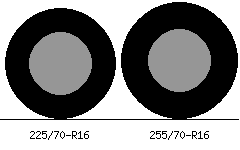
255 tires are 30 mm wider than 225 tires. This extra width can mean more road contact and possibly more grip.
2. Sidewall Profile
The sidewall profile is important for ride comfort and performance.
- 225 tire: Usually has a higher sidewall
- 255 tire: Often has a lower sidewall
Lower sidewalls on 255 tires can improve handling, but higher sidewalls on 225 tires help absorb bumps.
3. Road Grip
Wider tires like 255 have more contact with the road. This can improve grip, especially in dry conditions. Narrower 225 tires may lose grip more easily in sharp turns.
4. Wet Weather Performance
A wider tire can push more water, which may reduce performance in heavy rain. 225 tires can sometimes handle wet conditions better, as they cut through water more easily.
5. Cornering Stability
Wider tires give better stability when cornering. The 255 tire has an edge for drivers who like sporty handling.
6. Straight-line Stability
Both tires perform well, but the 255 tire offers slightly more stability at high speeds, thanks to the extra width.
7. Comfort
Narrower 225 tires usually provide a softer, more comfortable ride. The sidewall absorbs bumps better.
8. Road Noise
Wider tires sometimes produce more road noise, especially on rough surfaces. The 225 tire tends to be quieter.
9. Fuel Efficiency
Wider tires like 255 have more rolling resistance, which can lower fuel efficiency. Narrower 225 tires are better for saving fuel.
10. Tire Weight
A 255 tire is heavier than a 225 tire. This extra weight can affect acceleration and braking.
11. Vehicle Appearance
255 tires look more aggressive and sporty. 225 tires give a classic, clean look.
12. Braking Performance
Wider tires usually stop faster due to more contact with the road. 255 tires can shorten braking distance.
13. Snow Performance
Narrower 225 tires are often better for snow, as they focus pressure and cut through snow more easily.
14. Hydroplaning Risk
Wider tires like 255 have a higher risk of hydroplaning in heavy rain, compared to 225 tires.
15. Steering Response
Wider tires offer sharper steering, but may feel heavier. 225 tires are lighter and easier to steer.
16. Tire Price
255 tires are usually more expensive than 225 tires because of their size and materials.
17. Availability
225 tires are more common and easier to find in stores.
18. Load Capacity
Wider tires can carry more weight. 255 tires have a higher load rating.
19. Speed Rating
Both sizes can have similar speed ratings, but wider tires often get a higher rating.
20. Rim Compatibility
225 tires fit narrower rims, while 255 tires need wider rims.
21. Suspension Compatibility
Your car’s suspension may need adjustment if you switch from 225 to 255 tires.
22. Tread Life
255 tires may wear out quicker because of the larger contact patch.
23. Tire Rotation
Wider tires can make rotation patterns more complex, especially on sporty cars.
24. Driving Style
If you drive aggressively, 255 tires offer more support. For calm driving, 225 tires are enough.
25. Vehicle Type
225 tires are common for sedans and compact cars. 255 tires are often seen on SUVs and sports cars.
26. Weather Suitability
225 tires are better for cold and wet weather. 255 tires excel in dry, warm conditions.
27. Oem Recommendations
Manufacturers often suggest 225 tires for regular cars, while performance models get 255 tires.
28. Aftermarket Modifications
Upgrading to 255 tires can change your car’s look and handling, but may need rim changes.
29. Speedometer Accuracy
Changing tire width can affect speedometer readings. Wider tires may make the reading less accurate.
30. Wheel Well Clearance
255 tires may rub against wheel wells if your car isn’t designed for them.
31. Insurance Impact
Some insurers charge more if you use non-standard tire sizes.
32. Tire Pressure
Wider tires need different pressure settings. Check your car’s manual.
33. Tire Brand Options
More brands offer 225 tires than 255 tires.
34. Tire Model Variety
There are more models for 225 tires, including all-season, winter, and performance.
35. Resale Value
Cars with standard 225 tires often have better resale value.
36. Alignment Needs
Switching tire sizes may require a wheel alignment.
37. Tire Warranty
Some warranties become void if you use a non-standard size.
38. Driving Comfort
Narrow tires like 225 reduce vibrations and shocks.
39. City Driving
225 tires are better for city driving due to better comfort and fuel efficiency.
40. Highway Performance
255 tires perform well on highways, offering stability at high speeds.
41. Off-road Capability
Wider 255 tires are better for light off-roading.
42. Tire Life Expectancy
225 tires last longer due to less friction.
43. Maintenance Costs
Wider tires can cost more to maintain.
44. Tire Rotation Patterns
Some cars with 255 tires need special rotation patterns.
45. Handling In Tight Spaces
Narrower tires help with maneuvering in tight city spaces.
46. Acceleration
Extra weight on 255 tires can slow acceleration.
47. Braking In Wet Conditions
225 tires perform better in wet braking.
48. Tire Wear Pattern
Wider tires wear more evenly, but can wear faster.
49. Performance Upgrades
Sports upgrades often involve switching to 255 tires.
50. Winter Tire Options
More winter tire options available in 225 size.
51. Summer Tire Options
255 tires have more summer performance options.
52. Tire Valve Compatibility
No major difference, but wider tires may need stronger valves.
53. Rim Material Choices
Both sizes have similar rim material options.
54. Tire Mounting
Mounting wider tires needs special tools.
55. Tire Balancing
Wider tires may need more balancing weights.
56. Spare Tire Storage
225 tires fit more easily in spare tire storage spaces.
57. Tire Repair
Repairing wider tires can be more expensive.
58. Tire Recycling
Both sizes are recycled similarly, but wider tires use more materials.
59. Tire Markings
Both sizes have similar tire markings.
60. Environmental Impact
Wider tires use more resources, so 225 tires are more eco-friendly.
61. Comfort On Rough Roads
225 tires absorb bumps better.
62. Performance On Smooth Roads
255 tires shine on smooth, dry roads.
63. Tread Design Variety
More tread designs available for 225 tires.
64. Tire Age
Wider tires tend to age faster due to more stress.
65. Compatibility With Tire Chains
225 tires are easier to fit with tire chains.
66. Seasonal Tire Change
Changing from 225 to 255 may need new rims.
67. Tire Inflation
255 tires need higher inflation pressure.
68. Tire Sidewall Strength
255 tires often have stronger sidewalls.
69. Tire Flexibility
Narrower tires flex more, improving comfort.
70. Vehicle Load Distribution
Wider tires spread the load more evenly.
71. Compatibility With Awd
Both sizes work with AWD, but wider tires improve dry traction.
72. Compatibility With Fwd
225 tires are more common for FWD vehicles.
73. Compatibility With Rwd
255 tires are popular for RWD sports cars.
74. Tire Compound Choices
More compound choices for 225 tires.
75. Tire Customization
Wider tires offer more custom sidewall options.
76. Tire Replacement Frequency
Wider tires need replacement more often.
77. Tire Rotation Frequency
Both require regular rotation, but wider tires need it more.
78. Tire Siping
More siping options for 225 tires.
79. Heat Dissipation
Wider tires dissipate heat better.
80. Aquaplaning Resistance
Narrower tires resist aquaplaning better.
81. Tire Stiffness
Wider tires are stiffer.
82. Tire Rolling Resistance
Narrower tires have less rolling resistance.
83. Tire Contact Patch Shape
Wider tires have a squarer contact patch.
84. Tire Wear Noise
Wider tires make more noise as they wear.
85. Rim Protection
Wider tires offer better rim protection.
86. Tire Cupping
Wider tires are less prone to cupping.
87. Tire Expansion
Wider tires expand more with heat.
88. Tire Shrinkage
Both sizes shrink similarly in cold.
89. Tire Shrinkage
Narrower tires shrink slightly more in extreme cold.
90. Tire Bulging
Wider tires bulge more under heavy load.
91. Tire Crack Resistance
Both have similar crack resistance.
92. Tire Puncture Resistance
Wider tires are less prone to punctures.
93. Tire Bead Strength
Wider tires have stronger beads.
94. Tire Sidewall Flex
Narrower tires flex more.
95. Tire Stiffness In Turns
Wider tires are stiffer in turns.
96. Tire Speed Limit
Wider tires can have higher speed limits.
97. Tire Load Index
Wider tires have a higher load index.
98. Tire Tread Depth
Both sizes can have similar tread depth.
99. Tire Wear Indicators
Both have similar wear indicators.
100. Tire Traction Rating
Wider tires often get higher traction ratings.
101. Tire Temperature Rating
Wider tires usually handle heat better.
102. Tire Tread Wear Rating
Both sizes can have similar ratings.
103. Tire Water Evacuation
Narrower tires evacuate water faster.
104. Tire Slush Handling
Narrower tires handle slush better.
105. Tire Air Retention
Wider tires retain air better.
106. Tire Valve Location
No major difference.
107. Tire Bead Seating
Wider tires need more force for bead seating.
108. Tire Rim Lip Fit
Wider tires fit rim lips better.
109. Tire Rim Width Range
255 tires need wider rims.
110. Tire Rim Diameter Compatibility
Both sizes can fit similar rim diameters.
111. Tire Rim Offset
Wider tires need careful rim offset selection.
112. Tire Rim Bolt Pattern
No impact from tire width.
113. Tire Rim Backspacing
Wider tires need more backspacing.
114. Tire Rim Material
Both sizes use steel, alloy, or chrome rims.
115. Tire Rim Finish
Both sizes offer similar finishes.
116. Tire Rim Weight
Wider tires require heavier rims.
117. Tire Rim Balance
Wider tires make rim balancing more important.
118. Tire Rim Center Bore
No major impact.
119. Tire Rim Hub Fitment
No major impact.
120. Tire Rim Lug Nut Compatibility
No impact.
121. Tire Rim Lug Nut Torque
Heavier rims for 255 tires need higher torque.
122. Tire Rim Valve Stem Fit
No major difference.
123. Tire Rim Bolt Torque
No impact.
124. Tire Rim Cleaning
Wider tires can make rim cleaning harder.
125. Tire Rim Protection
Wider tires protect rims better.
126. Tire Rim Corrosion
No impact.
127. Tire Rim Paint
Both sizes allow for custom paint.
128. Tire Rim Polishing
Both sizes allow for polishing.
129. Tire Rim Repair
Wider tires can make rim repair harder.
130. Tire Rim Replacement
Wider tires require wider rim replacement.
131. Tire Rim Manufacturing
Wider rims are costlier to manufacture.
132. Tire Rim Supply Chain
Wider rims may have supply chain delays.
133. Tire Rim Storage
Wider rims require more storage space.
134. Tire Rim Recycling
Both are recycled similarly.
135. Tire Rim Environmental Impact
Wider rims use more material.
136. Tire Rim Market Price
Wider rims are more expensive.
137. Tire Rim Warranty
Both sizes have similar warranties.
138. Tire Rim Policy
Check local policies for wider rims.
139. Tire Rim Certification
Both sizes can be certified.
140. Tire Rim Inspection
Wider rims need more careful inspection.
141. Tire Rim Testing
Both sizes undergo similar testing.
142. Tire Rim Failure Rate
Wider rims may fail more under heavy load.
143. Tire Rim Recall
No major difference.
144. Tire Rim Maintenance
Wider rims need more frequent maintenance.
145. Tire Rim Upgrade
Wider tires require wider rim upgrades.
146. Tire Rim Downgrade
Switching to 225 tires allows rim downgrades.
147. Tire Rim Trade-in Value
Standard rims for 225 tires have higher value.
148. Tire Rim Dealer Options
More dealers offer standard rims.
149. Tire Rim Aftermarket Options
Wider rims have more aftermarket options.
150. Tire Rim Oem Options
Standard rims are more common as OEM.
151. Tire Rim Customization
Wider rims are more customizable.
152. Tire Rim Performance
Wider rims improve performance.
153. Tire Rim Fuel Efficiency
Standard rims improve fuel efficiency.
154. Tire Rim Handling
Wider rims improve handling.
155. Tire Rim Ride Quality
Standard rims improve ride quality.
156. Tire Rim Sound
Wider rims produce more sound.
157. Tire Rim Safety
Standard rims are safer.
158. Tire Rim Regulation
Check local regulations for wider rims.
159. Tire Rim Registration
No major difference.
160. Tire Rim Insurance
Wider rims may increase insurance costs.
161. Tire Rim Tax
Check local tax rules.
162. Tire Rim Import Duty
Wider rims may have higher import duty.
163. Tire Rim Export
No major difference.
164. Tire Rim Logistics
Wider rims need special logistics.
165. Tire Rim Shipping
Wider rims cost more to ship.
166. Tire Rim Packaging
Wider rims need larger packaging.
167. Tire Rim Labeling
No major difference.
168. Tire Rim Barcode
No major difference.
169. Tire Rim Inventory
Wider rims require more inventory space.
170. Tire Rim Ordering
Wider rims take longer to order.
171. Tire Rim Delivery
Wider rims take longer to deliver.
172. Tire Rim Installation
Wider rims need special installation tools.
173. Tire Rim Removal
Wider rims are harder to remove.
174. Tire Rim Disposal
No major difference.
175. Tire Rim Theft
Wider rims are more attractive to thieves.
176. Tire Rim Recovery
No major difference.
177. Tire Rim Tracking
No major difference.
178. Tire Rim Warranty Claim
No major difference.
179. Tire Rim Insurance Claim
Wider rims may have higher claim value.
180. Tire Rim Accident Impact
Wider rims get more damage in accidents.
181. Tire Rim Collision Repair
Wider rims are costlier to repair.
182. Tire Rim Paint Repair
No major difference.
183. Tire Rim Dent Repair
Wider rims are harder to repair dents.
184. Tire Rim Crack Repair
Wider rims are harder to repair cracks.
185. Tire Rim Scratch Repair
No major difference.
186. Tire Rim Bending
Wider rims bend more easily.
187. Tire Rim Strength
Standard rims are stronger.
188. Tire Rim Flexibility
Standard rims are more flexible.
189. Tire Rim Durability
Standard rims are more durable.
190. Tire Rim Longevity
Standard rims last longer.
191. Tire Rim Usage
Wider rims are used for performance cars.
192. Tire Rim Fitment
Standard rims fit more vehicles.
193. Tire Rim Compatibility
Standard rims are compatible with more tires.
194. Tire Rim Regulation Compliance
Both must comply with regulations.
195. Tire Rim Testing Standards
Both follow similar standards.
196. Tire Rim Certification Process
No major difference.
197. Tire Rim Inspection Process
Wider rims need more inspection.
198. Tire Rim Failure Analysis
Wider rims require more analysis.
199. Tire Rim Recall Process
No major difference.
200. Tire Rim Maintenance Schedule
Wider rims need more frequent checks.
201. Tire Rim Cleaning Products
No major difference.
202. Tire Rim Polish Products
No major difference.
203. Tire Rim Repair Tools
Wider rims need special tools.
204. Tire Rim Replacement Tools
Wider rims need heavier tools.
205. Tire Rim Removal Tools
Wider rims need special removal tools.
206. Tire Rim Storage Racks
Wider rims need larger racks.
207. Tire Rim Transportation
Wider rims are harder to transport.
208. Tire Rim Recycling Process
No major difference.
209. Tire Rim Environmental Regulations
Both must follow regulations.
210. Tire Rim Waste Management
No major difference.
211. Tire Rim Market Trends
Wider rims are becoming more popular.
212. Tire Rim Dealer Trends
More dealers offer wider rims.
213. Tire Rim Aftermarket Trends
Aftermarket for wider rims is growing.
214. Tire Rim Oem Trends
OEMs are offering wider rims for performance models.
215. Tire Rim Custom Trends
Custom wider rims are trending.
216. Tire Rim Performance Trends
Wider rims are used for performance upgrades.
217. Tire Rim Safety Trends
Standard rims are safer.
218. Tire Rim Regulation Trends
More regulations for wider rims.
219. Tire Rim Insurance Trends
Insurance costs for wider rims are rising.
220. Tire Rim Tax Trends
Taxes for wider rims are rising.
221. Tire Rim Import Trends
Imports of wider rims are increasing.
222. Tire Rim Export Trends
No major difference.
223. Tire Rim Logistics Trends
Wider rims require special logistics.
224. Tire Rim Shipping Trends
Shipping costs for wider rims are rising.
225. Tire Rim Packaging Trends
Packaging for wider rims is improving.
Data Comparison: 225 Vs 255 Tires
For clarity, here’s a quick comparison of the most important points:
| Feature | 225 Tires | 255 Tires |
|---|---|---|
| Width (mm) | 225 | 255 |
| Road Grip | Good | Very Good |
| Fuel Efficiency | Higher | Lower |
| Comfort | Better | Moderate |
| Noise | Lower | Higher |
| Price | Lower | Higher |
Credit: www.tacomaworld.com
Practical Examples: Real-world Use Cases
Let’s look at some common vehicles and how tire size affects their performance:
| Vehicle | OEM Tire Size | Upgrade Option | Benefits |
|---|---|---|---|
| Toyota Camry | 225 | 255 | Improved handling, less comfort |
| Ford Mustang | 255 | 225 | Better comfort, less grip |
| Honda Accord | 225 | 255 | Sportier look, higher price |
Non-obvious Insights
Many beginners miss these points:
- Tire width affects insurance and warranty. Using wider tires may void your car’s warranty or increase insurance premiums.
- Wider tires can change your car’s alignment and suspension. Always check with a professional before upgrading.

Credit: www.reddit.com
Confident Guidance: Which Tire Should You Choose?
- 225 tires are best for daily driving, comfort, and fuel savings.
- 255 tires suit sporty drivers who want maximum road grip and aggressive looks.
Before making a change, consult your car’s manual or a trusted mechanic. Upgrading tire width is not just about appearance—it’s about safety and performance.
For more technical details, you can visit Wikipedia’s Tire Code.
Frequently Asked Questions
What Is The Main Difference Between 225 And 255 Tires?
The main difference is width. 255 tires are wider by 30 mm, giving more road contact, which improves grip and handling but can reduce fuel efficiency and comfort.
Can I Switch From 225 To 255 Tires Without Changing Rims?
Usually, 255 tires need wider rims. Using the wrong rim can be unsafe and affect performance. Always check rim width before switching.
Are 255 Tires Better For Snow?
No. 225 tires are better for snow. They cut through snow and slush more easily, giving safer winter driving.
Do Wider Tires Increase Insurance Costs?
Yes, wider tires like 255 can increase insurance costs, especially if they are not standard for your car.
Will Changing Tire Width Affect My Speedometer?
Yes. Changing from 225 to 255 tires can alter your speedometer reading, making it less accurate. Always recalibrate after changing tire sizes.
Choosing between 225 vs 255 tires is about understanding your needs, driving style, and car requirements. With this full guide, you are now ready to make a smart, confident decision for your next tire purchase.