When you hook up your trailer for a road trip, there’s a lot to check—lights, hitch, tire pressure. But there’s one question that confuses many: do you balance trailer tires? Some say it’s not needed, others recommend it for every wheel. Let’s clear up the debate with real facts and practical advice. If you want a smooth, safe towing experience, understanding tire balancing is a smart move.
What Is Tire Balancing?
Tire balancing is a process where a technician adds small weights to the wheel to make sure it spins evenly. When a tire is out of balance, it causes the wheel to wobble or bounce as it turns. This is common with car tires, but trailers have different suspension systems and uses.
During balancing, the wheel and tire are mounted on a machine. The machine spins them and shows where the heavy spots are. Weights are placed to fix these uneven spots. This helps the tire roll smoothly and evenly.
Why Tire Balance Matters For Trailers
Some people believe trailers don’t need tire balancing because they don’t steer or have the same suspension as cars. But this is a misconception. Proper balance can make a difference for several reasons:
- Reduces vibration: Unbalanced trailer tires can cause shaking, which can be felt throughout the trailer and even in the tow vehicle.
- Protects cargo: Vibrations may damage the items you’re hauling, especially if they’re fragile.
- Longer tire life: Unbalanced tires wear unevenly and faster, leading to more frequent replacements.
- Better ride quality: Balancing helps your trailer follow the tow vehicle smoothly, reducing bounce and sway.
Are Trailer Tires Balanced From The Factory?
Many trailer tires are not balanced when you buy them—especially on new or budget trailers. Manufacturers often skip balancing to save time and money. Their reasoning is that trailers are not driven at high speeds or for long distances as cars are.
However, people increasingly use trailers for long hauls, camping, or carrying delicate goods, which means balance matters more than ever.
If you buy a new trailer, ask the dealer if the tires are balanced. If you buy new trailer tires, many shops will balance them for a small extra fee. It’s worth confirming before you hit the road.
Comparing Balanced Vs. Unbalanced Trailer Tires
To see the real impact, here’s a simple comparison:
| Feature | Balanced Tires | Unbalanced Tires |
|---|---|---|
| Ride Smoothness | Even, steady ride | Noticeable vibration, roughness |
| Tire Wear | Uniform, longer-lasting | Uneven, faster wear |
| Impact on Cargo | Less movement, safer transport | More shaking, higher damage risk |
| Suspension Stress | Reduced | Increased |
As you can see, balancing trailer tires gives real-world benefits, especially if you value your cargo or want to avoid extra maintenance costs.
When Should You Balance Trailer Tires?
Not every trailer use requires balancing, but there are situations where it’s especially important:
- Long-distance towing: If you tow your trailer for many miles at highway speeds, balancing reduces vibration and wear.
- Carrying sensitive cargo: Glass, electronics, or furniture can be damaged by constant shaking.
- New tires: Any time you replace a trailer tire, balancing is wise.
- Noticing vibration: If you feel shaking in the trailer or tow vehicle, get the tires checked.
- After a repair: If a tire is removed for a patch or rotation, re-balance it.
For short trips at slow speeds, or if you use your trailer rarely, balancing is less critical. But for regular or heavy-duty use, it’s a smart investment.
How To Balance Trailer Tires
Balancing trailer tires is very similar to balancing car tires, but there are a few differences. Here’s how it’s done:
- Remove the wheel from the trailer and take it to a tire shop.
- The shop mounts the wheel on a balancing machine.
- The machine spins the tire and finds heavy/light spots.
- The technician adds clip-on or adhesive weights to the rim.
- The process is repeated until the machine shows the tire is balanced.
Most tire shops can balance trailer tires. If you’re buying new tires, ask them to balance before mounting. If you do your own trailer maintenance, you’ll need access to a balancing machine—usually not practical for most people.
Dynamic Vs. Static Balancing
There are two main types of tire balancing:
| Type | How It Works | Best For |
|---|---|---|
| Static Balancing | Finds heavy spot by spinning tire on a single axis | Small trailer tires, low speeds |
| Dynamic Balancing | Spins tire on two axes, finds side-to-side and up/down imbalance | Larger trailers, highway speeds |
Dynamic balancing is more precise and recommended for larger trailers or frequent highway towing.
Common Mistakes When Balancing Trailer Tires
Many trailer owners skip balancing or make mistakes that lead to poor performance. Here are some common problems:
- Skipping balancing: Thinking it’s not needed can lead to faster tire wear and rough rides.
- Incorrect weights: Using the wrong type or poorly attached weights can cause them to fall off.
- Not re-checking after repairs: Any time a tire is removed or repaired, the balance can change.
- Ignoring wheel condition: Bent or damaged wheels can’t be balanced properly.
A non-obvious mistake: If you use wheel covers or decorative hubcaps, they can sometimes throw off the balance if added after the tire was balanced. Always add accessories before balancing.
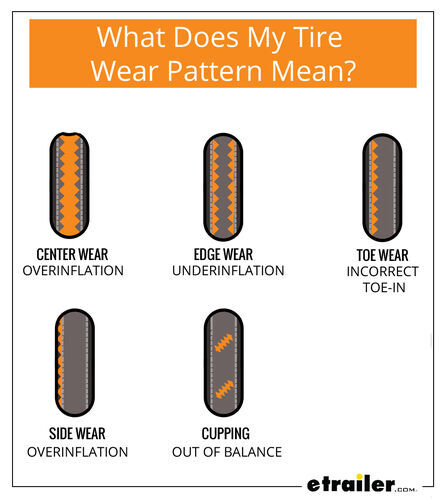
Credit: www.etrailer.com
Signs Your Trailer Tires Are Out Of Balance
How do you know if your trailer tires need balancing? Watch for these signs:
- Visible vibration: Wheels seem to bounce or move side to side, especially at higher speeds.
- Uneven tire wear: Bald spots, scalloping, or cupping on the tire tread.
- Rattling cargo: Items inside the trailer shake or make noise, even on smooth roads.
- Suspension noise: Extra stress can lead to squeaks or clunks from trailer axles.
If you notice any of these, have your tires checked by a professional.
Is Balancing Always Necessary?
There are cases where balancing may not be strictly necessary:
- Very small utility trailers: Used at low speeds for short distances, balancing may not be critical.
- Older trailers with heavy-duty suspension: Some designs absorb vibration well.
- Farm or off-road trailers: Used only on rough terrain and at slow speeds, the benefits are limited.
However, as trailers get bigger, faster, and carry more expensive cargo, balancing becomes more important.
Cost Of Balancing Trailer Tires
Tire balancing is a relatively low-cost service. In most regions, it costs between $10 and $20 per tire. Some shops include it free with a tire purchase. For a typical two-axle trailer (four tires), expect to pay $40 to $80 total.
Considering the price of new tires (often $70 to $150 each), balancing is a smart way to protect your investment and avoid extra wear.
Diy Vs. Professional Balancing
While some car enthusiasts balance their own tires, it’s rare with trailers. Professional shops have precision machines and trained staff. DIY balancing methods (like using tire beads or sand inside the tire) exist, but they’re less accurate and may not work for all trailer types.
If you’re hauling valuable cargo or plan to use your trailer often, let a professional handle the job.

Credit: www.youtube.com
Myths About Trailer Tire Balancing
Several myths can lead trailer owners astray:
- “Trailer tires are always balanced from the factory.” Not true—many are not.
- “Balancing is only for cars.” Trailers benefit, too, especially at higher speeds.
- “You can’t balance trailer tires.” Any tire with a metal rim can be balanced.
- “Vibration is normal for trailers.” While some bounce is expected, strong vibration is a sign of a problem.
Don’t let these myths cost you time or money.
Additional Tips For Trailer Tire Care
Balancing is just one part of tire health. For a safe, smooth trip, remember:
- Check tire pressure before every trip.
- Inspect for damage or cracks—replace old tires even if tread looks good.
- Rotate tires on double-axle trailers every 5,000-7,000 miles.
- Don’t overload your trailer—excess weight increases wear and imbalance.
- Store your trailer out of sunlight to prevent rubber cracking.
Combining these habits with regular balancing gives the best results.
Credit: www.youtube.com
Real-world Example
A camping family tows a 24-foot travel trailer several times a year. After noticing strong vibration at 60 mph, they have the tires balanced. The result: smoother rides, less noise, and better tire life. Over two years, they save hundreds on tire replacement and avoid damaged dishes.
This shows how balancing, though often skipped, pays off over time.
External Resource
For more technical details about tire balancing, see the Wikipedia article on Tire Balance.
Frequently Asked Questions
How Often Should I Balance Trailer Tires?
Balance trailer tires whenever you buy new tires, after repairs, or if you notice vibration or uneven wear. For regular use, check every 12,000–15,000 miles.
Can I Balance Trailer Tires At Home?
Most people need special machines to balance tires accurately. DIY options exist, but professional balancing is safer and more precise.
Do All Types Of Trailers Need Balanced Tires?
Not every trailer needs it, but larger, faster, or cargo-carrying trailers benefit most. Small, slow-moving trailers may not require it.
Will Balancing Trailer Tires Fix A Bumpy Ride?
If the bumpiness is caused by tire imbalance, balancing will help. But other issues—like bent axles or suspension problems—also cause rough rides.
Is Balancing Trailer Tires Expensive?
No—tire balancing usually costs $10–$20 per wheel. It’s a small price for protecting your tires, cargo, and comfort.
A little attention to tire balance can make your next trip safer, smoother, and cheaper. If you value your cargo, your trailer, and your time, don’t skip this simple step. Your trailer—and everything you carry—will thank you.