When it comes to upgrading your vehicle for off-roading or simply achieving a bold new look, 35 inch tires are a popular choice among truck and SUV enthusiasts. But one question always comes up: what size wheel fits best with 35 inch tires? This is not just about looks. The right wheel size affects your vehicle’s safety, ride comfort, performance, and even your wallet. Choosing wisely means understanding not only the numbers, but how those numbers work together on your vehicle.
Many people think that tire size is the only thing that matters. However, the wheel diameter and width are just as important. Get these wrong, and you could face rubbing, poor handling, or extra wear on your vehicle. In this guide, you’ll find a detailed breakdown of 35 different wheel sizes for 35 inch tires, complete with their pros, cons, and best uses. By the end, you’ll have a clear idea of which size works for your needs—whether you’re cruising city streets or tackling muddy trails.
Understanding 35 Inch Tires And Wheel Sizing
Before diving into the specifics, it’s important to know what “35 inch tires” actually means. The “35” refers to the overall diameter of the tire—so from one edge, across the center, to the other edge, the tire measures about 35 inches tall. However, not all 35 inch tires are exactly 35 inches, since actual measurements can vary slightly by brand and tread design.
The wheel size is a combination of two things:
- Diameter: The distance across the wheel, measured in inches (like 16″, 17″, 18″, etc.)
- Width: How wide the wheel is from bead to bead, usually between 7″ and 12″ for most trucks and SUVs
Selecting the right combination ensures your tire fits safely and performs as intended.
Factors To Consider When Choosing Wheel Size
Several factors play a role when pairing wheels with 35 inch tires:
- Vehicle type and lift: Some vehicles need a suspension lift to fit 35 inch tires.
- Backspacing and offset: This affects how far the wheels stick out or sit inside the fenders.
- Tire width: A 35 inch tire can come in different widths (like 12.5″ or 11.5″).
- Driving purpose: Off-roading, towing, or daily driving all have different wheel needs.
- Aesthetics: Some prefer a “meaty” tire look, others like bigger wheels with a lower-profile tire.
Now, let’s look at 35 different wheel sizes commonly paired with 35 inch tires, and what each size offers.

Credit: www.youtube.com
35 Wheel Sizes For 35 Inch Tires
1. 15×7 Inch Wheels
A classic choice for older trucks and Jeeps. 15×7 wheels are lightweight and allow for a large tire sidewall, giving excellent off-road comfort and flex. However, they often need special brake clearance, and may not fit modern vehicles without modifications.
2. 15×8 Inch Wheels
Slightly wider, 15×8 wheels provide better support for wider 35 inch tires. They’re a favorite among rock crawlers for the low pressure flex, but modern vehicles might struggle to fit them over factory brakes.
3. 15×10 Inch Wheels
This size gives a deep dish look and allows the tire to spread out, but increases the risk of tire bead unseating at low pressures. 15×10 is best for show trucks or sand dunes, not for daily drivers.
4. 16×7 Inch Wheels
16×7 wheels are rare today but can work with 35 inch tires if you want a more classic, high-sidewall look. Their narrow width can lead to bulging sidewalls, which some off-roaders like for extra grip.
5. 16×8 Inch Wheels
A balanced choice, 16×8 wheels are a good fit for many trucks and SUVs. They give a bit more sidewall than 17s, improving off-road ride without sacrificing handling.
6. 16×10 Inch Wheels
With a wider stance, 16×10 wheels are for those who want aggressive looks and stability. The downside is more stress on wheel bearings and possible fender clearance issues.
7. 17×7 Inch Wheels
17×7 wheels are narrow for 35 inch tires, but some prefer them for snow or mud, where a skinny tire can dig in better. They give a tall sidewall and soft ride.
8. 17×8 Inch Wheels
Probably the most popular size today for 35 inch tires. 17×8 offers a near-perfect balance of performance, comfort, and compatibility with modern brake setups.
9. 17×9 Inch Wheels
A bit wider, 17×9 wheels help support heavier vehicles and wider tires. They’re often used on full-size trucks and deliver a stable, planted feel.
10. 17×10 Inch Wheels
17×10 wheels offer a wide, aggressive look and are often chosen for show builds. However, they can make the tire sit too wide, possibly leading to rubbing unless you have a lift and proper fender clearance.
11. 18×8 Inch Wheels
18×8 wheels are becoming common as more trucks come with larger factory wheels. They give a modern look with a slightly lower tire sidewall, improving handling but slightly reducing off-road comfort.
12. 18×9 Inch Wheels
A favorite for those wanting both style and function. 18×9 wheels fit most 35 inch tires well and clear modern brake systems easily.
13. 18×10 Inch Wheels
18×10 wheels make a bold statement and provide extra width for wide 35 inch tires. They’re popular on custom builds but may require fender flares.
14. 18×12 Inch Wheels
For those who want the most aggressive “stance,” 18×12 wheels are extremely wide. While eye-catching, they often require significant modifications to avoid rubbing.
15. 19×8 Inch Wheels
Rare, but 19×8 wheels can fit some luxury SUVs. They provide a sportier look but reduce tire sidewall, impacting off-road ability.
16. 19×9 Inch Wheels
19×9 wheels balance style and function for larger SUVs, but you’ll lose some off-road comfort due to the shorter sidewall.
17. 19×10 Inch Wheels
For performance-focused trucks or SUVs, 19×10 wheels offer a wide stance and modern appearance, but they’re not ideal for rugged trails.
18. 20×8 Inch Wheels
20×8 wheels are popular on full-size trucks for a clean, upscale look. They reduce sidewall height, making the ride stiffer but improving cornering.
19. 20×9 Inch Wheels
A sweet spot for many modern trucks. 20×9 offers a balance of sidewall and wheel size, making them practical for both daily and occasional off-road use.
20. 20×10 Inch Wheels
20×10 wheels are common for lifted trucks with 35 inch tires. They look aggressive and support wide tires, but may require trimming or lifts for clearance.
21. 20×12 Inch Wheels
One of the widest options, 20×12 wheels offer serious “stance.” They almost always need fender flares and suspension mods to prevent rubbing.
22×8 Inch Wheels
For those seeking a luxury or show-truck appearance, 22×8 wheels stand out. The low tire sidewall they require gives firm handling but reduces off-road capability.
22×9 Inch Wheels
22×9 wheels are less common but provide a sleek, modern look for high-end trucks and SUVs.
22×10 Inch Wheels
22×10 wheels make a bold visual impact, but the lower sidewall can make rides harsher and limit off-road use.
22×12 Inch Wheels
The widest in the 22-inch category, 22×12 wheels are for show trucks and require serious modifications.
23×8 Inch Wheels
23×8 wheels are rare and usually custom-made for unique builds. They focus on appearance over functionality.
23×9 Inch Wheels
Slightly wider, 23×9 wheels remain a niche choice, mostly for show purposes.
24×9 Inch Wheels
24×9 wheels are for those who want to stand out. The minimal tire sidewall is not ideal for rough roads.
24×10 Inch Wheels
A bit wider, 24×10 wheels offer a dramatic look, but expect a very firm ride.
24×12 Inch Wheels
The widest of the 24-inch options, 24×12 wheels are show-stoppers. They require custom fender work and are rarely practical for daily use.
26×10 Inch Wheels
26×10 wheels are extremely large and almost always used for car shows or very custom trucks. The sidewall is tiny, making them unsuitable for off-roading.
26×12 Inch Wheels
The ultimate in “big wheel” style, 26×12 wheels are entirely for appearance. Expect a harsh ride and limited tire choices.
28×12 Inch Wheels
The largest commonly seen, 28×12 wheels fit only on highly modified vehicles. They are attention-grabbing but not practical for daily driving or off-road use.
Comparing Wheel Sizes For 35 Inch Tires
To help visualize how wheel size affects tire profile and performance, see the table below:
| Wheel Size | Sidewall Height (inches)* | Ride Comfort | Off-road Ability |
|---|---|---|---|
| 17×8 | ~9.0 | Excellent | Excellent |
| 20×10 | ~7.5 | Good | Good |
| 22×12 | ~6.5 | Fair | Poor |
| 24×12 | ~5.5 | Poor | Poor |
*Sidewall height is estimated and will vary based on the actual tire width and aspect ratio.
Credit: offroadium.com
Wheel Width Vs. Tire Width
Matching wheel width to tire width is just as important as diameter. A wheel that’s too narrow or too wide can cause uneven tire wear, bead unseating, or poor handling. Here’s a quick comparison:
| Wheel Width | Recommended Tire Width Range | Common Use |
|---|---|---|
| 8″ | 11.5″ – 12.5″ | All-around, Off-road |
| 10″ | 12.5″ – 13.5″ | Show, Aggressive Looks |
| 12″ | 13.5″ – 14.5″ | Stance Builds |
Key Insights Most Beginners Miss
- Brake Clearance: Larger wheels (17” and up) often clear modern brake calipers better than smaller 15” wheels. Always check your vehicle’s brake size before buying wheels.
- Suspension and Fender Clearance: Just because a wheel fits, doesn’t mean the tire won’t rub. Larger diameters and widths often require lifts and fender modifications.
- Weight Matters: Bigger wheels are heavier. This affects acceleration, braking, and even fuel economy. Lightweight alloy wheels can help reduce this impact.
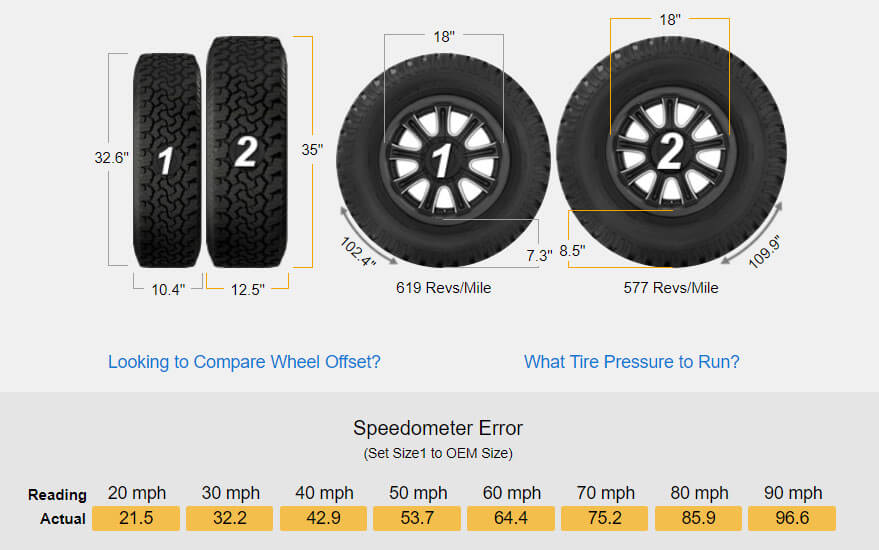
- Speedometer Accuracy: Changing tire and wheel size can throw off your speedometer. Recalibrating it after installation is often necessary.
Common Mistakes When Choosing Wheels For 35 Inch Tires
- Choosing style over function: That huge wheel may look cool, but if you drive off-road, you’ll want more sidewall.
- Ignoring offset and backspacing: These measurements decide how far your wheel sticks out or tucks in. The wrong numbers can cause rubbing.
- Skipping professional advice: Always double-check with tire and wheel professionals, especially for aggressive setups.
Practical Examples
- Daily Driver: A 17×8 or 18×9 wheel offers a smooth ride and minimal modifications.
- Off-Road Rig: 16×8 or 17×8 keeps more sidewall for better flex and grip.
- Show Truck: 22×12 or 24×12 grabs attention, but needs serious suspension work.
Wheel Size Trends And Data
Recent data shows that 17×8 and 18×9 remain the most popular wheel sizes for 35 inch tires among off-roaders and daily drivers. Meanwhile, 20×10 and larger sizes are gaining popularity in custom builds and show trucks.
Where To Find More Technical Information
For detailed specifications and wheel fitment calculators, check resources like Tire Rack.

Credit: www.discountedwheelwarehouse.com
Frequently Asked Questions
What Is The Best Wheel Size For 35 Inch Tires?
For most trucks and SUVs, a 17×8 or 18×9 wheel is ideal. These sizes provide enough sidewall for comfort and off-road ability, while fitting most modern brakes.
Can You Fit 35 Inch Tires On A 15 Inch Wheel?
It’s possible, but rare on modern vehicles due to brake size. Classic trucks and Jeeps with smaller brakes can use 15×8 wheels, but always check clearance.
Will 35 Inch Tires Rub On My Stock Suspension?
In most cases, yes. Fitting 35 inch tires usually requires a suspension lift and possibly fender trimming, especially with wider wheels.
Do Bigger Wheels Affect Fuel Economy?
Yes, larger wheels are heavier and can reduce fuel economy due to increased rolling resistance and weight.
How Do I Know If My Wheel And Tire Combo Will Fit?
Check your vehicle’s wheel well, suspension, and brake clearance. Use online fitment calculators and consult with experts or forums for your specific model.
Choosing the right wheel size for 35 inch tires is more than just picking a number. It’s about matching your vehicle, driving style, and personal taste for a safe and enjoyable ride. Take your time, measure carefully, and enjoy the transformation your new wheels and tires will bring.